Trending
Prev Story
Next Story

Yemeni gov’t forces, Houthis trade blame for deadly strikes on Taiz market

Al Jazeera English •
November 06, 2026 • 06:09 PM
• By Al Jazeera Staff
1
1 reads 0 reactions

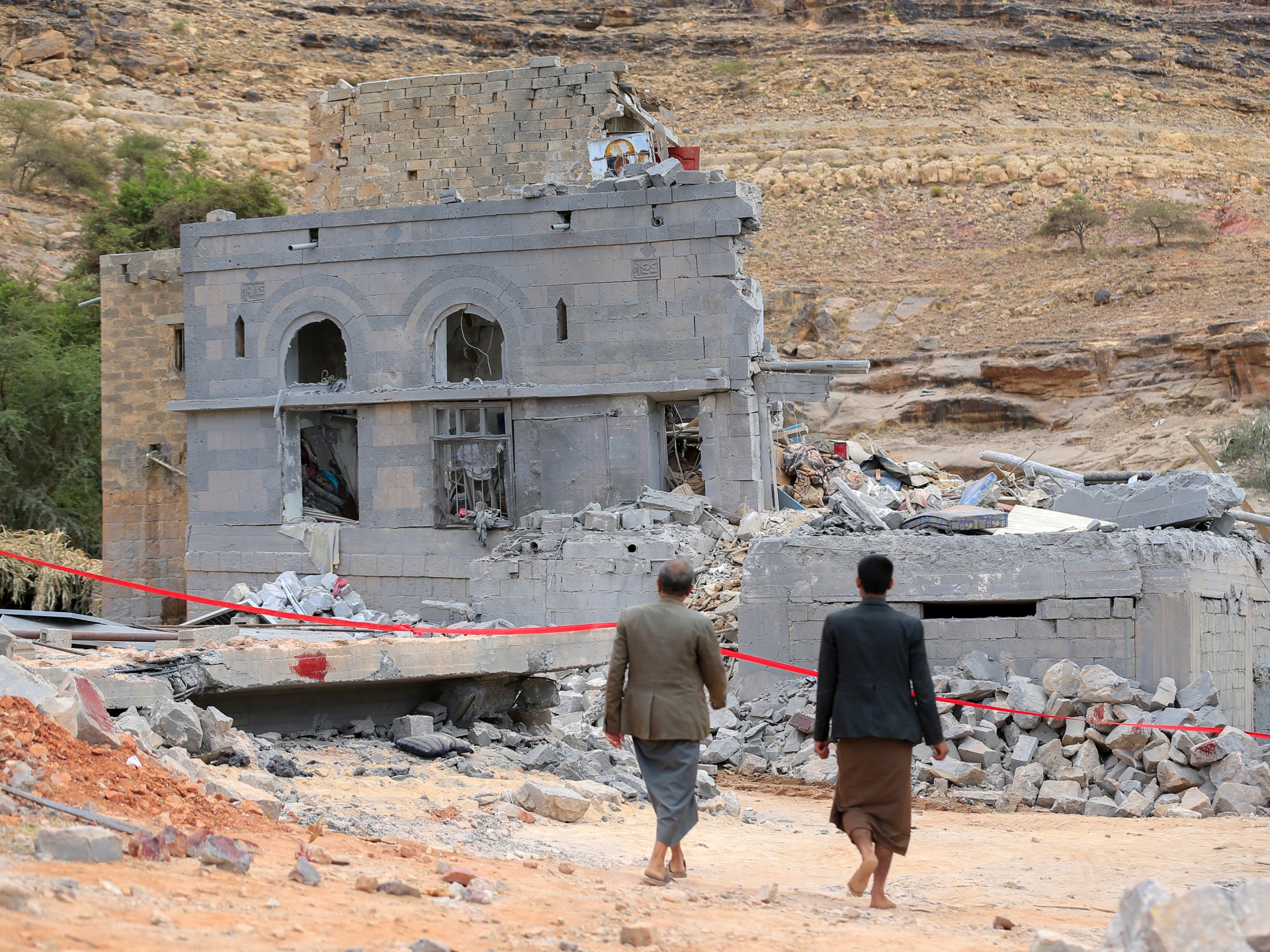
The attack on al-Hadara market in Taiz governorate's al-Waziiya district killed at least 30 people, Houthi rebels say.

Yemeni gov’t forces, Houthis trade blame for deadly strikes on Taiz market

Yemen’s government forces and the Houthi rebel group are trading blame for an attack on the al-Hadara market in the Taiz governorate, that both sides say killed and injured dozens of people.

The Houthis on Friday accused Saudi Arabia, which backs Yemen’s internationally recognised government, of having launched three air strikes on the market, killing at least 30 civilians and injuring eight others.

Its Ministry of Health and Environment in the Yemeni Houthi-controlled capital Sanaa said Riyadh committed a “horrific crime” and called for an independent international investigation into Saudi Arabia’s “systematic targeting” of civilians.

There has been no response so far from the Saudi-led coalition forces. The spokesperson for the Yemeni government forces, Colonel Majed al-Nazili, said the “terrorist” Houthis struck the market with ballistic missiles, causing dozens of civilian casualties. He accused the Iran-backed group of committing a “war crime” and called for accountability.

Al Jazeera could not independently verify the reports.

Al Jazeera’s Yousef Mawry, reporting from Sanaa, said fighting has been ongoing in the al-Waziiya district where the market is located. The area is controlled by the Houthis, who are also known as Ansar Allah (Arabic for Supporters of God).

The Saudi-led coalition has been carrying out attacks on a daily basis to gain control of the district and its strategic mountain range, Mawry said.

“Whoever controls the al-Waziiya district controls the majority of the western Red Sea coastal line,” he added.

The Yemeni army said it recaptured several areas in the Taiz governorate on Friday, including the al-Nidani village, Shaab al-Sarari, large parts of the Sanamat area and the Ribat al-Qarn area in Dhi al-Barh.

Government forces also imposed a siege on entrances to the al-Sarari area, according to the military.

While the Houthis control much of the governorate, the city of Taiz is government-held. An ongoing Houthi siege on the city has lasted for 30 days and affected hundreds of thousands of people in the area.

The United Nations has repeatedly warned of a catastrophe inside Taiz city, where supplies of food and medicine are becoming increasingly scarce.

Yemen’s internationally recognised government launched Operation Dawn of Yemen on October 5  to take control of territories held by Houthi fighters.

Since the start of the military operation, neither Yemen’s government-controlled territories nor Saudi Arabia has been safe from Houthi missile attacks.

The Houthis have been firing missiles and drones daily into Saudi Arabia, hitting oil facilities and disrupting air traffic over the kingdom.

Prev Swipe Story Next

Same Story from Other Publications

Compare how 2 other independent news outlets reported on this story.

2 Publications
CNN International
1d ago
Yemen’s Houthis hold mass funeral after deadly Saudi airstrike | CNN

Yemen’s Houthis hold mass funeral after deadly Saudi airstrike | CNN

At least 43 people in Yemen, including women and children, were buried in a mass funeral after being killed in a reported Saudi-led airstrike, as renewed fighting between Iran-backed Houthi rebels and Saudi-backed forces deepens the country’s ongoing conflict.

#houthis #saudi #deadly
Compare →
NPR News
2d ago
How bodegas led to the Yemeni coffeehouse explosion : Planet Money

How bodegas led to the Yemeni coffeehouse explosion : Planet Money

There is a long-standing tradition of different immigrant groups arriving in the U.S. and specializing in one particular type of business. Think, nail salons run by people from Vietnam or Gujarati Indians owning motels and hotels.Yemenis are another immigrant community that has largely clustered around one industry, in their case, bodegas and small grocery stores. There are thousands of these shops all over the country, despite Yemeni-Americans only making up around one-fortieth of one percent of the U.S. population, according to the last census. In the past 9 years, a new business success story has been built on top of that foundation: Yemeni coffee houses.Today on the show, why some immigrant groups concentrate in a single industry, while others spread out to work in all sorts of jobs. And what it’s like for the next generation to try to expand on their parents’ success.Read: - Our book: Planet Money: A Guide to the Economic Forces That Shape Your Life - Our weekly longform Planet Money newsletter- Our weekly Indicator round-up newsletterFollow: - Instagram- TikTok- YouTube- FacebookSupport public media with NPR+ and enjoy perks for over 25 podcasts like this one. This show’s perks include bonus episodes and sponsor-free listening. Learn more at plus.npr.org.Today’s episode of Planet Money was hosted by Amanda Aronczyk and Jeff Guo. It was produced by James Sneed, edited by Keith Romer, and fact-checked by Dania Suleman. Engineering by Cena Loffredo and Travis Hagen. Alex Goldmark is Planet Money’s executive producer.

Related Stories

Business & Economy
Build #2611