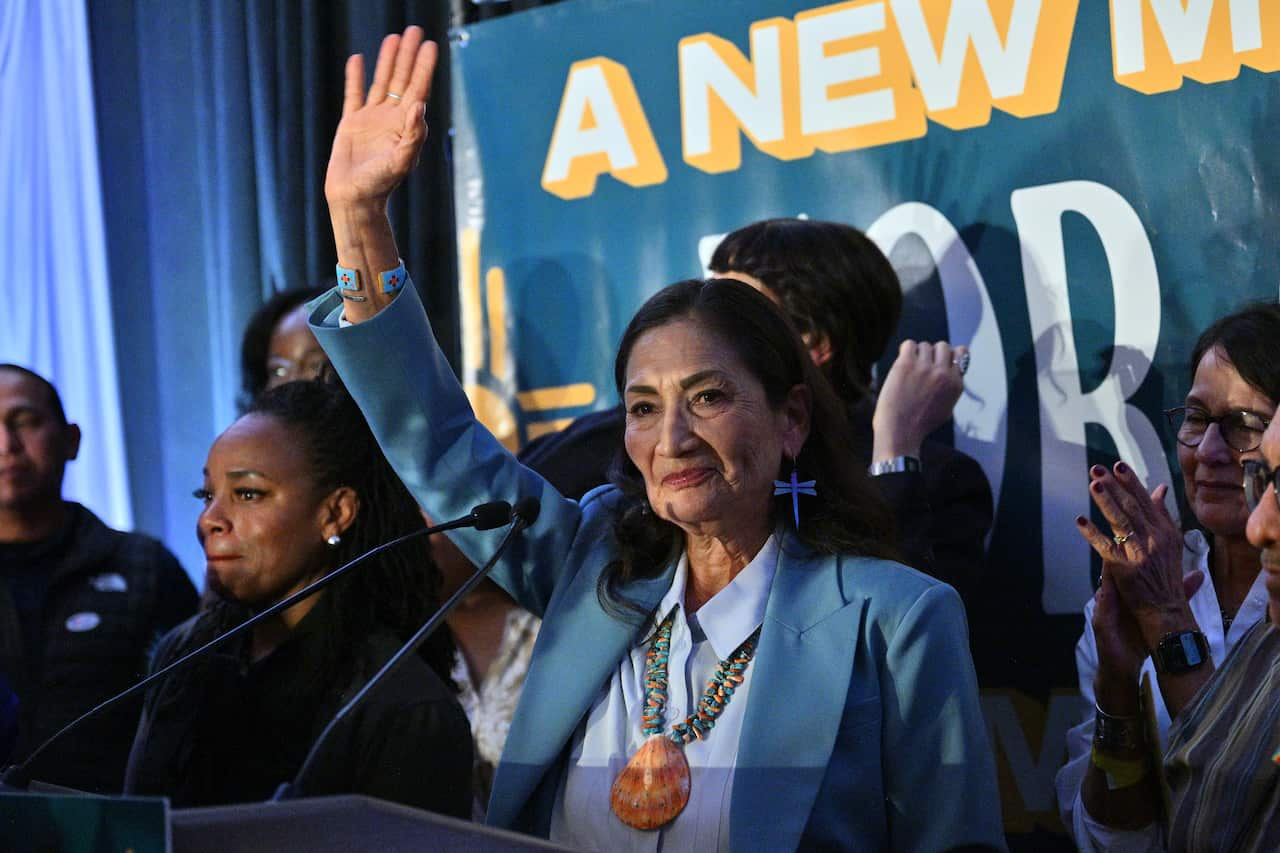
Two Native American women have made history in the United States midterm elections, breaking barriers as Democrats secured major victories against US President Donald Trump's Republican Party.
In Minnesota, Peggy Flanagan, a citizen of the White Earth Band of Ojibwe, became the first Native American woman elected to the US Senate, while Deb Haaland, a member of the Laguna Pueblo, became the first Native American woman elected governor of a US state.
Their victories came during a record-breaking election for Indigenous political representation, with 225 Indigenous candidates contesting seats across 30 US states.
According to research by Indigenous news organisation ICT and Native-led organisation Advance Native Political Leadership, the candidates represented nearly 100 Indigenous nations and communities, with women accounting for more than half of those on the ballot.
Your trusted source for staying up-to-date with the world around you. Get free daily news updates and analysis, straight to your inbox.
The figures reflect a broader rise in Indigenous political participation, with the number of candidates contesting primary elections increasing by nearly 400 per cent compared to 2016.
But in Alaska, where Yup'ik Democrat Mary Peltola is narrowly leading a closely contested Senate race, Trump has demanded that her Republican opponent be declared the winner, despite votes still being counted.
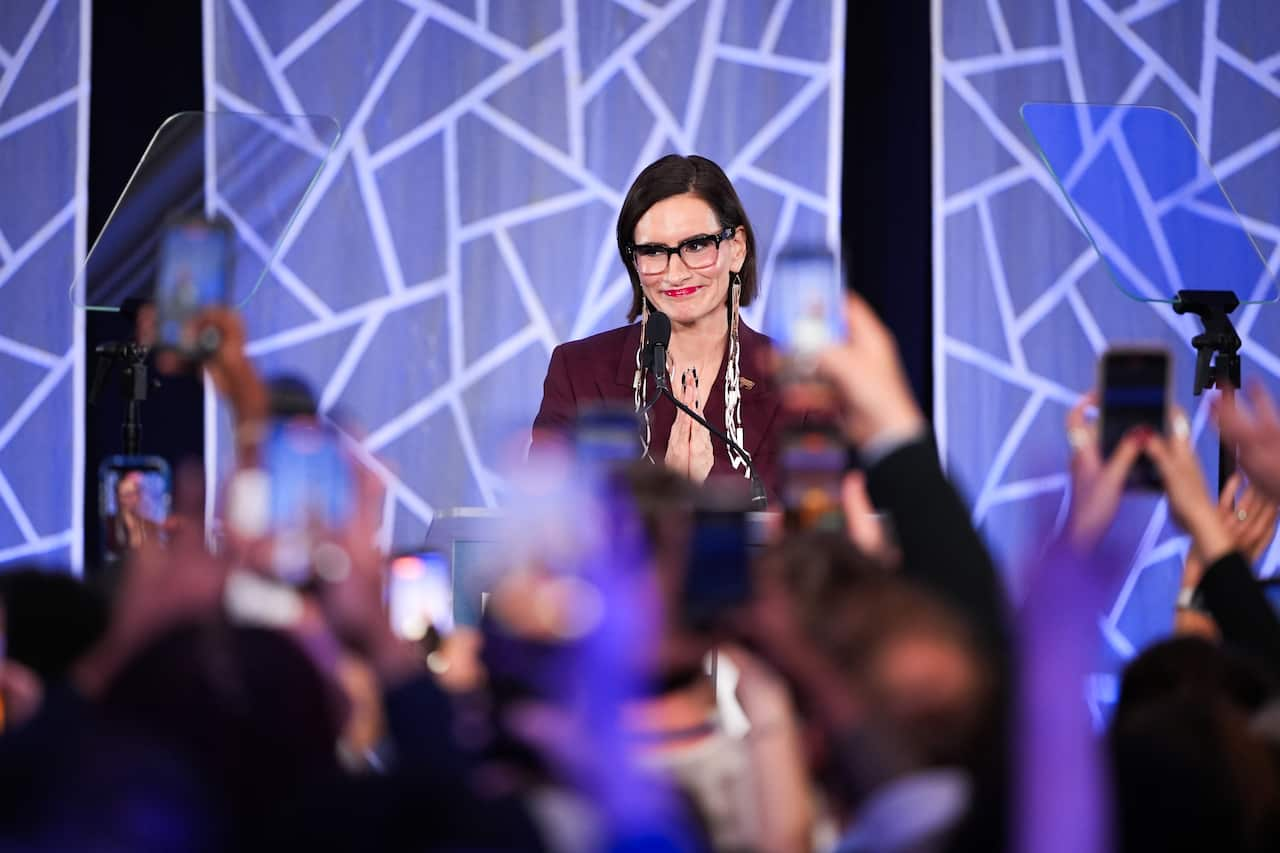
Flanagan, Minnesota's lieutenant governor, defeated Republican Michele Tafoya to become the first Native American woman elected to the US Senate in its 250-year history.
Her victory was celebrated with a traditional drum performance by members of the White Earth Nation, as supporters gathered to mark the historic result.
Addressing the crowd at her election night victory party, Flanagan delivered a message to young Indigenous Americans.
"To the daughters and to the sons who too often are forgotten or erased, I see you," she said.
"Do not be disheartened that it took 250 years for one of us to get here."
She urged the next generation to draw inspiration from the determination of Indigenous communities, saying future Native American leaders would reach the Senate much sooner.
The senator-elect also used her victory speech to outline an ambitious political agenda, promising to challenge the Trump administration on immigration, healthcare and foreign policy.
"We will rip ICE apart," Flanagan declared, referring to the federal Immigration and Customs Enforcement agency .
She pledged to replace it with an immigration system grounded in public safety, dignity and due process, while also promising to pursue universal healthcare and an end to the US war in Iran .
In New Mexico, 65-year-old Democrat Deb Haaland defeated Republican Gregg Hull and will lead a state where Native Americans account for approximately 12 per cent of the population.
Haaland previously served as interior secretary under former US president Joe Biden, becoming the first Indigenous person appointed to a US Cabinet position.
She was also among the first Native American women elected to Congress in 2018.
Addressing supporters following her election victory, Haaland acknowledged the significance of the moment.
"It's not only about history. It's about our future," she said.
Haaland has previously spoken openly about her experiences as a single mother, navigating the healthcare system and overcoming alcohol addiction before pursuing a career in politics.
Speaking to PBS NewsHour following her victory, she said she was proud of the historic achievement but stressed that governing would require addressing the challenges confronting New Mexico.
She pledged to listen to communities across the state and respond to their different needs, including pressures surrounding healthcare and the cost of living.
While Flanagan and Haaland have secured their victories, another closely watched race involving an Indigenous candidate remains unresolved.
In Alaska, Yup'ik Democrat Mary Peltola is narrowly ahead of incumbent Republican senator Dan Sullivan, with the contest still too close to call.
Peltola, who became the first Alaska Native elected to the US House of Representatives in 2022, is seeking to make history again by becoming the first Alaska Native to serve in the Senate.
With approximately three-quarters of votes counted on Thursday, Peltola was leading Sullivan by fewer than 1,000 votes, with neither candidate securing an outright majority.
But Trump has intervened in the contest, demanding that election officials transfer votes from two other candidates to the Republican incumbent and immediately declare him the winner.
The ballot includes another candidate named Daniel J Sullivan, an independent with the same name as the Republican senator, as well as Republican Gerald Heikes.
Trump accused the candidates of being included on the ballot to undermine the incumbent's chances.
"The vote totals for the Fake Dan Sullivan, plus the other 'slug' that the Dems put on the Ballot, should be immediately given to the REAL Dan Sullivan," Trump wrote on his Truth Social platform.
He declared that Sullivan would easily win and claimed there was no other fair outcome.
However, Trump's proposed intervention would violate Alaska's ranked-choice voting rules.
Under the system, voters rank candidates in order of preference. If no candidate secures more than 50 per cent of first-choice votes, the lowest-ranked candidates are progressively eliminated, with their votes redistributed according to each voter's next recorded preference.
Votes cannot simply be transferred to a candidate at the president's direction.
The controversy comes amid Republican allegations that the similarly named independent candidate was recruited to confuse voters, claims Peltola and Alaska Democrats have denied.
The US justice department has also pursued legal action surrounding the election, although a federal judge rejected its attempt to delay certification.
With thousands of ballots outstanding, the final result may not be known for weeks.
Alaska's ranked-choice tabulation is not expected to begin until 18 November.
Beyond the contests involving Indigenous candidates, the midterms have delivered several other significant political firsts.
In Georgia, Democrat Keisha Lance Bottoms became the first Black woman elected governor of a US state, defeating Republican Rick Jackson.
The former Atlanta mayor also ended more than two decades of Republican control of Georgia's governorship.
"Georgia, this win is for all of us," she told supporters during her election night address.
"And no matter who you voted for tonight, I will be a governor for all of Georgia."
The results unfolded amid a broader Democratic wave that saw the party win control of both chambers of Congress, delivering a significant setback to Trump halfway through his second term.
But beyond the balance of political power, the election has marked a turning point for communities historically underrepresented in US politics.