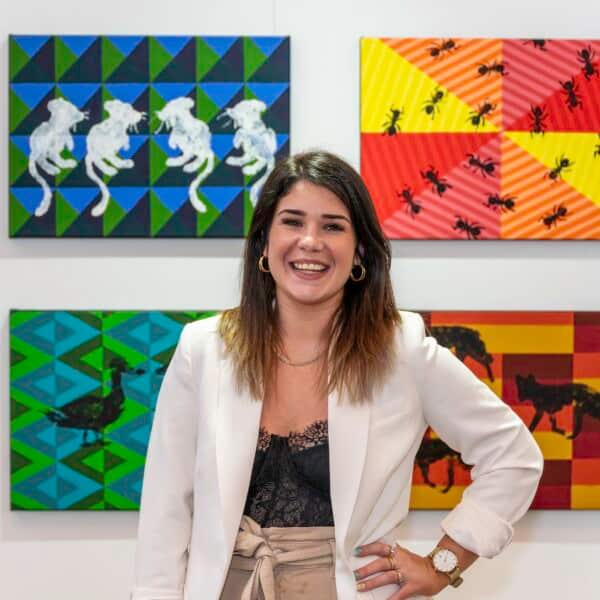
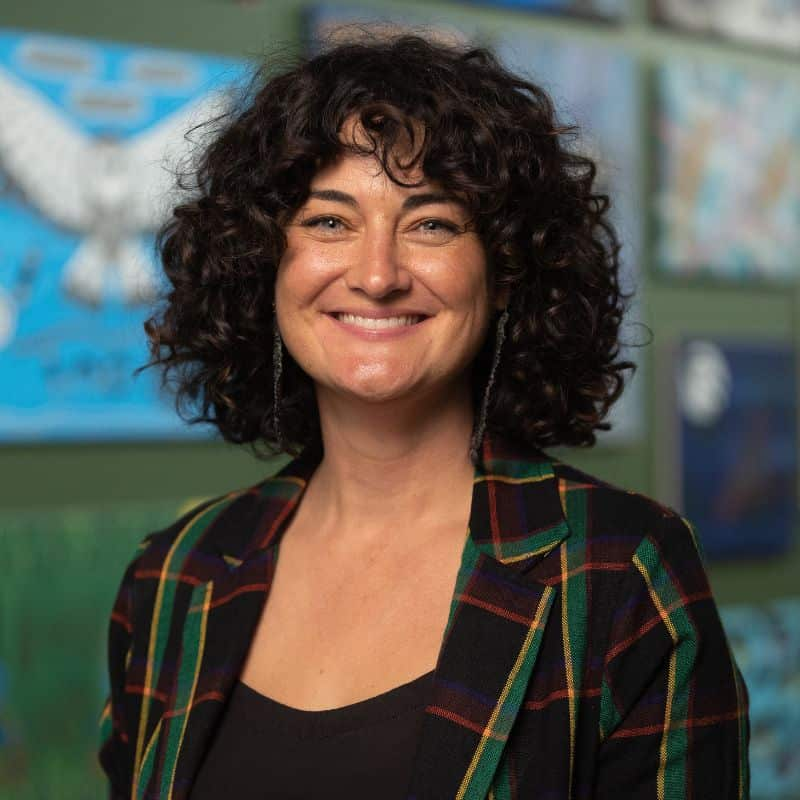
Flick Chafer-Smith initially refused to go to art classes while she was incarcerated at the Dame Phyllis Frost Centre, on the outskirts of Melbourne.
“It took a lot of badgering from my sister girls in there … I never thought that I was creative or artistic, or that I could produce a painting that somebody would choose to look at, let alone pay for,” she said.
“It takes a lot of courage and vulnerability for someone to walk into that space and say, ‘I don’t know what I’m doing but I’m here and I’m going to give it a crack.'”
Now, the proud Ngarrindjeri woman is exhibiting her first solo show and working as a First Peoples Arts Mentor with The Torch, visiting the same facility where she was incarcerated, and supporting people to make, sell, exhibit and license their art.
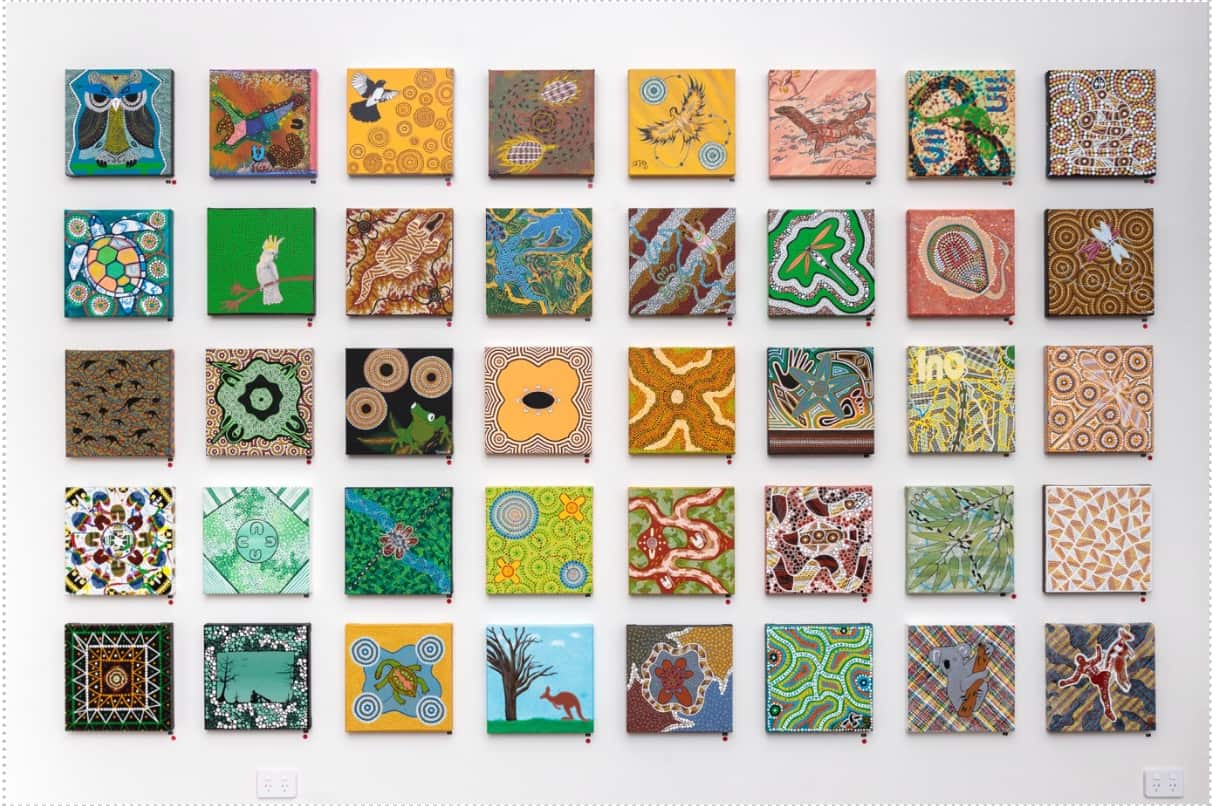
The Torch works with incarcerated First Nations people across Victoria, and its annual exhibition, Future Dreaming 2026: Voices Beyond the Walls, is now on show.
“We have predominantly mob staff and 100 per cent of our participants and artists are First Nations people from across Australia,” said Susannah Day, CEO of The Torch.
The Martu/Darlot woman says the group offers artists a way to practice culture while isolated from their family, community and Country, bridging gaps between incarcerated artists and the public through direct and unmediated storytelling.
The exhibition includes audio statements, written reflections, and digital postcards.
“There is a beautiful blend of Dreaming stories and people using totems and those stories as kind of allegories for their own lives, reclaiming culture and story," said Day.
Chafer-Smith says an important part of her work with The Torch involves providing cultural resources to help artists feel connected with their Country and culture.
“So, when I go for a visit, I might have a woman come in and say she's Gunaikurnai; our amazing in-house scholar, Joel, has already put together a whole booklet containing traditional Gunaikurnai painting styles, photos of Country, language, and work by other Gunaikurnai artists.”
When Chafer-Smith was a program participant, Joel created a Ngarrindjeri booklet to support her first artwork, which was shown in a previous exhibition by The Torch.
“It was in the 'Confined' exhibition, and while I was still in prison, my mum and my dad both went, and it was probably the first thing that they had been invited to attend in a very long time that wasn't a court case,” she said.
“So, it was a proud moment for them, and they had a fancy photo taken next to my painting by a photographer."
"It was just a really pivotal moment for me, being able to look at what I can do and produce, and maybe I might be more than just the criminal, the addict, the waste of space that the media, the community, the voices in my head were telling me I was.”
All proceeds from Future Dreaming go directly to artists, with works priced between $180 and $330, and anchored in the theme: Art that Moves. Stories that Heal.
“Last year, our artists earned $1.47 million of earned income from the sale of their work, from direct employment, from licencing fees, from fees that they have earned from running workshops,” said Susannah Day.
The Torch works with artists on remand, in custody, and in community, offering support, supplies, cultural workshops, excursions, and employment opportunities.
Ms Day says the organisation's mission is not to produce professional artists.
“Our goal is to break cycles of incarceration, both intergenerational and individual, and also to build and develop cultural leaders, because our artists tell us that they want a sense of purpose for their lives and they would like to build towards being an Elder and be respected in their communities,” she said.
According to The Torch, First Nations people make up 36 per cent of Victoria's prison population, but by supporting sustainable pathways out of the criminal legal system, the organisation contributes to a significant reduction in re-offending rates.
“Before, I would always run to unhealthy ways of coping,” said Chafer-Smith.
“Now, whenever life is good, whenever life is bad, whenever I'm experiencing an emotion, whether it be good or bad, I pick up a paintbrush and put it down on canvas.
"That keeps me sane. It keeps me grounded.”