This audio is voiced by AI and may occasionally mispronounce words.
Share your feedback and help us improve this feature. Read more about how we use AI at SBS here.
Salman Shabbir was having breakfast at his Sydney home when his phone rang in the pre-dawn hours of 15 March 2024.
On the other end of the line, in Pakistan, his sister-in-law was in a panic.
"They're here. They're asking for you. They're taking your brother," she told Shabbir.
Then an unfamiliar man came on the line and asked Shabbir to confirm his identity.
Shabbir says he could hear his sister-in-law screaming in the background, pleading with the men not to take his brother. Then the screams fell silent.
Your trusted source for staying up-to-date with the world around you. Get free daily news updates and analysis, straight to your inbox.
He was in Australia, thousands of kilometres from his family in Pakistan, a country he left 11 years earlier.
Hours later, Shabbir says, the callers demanded that he stop posting about Pakistan's politics on his X account.
SBS News has contacted the High Commission for Pakistan in Canberra for comment but did not receive a reply by the deadline.
The episode raises a disturbing question: can speaking out against a government from abroad put the people you love at risk? It is a question at the heart of transnational repression in which governments or their alleged proxies seek to silence critics beyond their borders.
In the hours after the call, Shabbir tried to piece together what had happened to his brother.
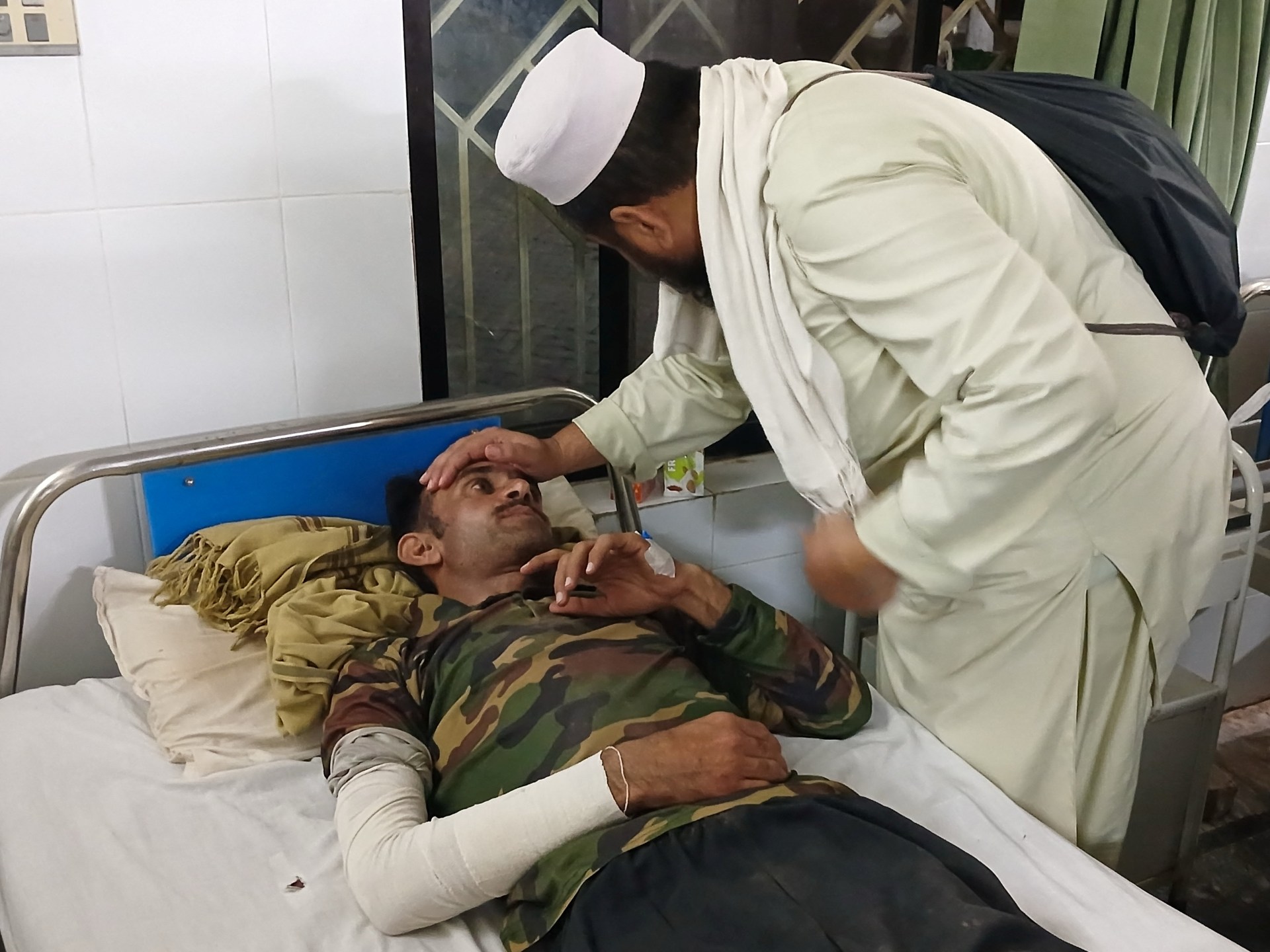
He says several uniformed men arrived in a black ute known locally as a Vigo Dala. One was from the local police; the others wore commando-style clothing and carried what Shabbir describes as "huge guns”.
"They were sent by the [Pakistani] military," he alleges.
Shabbir runs an X account called Citizen Action, which he initially used to advocate for overseas voting rights. He later turned to criticising Pakistan's elections and the treatment of former prime minister Imran Khan .
Shabbir alleges that, days before his brother was taken, Pakistan's then-information minister, Attaullah Tarar, criticised a petition he had launched. The petition addressed bodies within the European Union and highlighted the alleged mistreatment of Khan, arguing it breached human rights expectations embedded in trade agreements. Shabbir says the petition attracted more than 3,000 signatures.
Khan has been jailed since 2023 following a string of convictions and charges. He and his party, Pakistan Tehreek-e-Insaf , maintain the cases are politically motivated and aimed at keeping him out of power.
"I tweeted out that they have taken my brother, and the tweet started going viral," Shabbir says.
He says he also contacted Australia's Department of Foreign Affairs and Trade (DFAT), the National Security Hotline, the Australian Federal Police (AFP), and Pakistan's then-high commissioner to Australia, seeking help. He also spoke to a Pakistani media outlet.
Within 12 hours, Shabbir received a second call. The caller asked where Shabbir was and whether he had an Australian passport. He demanded Shabbir's X username and password. Shabbir says he refused.
The caller then warned they would continue to hold his brother if Shabbir wouldn't comply, before ending the call.
Shabbir says he received a third call about half an hour later. SBS News obtained a recording of the calls, first published by Drop Site News.
The callers demanded that Shabbir stop posting on X about Pakistan's politics, initially for three months. When he refused, he says they reduced the demand to one month and then five days.
At one point, Shabbir alleges, the men tortured his brother during the call.
"The conversation got really heated.
Shabbir's experience is not the only alleged case of transnational repression involving people in Australia.
In recent years, allegations have included death threats linked to the Cambodian government, requests to spy on a neighbour allegedly made on behalf of the Chinese government, and stalking orders attributed to the Iranian government. Other reports have involved India, Myanmar, Rwanda, South Sudan, Vietnam and other countries.
Australians have also reportedly been targeted overseas. Melbourne-based Tran Hiep is currently being detained in Vietnam on terrorism and sabotage charges, which the United States-based pro-democracy group Viet Tan, designated as a terrorist group by Vietnam, alleges are unfounded.
In another case, last year, an Australian journalist was arrested in Thailand at Malaysia's request over a criminal defamation complaint, prompting criticism from human rights groups.
In September, a Senate inquiry was launched to examine the nature, scale and methods of transnational repression, including its impacts on diaspora communities and democratic processes. The inquiry was established by a Greens motion with support from the Coalition.
Newly elected Greens leader David Shoebridge tells SBS News: "The purpose of this inquiry is to surface this and force parliament to confront the reality that there are foreign governments, bad actors in other parts of the world that are actively trying to silence and stifle political discussion inside Australia."
Shoebridge says perpetrators can be "incredibly bold" and make little effort to hide their actions.
"Sometimes it's quite overt and there is a potentially quite significant evidentiary thread."
He says he's spoken to many Australians who've experienced transnational repression, including Shabbir, who contacted him after his brother was taken.
Transnational repression occurs when states or their proxies seek to control, intimidate or punish people for their activities beyond their own borders.
Tactics range from threats, surveillance and physical violence to pressure on relatives and the misuse of legal or law enforcement systems. They can also include denying passports or consular services, refusing re-entry into the country or revoking nationality. Some acts are criminal offences, while others can foster fear and mistrust within diaspora communities.
The issue has drawn growing concern from the United Nations. More than 100 UN special rapporteurs and mandate holders expressed "deep concern" over the "growing challenge" in a statement published last month.
At the 56th session of the UN Human Rights Council in June 2024, Australia joined with more than 45 other countries in a statement condemning transnational repression as a threat to sovereignty, democracy and human rights, and calling for stronger protections for those at risk.
For people living in exile, the effects can extend well beyond their own safety, reaching family members who remain in their country of origin.
Naung Naung, a refugee from Myanmar who studies transnational repression, says Myanmar people in Australia have reported threatening phone calls, surveillance, intimidation at pro-democracy events and restrictions on passports, as well as the alleged misuse of Australian law.
In 2021, the Myanmar embassy in Canberra was accused of transnational repression after it wrote to students demanding they pledge loyalty to the military junta.
Naung says his brother was doxed because of his alleged friendship with figures from the National Unity Government, an opposition administration formed after the 2021 military coup, in their hometown. He says a photo his brother had posted online was shared in a pro-military Telegram channel with calls for arrest.
"My parents had to move to a different town, and they have not been able to come back since then to my hometown," he tells SBS News.
For years, Naung used a pseudonym online, despite living in Australia.
He remains too worried about his family's safety to connect with his parents on social media.
In a statement, the Embassy of Myanmar in Canberra denied all allegations it has engaged in transnational repression or foreign interference, calling them “entirely groundless” and saying it acts in accordance with Australian law and relevant diplomatic rules and regulations.
The embassy said it has never threatened, surveilled, or intimidated members of the Myanmar community in Australia, and that it has handled passport-related matters in accordance with applicable rules and regulations.
“It is a globally widespread phenomenon for individual with differing point of views to criticize and target one another on social media,” the embassy said.
The scale of transnational repression in Australia is difficult to establish, partly because there is no comprehensive public data tracking reported cases, according to Shoebridge.
"One of the reasons is when you go to, for example, the Australian Federal Police — and I've put many complaints in front of them about foreign interference — after a rudimentary review of it, they will say, 'Well, actually the core potentially criminal action is happening in another country and therefore they won't undertake a police investigation and therefore they don't gather the data,'" he says.
In recent years, the AFP has pursued several cases involving alleged transnational repression.
In one case, three Chinese nationals have been accused of covertly collecting information about a Canberra Buddhist association on behalf of a Chinese public security bureau.
The Australian Security Intelligence Organisation (ASIO) has also documented attempts to intimidate or harm critics living in Australia. In his 2024 annual threat assessment, ASIO director-general Mike Burgess said the Counter Foreign Interference Taskforce, established in 2020, had conducted more than 120 operations to mitigate threats to communities, Australia's political system and classified information.
The operations covered a range of foreign interference threats, Burgess said at the time.
"One involved an individual working on behalf of a foreign government who wanted to physically harm an Australian-based critic of the regime, including attempts to identify the target's home address and bank details, hiring a subcontractor to photograph the house, and requesting a quote for 'severe action' against the dissident.
"Even more recently, a foreign intelligence service tried to find an Australian who would be willing to make a different dissident quote 'disappear'."
Mubashar Hasan is a Sydney-based researcher on transnational repression whose work draws on both his own experience and accounts from diaspora communities. He was a political science professor in Bangladesh before relocating to Norway and later moving to Australia in 2020, after being forcibly disappeared by Bangladesh's military in 2017.
"I heard people crying. I heard people begging. There was no freedom to even drink water as you want. There was a 24-hour high-voltage light," he tells SBS News.
Hasan says he was held at a secret detention site for 44 days, but after his release, he could no longer feel safe in Bangladesh.
"I became a kind of refugee in my own country, because the police, the intelligence, the judge, everyone knew there was a crime against humanity that took place against me, but no-one was doing anything," he says.
SBS News tried several times to contact the Bangladeshi embassy for comment but did not receive a response.
After relocating to Norway, Hasan began hearing similar accounts from other people, some of whom were living in exile.
He later turned to researching transnational repression, taking care with how he wrote about the subject because he feared attracting the attention of authorities back home. He has since moved to Australia, where he studies the issue and works with diaspora communities.
"In my experience of engaging with the community members from Myanmar, Iran, Rwanda, South Sudan, and a few other countries, we've found mistrust within the community," he says.
Some people fear they are being watched by others in their own community; others avoid community gatherings or posting on social media, worried about intimidation or harassment.
Hasan says more needs to be done to address the effects of transnational repression on migrant communities.
"Communities here need to find confidence in the authorities that yes, if I believe that I'm facing repression, I could go somewhere, and that could be a government department, an agency or even a counselling support system where I can go and talk about it and people will listen."
In July, Independent National Security Legislation Monitor Jake Blight completed a statutory review of Australia's foreign interference laws .
He says evidence from ASIO, AFP, civil society and academics convinced him transnational repression is a "very serious and growing problem".
Blight says it can be addressed using diplomatic pressure, sanctions, and the visa system, as well as through criminal law.
"Many types of these actions are already crimes. Assaulting people, stalking people, using a telecommunication service to menace or harass: these are all offences," he tells SBS News.
"And while I found a few gaps in the offences, it's very challenging when you're talking about prosecuting people who are acting offshore."
Blight's review identified four areas for reform: creating a new offence for coerced repatriation; extending an existing foreign interference offence concerning democratic and political rights from Australians to anyone in Australia; increasing penalties for people paid to commit crimes on behalf of foreign governments; and extending protections against foreign interference to judicial proceedings, royal commissions and independent inquiries.
A spokesperson for the Department of Home Affairs told SBS News the government takes the "persistent, evolving and increasingly complex threat" seriously.
They said the government is carefully considering Blight's recommendations and "is committed to ensuring Australia's robust criminal offences remain fit-for-purpose to address the risks posed by espionage and foreign interference , including transnational repression".
In May, the government launched the Counter Foreign Interference Community Support Hub, providing online resources in more than 23 languages to help recognise and respond to foreign interference.
But Shoebridge wants the law to go further.
"I think if somebody in a third country is threatening to harm somebody's relatives, threatening to potentially destroy their house, to coerce them, to change someone's behaviour in Australia, and if you can establish that causal connection, then I think it should be a crime on the Australian statute books," he says.
Shabbir encountered the limits of Australia's response firsthand when he tried to get help after his brother was taken.
"On the day I called DFAT, they asked me to call the National Security Hotline, who asked me to call AFP, who asked me to call DFAT," he says.
"It was a bit of ping-pong, to be honest, but in the end, I was forwarded a flyer that was made by Senator [David] Shoebridge's office, and it had guidelines on how to register such a case, and something called the category called foreign interference."
Eventually, Shabbir says he got a call from NSW Police, who discussed the case and conducted a risk assessment. An officer gave him a case number and told him to call if anything changes.
His brother was ultimately released within a day, and Shabbir continues his online activism, but he wants to see greater action to protect Australian citizens from alleged transnational repression.
Like Shoebridge, he wants Australian authorities to recognise what he calls the "extraterritorial proxy loophole" — where threats made through relatives overseas fall outside the reach of Australian law because the conduct occurred offshore.