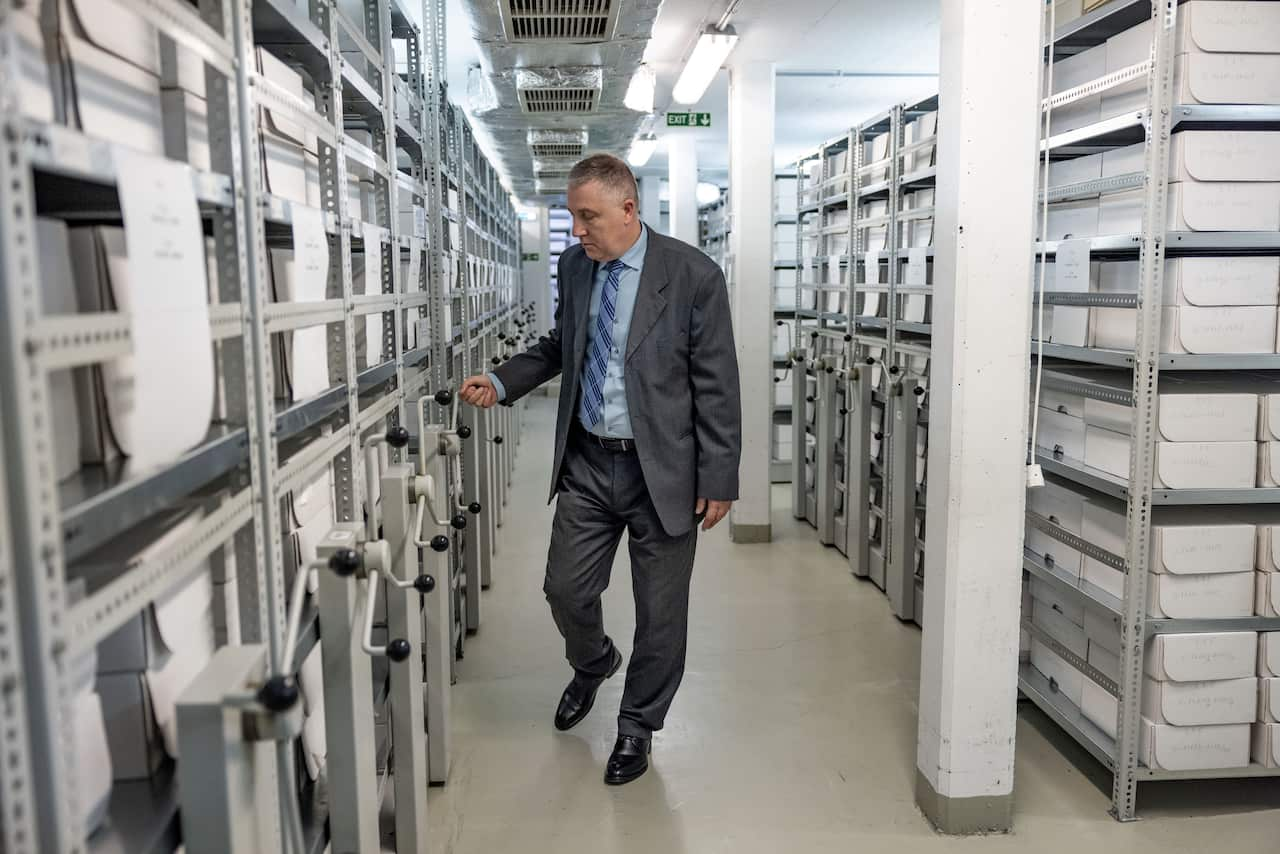
Hungary has released tens of thousands of communist-era secret police records in a publicly searchable online database, exposing the names of people who informed on fellow citizens during decades of one-party rule.
A database containing names and records of an estimated 50,000-60,000 former informants was released on Wednesday.
Politicians, religious figures and television personalities are among those whose names appear in the registry, although its head said most were not public figures.
"Following today's disclosure, a great many families will be confronted with information that is difficult for them to bear," Hungary's Prime Minister Péter Magyar said, asking people to treat the disclosure with "dignity and humanity".
Additional files will be uploaded by February 2027, but the files are far from complete, as many were destroyed in 1956 during Hungary's anti-Soviet uprising and also between 1988 and 1989.
Your trusted source for staying up-to-date with the world around you. Get free daily news updates and analysis, straight to your inbox.
More than 36 years after the collapse of communism in the country, the release fulfils a pledge by Magyar to make the records public and help Hungarians confront their country's totalitarian past.
Although its communist rule ended in 1989, Hungary has delayed widely opening the files until now.
So far, apart from researchers, ordinary people had been limited to viewing records about themselves or close relatives. From Wednesday, anyone can search the online database for names linked to the former state security services.
During the Cold War, secret police agencies in Eastern Europe relied on collaborators drawn from the public, often via blackmail, threats or rewards.
Individuals, often recruited through coercion, were tasked with reporting on colleagues, friends and even relatives for signs of disloyalty towards the regime.
Secret police employed a total of 150,000 informants over four decades, according to estimates from the state security archives, but records survive for only about a third.
"A significant proportion of the records from the late 1970s and 1980s are incomplete, largely because these records were still active files" at the time of regime change, said Bendeguz Gergo Cseh, the head of the archive.
Historian Laszlo Eorsi from the 1956 Institute Foundation told Agence France-Presse the release was "better late than never".
"We are getting access to much more information than before about who the authorities have recruited and how the security apparatus worked back then," he said.
Debates over opening the archives have dogged Hungarian politics since the fall of communism.
In 2002, weeks after becoming prime minister, socialist politician Peter Medgyessy became embroiled in scandal after it was revealed that he had worked as a communist-era secret agent.
The case prompted fresh calls for transparency, and parliament adopted a law in 2003 allowing individuals who had been monitored to learn who reported on them.
Medgyessy isn’t the only Hungarian leader who was approached to be an informant.
Former Hungarian prime minister Viktor Orbán said on Tuesday that communist secret services had tried to recruit him as an informer while he was doing his military service, but he refused, and later became the target of heavy police surveillance.