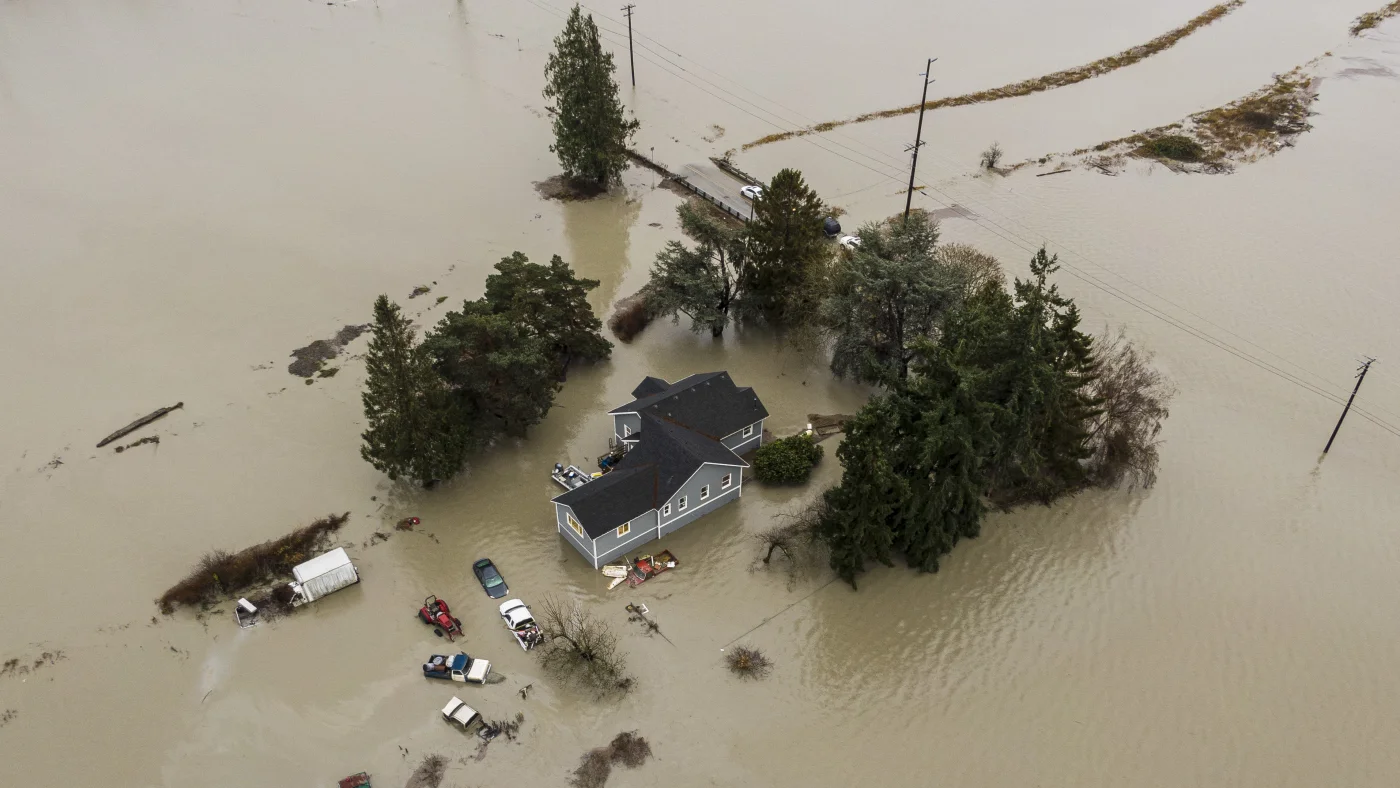
Wild weather is a way of life for people living along the coast in the Philippines, Taiwan, China and Japan. But the last few months have been extraordinary.
A wave of intense and, at times, unpredictable storms exacerbated by the El Niño weather pattern has killed dozens, shuttered major airports and wiped out crops and infrastructure across a swathe of East Asia.
In October, nearly all of Taiwan shut down as a monster storm big enough to engulf the island of 23 million roared towards its north-eastern coast. Equivalent to a category five hurricane, Typhoon Champi's 295km/h (193mph) winds had the power to flatten homes and whip up destructive waves.
Thankfully it did not make landfall in Taiwan, skirting past the island while dousing it in rain. But it had far-reaching impacts : hundreds of flights were cancelled in Hong Kong, Taiwan and Japan. In the Philippines' Batanes archipelago, seaside highways shut as huge waves crashed onto the shore, and in southern Japan's Okinawa islands, power was cut to 15,000 homes.
El Niño is a naturally occurring climate phenomenon in which warm waters pooling in the eastern Pacific and altered wind patterns drive extreme weather events around the world.
It happens around every two to seven years, lasting for around a year. This year's El Niño, which the UK Met Office has forecast to be the "strongest in living memory", is likely to last until February or March.
In June, Japan watched two storms - Typhoon Mekkhala and Severe Tropical Storm Higos - race towards its eastern coast simultaneously, forcing one million people to evacuate. In July, Tropical Storm Narra grazed China's southern coast along Guangxi, submerging villages and displacing tens of thousands.
August brought Super Typhoon Dolphin, which churned across the Pacific for 16 days - before slamming into eastern China, triggering heavy floods and dozens of casualties .
Later that month Typhoon Saudel made landfall in three south-eastern Chinese cities over one week, shutting transport networks and forcing thousands to evacuate.
The Pacific Ocean, heated to record levels by El Niño, is now brimming with typhoon energy, according to the Accumulated Cyclone Energy (ACE) metric which measures the total intensity of a season's storms. This year, the ACE reading for South East and East Asia is forecast to be nearly double the 30-year average.
El Niño also affects wind patterns and in this case, that means typhoons are tending to form further east than usual. They are also becoming stronger as they remain over warm waters for longer.
The Pacific can be likened to someone "burning with fever", says Ana Liza Solis, head of climatology at the Philippines' national weather bureau. "It can go into convulsions soon," she said at a press briefing in Manila in September.
Forecasts suggest the worst may not be over. Last month, sea surface temperatures in the equatorial Pacific - the area monitored by the Japan Meteorological Agency for its El Niño predictions - soared to 4C above normal, the highest since records began in 1949. The previous record - 3.6C - was set in December 1997.
China's climate agency has warned of sea surface temperatures continuing to rise over the next three months because of the El Niño.
Despite typhoon season usually peaking around September to October, this is likely to raise concerns across a region that has already been battered by back-to-back storms.
In August, Typhoon Chan-Hom baffled storm watchers in Japan by crossing the country from east to west, as opposed to the usual south-to-north trajectory. Japan's well-resourced and prepared authorities were able to evacuate people swiftly, but this would be far more challenging in some neighbouring countries.
To get a better picture of how rising temperatures could amplify the risks, Manila-based climatologist Rafaela Jane Delfino and colleagues simulated the effects of warmer conditions on the Philippines' most recent monster storms, including 2013's Super Typhoon Haiyan (Yolanda) which killed more than 6,000 people.
They arrived at what she describes as "very, very scary findings": higher temperatures increased total accumulated rainfall by 26%. It's a devastating prospect in a country where flooding from monsoon rains and some 20 tropical storms per year has emerged as one of the main disaster risks.
In recent years, floods have paralysed entire cities for days, and tired of the annual ordeal, Filipinos have taken to the streets to protest against corruption which they say is gnawing away at millions of dollars from flood-control projects.
Delfino, in an article on the University of the Philippines website, insists leaders and officials must gain a better understanding of climate hazards if communities are to be better prepared.
Countries are bracing for the immediate impact. Japan has urged citizens to stockpile food and essentials for the typhoon season , and to secure outdoor furniture that could become deadly projectiles when typhoon winds hit. China has asked local officials to identify vulnerable areas and is upgrading its warning and monitoring systems.
The Philippines and its South East Asian neighbours are preparing for disruptions to food production, especially rice, and have increased support for famers, including the provision of fertilisers.
But what happens in the long term is less clear. The window for governments to act on El Niño is "closing", the United Nations Development Programme in Asia and the Pacific said recently.
"How severely a community experiences an El Niño is decided years in advance, by where roads and settlements are built, how water is managed, who is covered by social protection and whether public budgets have room to absorb a shock.
"Every El Niño tests the resilience we have built; this one should also drive us to build more," it added.