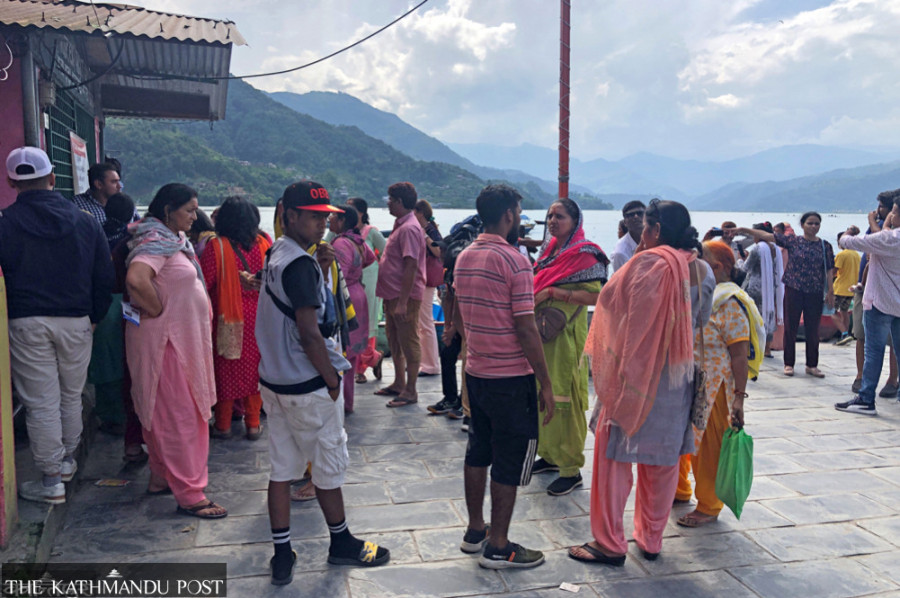
In October, tourist arrivals from India, traditionally Nepal’s largest tourism source market, fell 30 percent, year on year. The decline is particularly concerning because the neighbouring country offers Nepal one of its most accessible and sustainable tourism markets. At a time when geopolitical tensions, particularly the war in West Asia, threaten international travel patterns, India represents an enormous opportunity. The two countries share cultural, religious and linguistic ties, have an open border and enjoy relatively easy connectivity. Nepal does not need to spend heavily convincing Indian travellers to discover an unfamiliar destination. It needs to make their journey safe, affordable and convenient.
But that is precisely where Nepal has failed. A flight between the two countries takes less than an hour and a half, yet travelling by air can be prohibitively expensive for many Indian families. Overland journeys, meanwhile, are frequently hampered by poor road conditions, landslides and inadequate services.
Indian visitors are not a homogeneous market. They include religious pilgrims, family holidaymakers, honeymooners, adventure seekers and business travellers. Nepal must develop targeted products and marketing strategies for each segment. Pilgrimage tourism alone demonstrates the economic potential. Every season, Nepali operators handle tens of thousands of Indian and non-resident Indian pilgrims travelling to Kailash Mansarovar, with arrangements often involving 24,000 to 25,000 visitors. These journeys support hotels, restaurants and guest houses in gateway cities such as Nepalgunj and mountain hubs such as Simikot in Humla. Guides, porters, drivers and other local businesses also depend on this traffic. Disruptions to routes through Kerung and the Simikot-Hilsa corridor therefore hurt a much wider tourism supply chain.
The August floods have further damaged confidence. Indian travellers, particularly those travelling in large family groups or organised pilgrimage parties, are sensitive to safety concerns and transport disruptions. They need reliable roads, predictable travel schedules, suitable accommodation, vegetarian food and family-friendly facilities.
The government and the Nepal Tourism Board must move beyond inviting social media influencers to promote destinations. Influencer campaigns can generate visibility, but they cannot substitute for sustained destination marketing and improvements in infrastructure. Nepal should launch targeted promotional campaigns in major Indian cities. Tourism boards, airlines, hotels and tour operators should jointly organise roadshows, travel fairs, pilgrimage promotions and familiarisation trips for Indian travel agents and media.
More importantly, Nepal must communicate clearly that its major tourism destinations are accessible and safe. It should provide regular updates on road conditions, trekking routes, airports and disaster-affected areas. A credible, regularly updated travel information system would help tour operators make informed decisions and reassure prospective visitors.
Nepal has experienced sharp fluctuations in Indian arrivals following the Covid-19 pandemic, political tensions, natural disasters and aviation accidents. Yet the market has repeatedly demonstrated its potential. In May this year, Nepal received 40,782 Indian visitors by air, the highest monthly figure on record. That momentum should not be allowed to disappear because of inadequate planning and poor crisis communication.
The October figures should prompt a rethink of Nepal's tourism promotion strategy. Neglecting the neighbouring market would be a costly mistake. Nepal does not have to capture a large share of India’s outbound tourism market to make a difference. Attracting even 0.5 percent of Indian travellers would bring millions of potential visitors and provide a significant boost to the economy. The opportunity is enormous. What Nepal needs now is a coordinated strategy to turn geographical proximity into a lasting tourism advantage.