Jim Chalmers has fronted 17 press conferences after rate hikes as Treasurer, with a familiar script. ( ABC News: Ian Cutmore )
Jim Chalmers is a man stuck in an endless loop. Time and again in his four and a half years as treasurer, he has had to front up after bad news and spin the unspinnable.
His scorecard, across 41 post-rates press conferences: 17 hikes, 21 holds, three cuts.
That's an awful lot of times to reach for the same, gloomy script. And the talking points are becoming gratingly familiar. We know you're doing it tough. We're trying to help in a responsible way. Oh, and this isn't our fault.
Not that there's anything wrong with repetition. Politics works on the "vomit principle": to make sure your message is heard, you need to say it over and over again until it makes you want to vomit.
But after nearly five years of high inflation and high interest rates, the treasurer and his colleagues are at risk of triggering the wrong kind of nausea. Their challenge now is to find something fresh to stay.
That is difficult when the economic story hasn't changed much. The entire tenure of the Albanese government has taken place in a state of suspended animation, as it grapples with both the dual pain of the inflation disease and the harsh medicine of interest rates.
There is little room to manoeuvre. The billions spent on short-term cost-of-living help have done little to ease the anger of struggling voters, while opening the government up to opposition accusations that it is making the problem worse.
Ministers do not believe they could have done things any other way and are struggling to see what else they may cut from a federal budget heaving under the weight of long-term pressures in health, defence and social programs.
Meanwhile, the shocks keep coming. In the first wave four years ago, the Ukraine war and a global supply crunch arrived at precisely the worst time for Australia and other countries who were still in economy-stimulating mode after the pandemic.
This time, the Middle East war has combined with a spectacularly ill-timed artificial intelligence investment boom, which may yield fruit in years to come if the optimists are to be believed, but which for now is mostly a capital-heavy cash splash.
On both occasions, one great big hammer blow from the universe has pushed up the level of demand in our economy just as another big hammer blow from the opposite direction has pushed down what we are able to supply.
None of these can reasonably be seen as the government's fault. Yes, it's true the list of new spending decisions made under Chalmers's watch includes some expensive items we could have done without. A little less cash could have meant a little less pain.
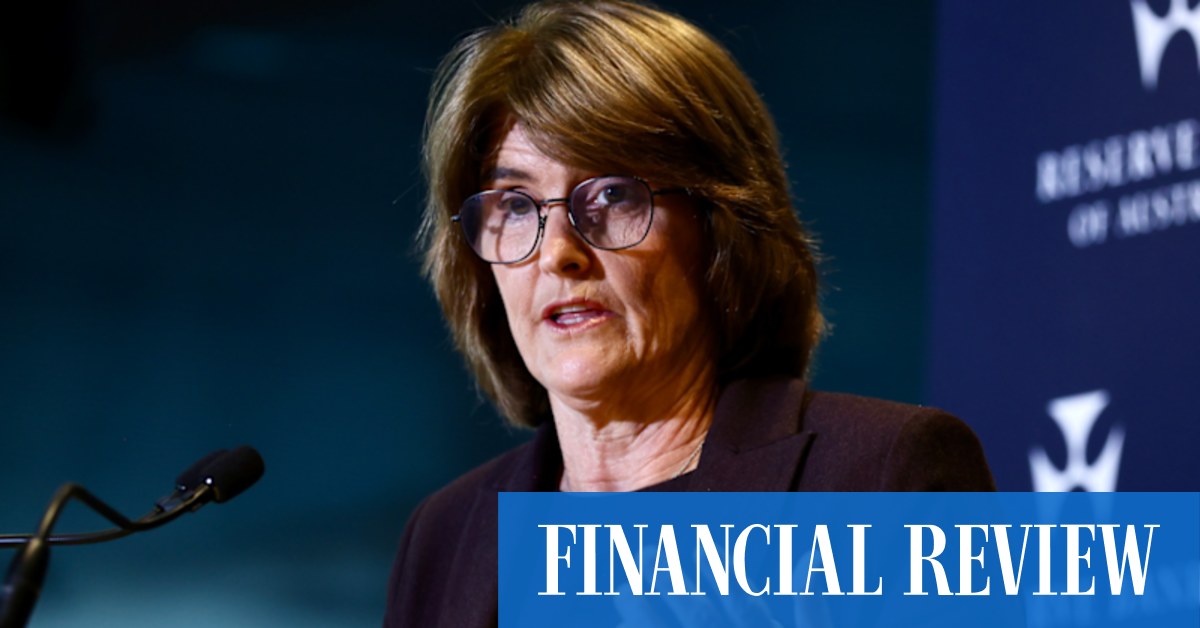
But no set of government decisions, however courageous, could have spared us from all pain. Inflation, as Reserve Bank Governor Michele Bullock puts it, makes us poorer. Our dollars don't go as far. Excising it from our system hurts, whichever way you slice it.
All of which is to say that there's nothing wrong, as such, with the government's talking points. It's not wrong to say that the root causes lie elsewhere. It's not wrong to say that it's a fine balance between helping and hindering. And it's not wrong to say it sucks.
But the missing ingredient, of which the government is in desperate need, is hope.
In its first term, when they endured a similar cost-of-living slump, ministers could reasonably hold out hope that the clouds would part before the election. And they did. Three rate cuts created a well-timed sense that the worst was over.
This time, hoping for the cycle to turn will not be enough, not least because the curveballs from a volatile world won't stop coming.
Around the world, the mainstream politicians faring best are those who have been able to bend the volatility to their advantage. As the saying goes: don't waste a crisis.
There are signs the government has grasped this. Both Chalmers and Albanese have framed the budget's changes to the capital gains tax, negative gearing and trusts as their answer to voter anger at the "broken status quo".
The policy has been contentious, and Chalmers has taken to remarking in the past week that he believes he has "lost some paint" over the political risk.
"I think any treasurer taking on difficult reforms, which have been neglected for too long, in our tax system, in our housing market and elsewhere — no reforming treasurer expects there to be some kind of unanimously positive reaction," he said on Tuesday.
Whether Chalmers is actually relaxed about the backlash, and whether his colleagues feel the same, is unclear. But if the lesson from the tax decision, by far Labor's riskiest decision, is to take fewer risks, the outcome will likely be a hiding to nothing.
The same is true for the Coalition, which has adopted a bold proposal to index tax brackets but has baulked at suggestions from prominent former politicians to raise GST. None of these ideas are universally popular, and all of them create losers.
But the Coalition needs a fresh script every bit as much as Labor; its lines about the government's "spending addiction" are just as worn out from overuse.
With the federal budget under sustained pressure, and inflation likely to constrain the choices of governments for some time to come, a big risk grounded in political conviction might be the only way for either party to break their doom loop.