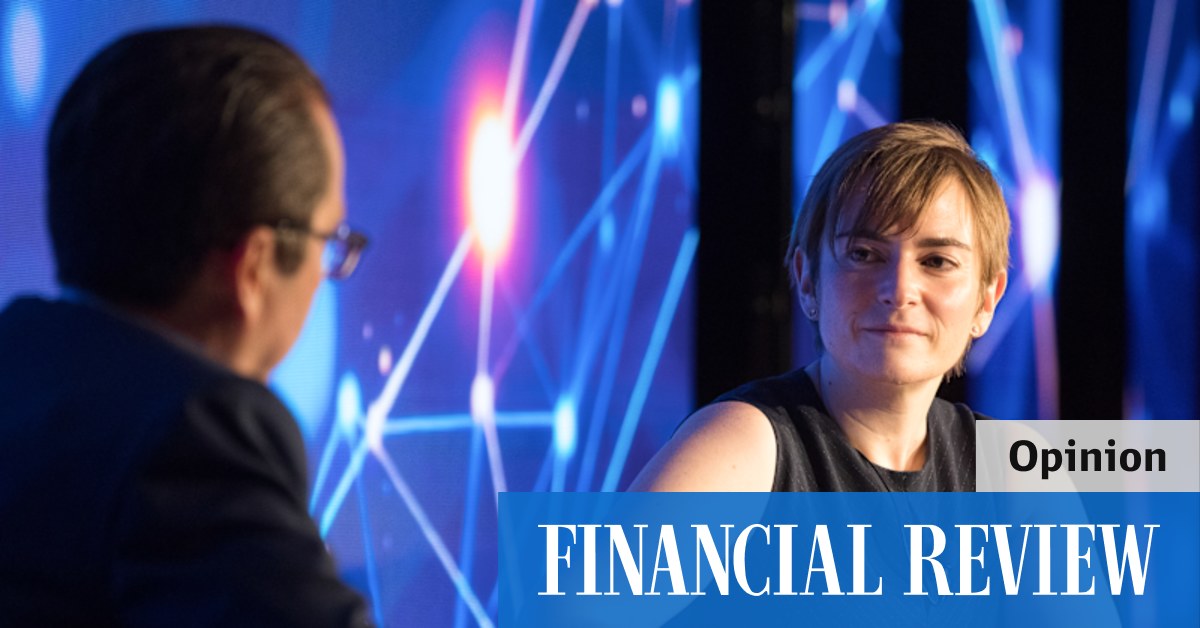
RBA governor Michele Bullock. ( ABC News: John Gunn )
In a split decision, the nine members of Australia's Reserve Bank's board have decided to deliver Australia's highly-indebted households a fifth — but hopefully final — interest rate hike for 2026.
The board will meet again on December 7 and 8, but any future hikes are more likely to be delivered in the new year.
Official forecasts released by the RBA on Tuesday show workers can expect their real pay packets to shrink this financial year, with wages rising just 3.4 per cent compared to a forecast 3.7 per cent rise in prices.
And we'll end the calendar year with a headline inflation rate of 4.5 per cent — well above the RBA's target of 2 to 3 per cent, revised up from a previous forecast of 3.6 per cent compiled only three months ago.
Higher oil prices, along with stronger-than-anticipated price pressures at home, have the Reserve Bank thinking it will not get inflation back to within its target band of between 2 and 3 per cent until the second half of next year.
It's a gloomy picture for households.
Mortgage minimum repayments are were already eating up 10 per cent of household disposable income ahead of this week's decision, figures from the Reserve Bank's Statement on Monetary Policy show.
Once the full effect of September's and this week's rate hikes are factored into repayments, Aussie home loan payments will be sitting at the highest level since the pre-Global Financial Crisis period in late 2007 and 2008.
Indeed, visions of 2008 — the last time interest rates were this high — now dance in our heads.
If you remember, mortgage holders began 2008 under a freshly elected Rudd government and groaning under the weight of high interest rates.
The Reserve Bank, then under Glenn Stevens, ratcheted up interest rates to try to dampen the inflationary pressures created by a Chinese-fuelled boom in Australian commodity export prices.
This filled government coffers with cash, which in turn was funnelled to households via successive annual tax cuts.
Back then it was prime ministerial hopeful Kevin Rudd lambasting the Howard and Costello government and declaring "this reckless spending must stop". His future treasurer Wayne Swan would go on to declare that the previous government had "let the inflation genie out of the bottle".
The economic landscape today is very different, however, to those pre-GFC mining boom days.
The Australian economy has already cooled and expected to grow by a meagre 1.6 per cent this year, slowing to 1.3 per cent next year.
The magnitude of house price falls has surprised even the Reserve Bank, which notes the impact of both higher interest rates and recent tax changes.
Much of the inflationary pressure today is not explained by a run-away strong economy, but rolling external price shocks, most notably for oil, which the RBA fears are becoming increasingly entrenched in people's expectations for future price rises.
So, will a strategy of crunching borrowers work to bring price pressures to heel?
Well, the RBA is keen to let you know that crunching borrowers' cash flow is only one of four major "channels" through which higher interest rates work — and the least potent at that.
There's also the exchange rate effect by which the Aussie dollar is bolstered compared to other countries, which, in turn, makes imported goods less expensive.
Then there is the "inter-temporal substitution" channel, which is a fancy way to say that higher interest rates encourage people to save more and borrow less, dampening demand.
Added to that is home owners the "wealth effect" whereby higher interest rates contribute to lower house prices than otherwise, just generally making homeowners (including those with no mortgage) feel less rich.
It's a calculated strategy to cool the rising cost of living — albeit one which will fall most heavily on the shoulders of Australian mortgage holders.
Will it work? We're about to find out.