Trending
Prev Story
Next Story

Could your head shape be an Alzheimer’s risk? Scientists are looking

The Australian Financial Review (AFR) •
November 03, 2026 • 12:34 AM
1
1 reads 0 reactions

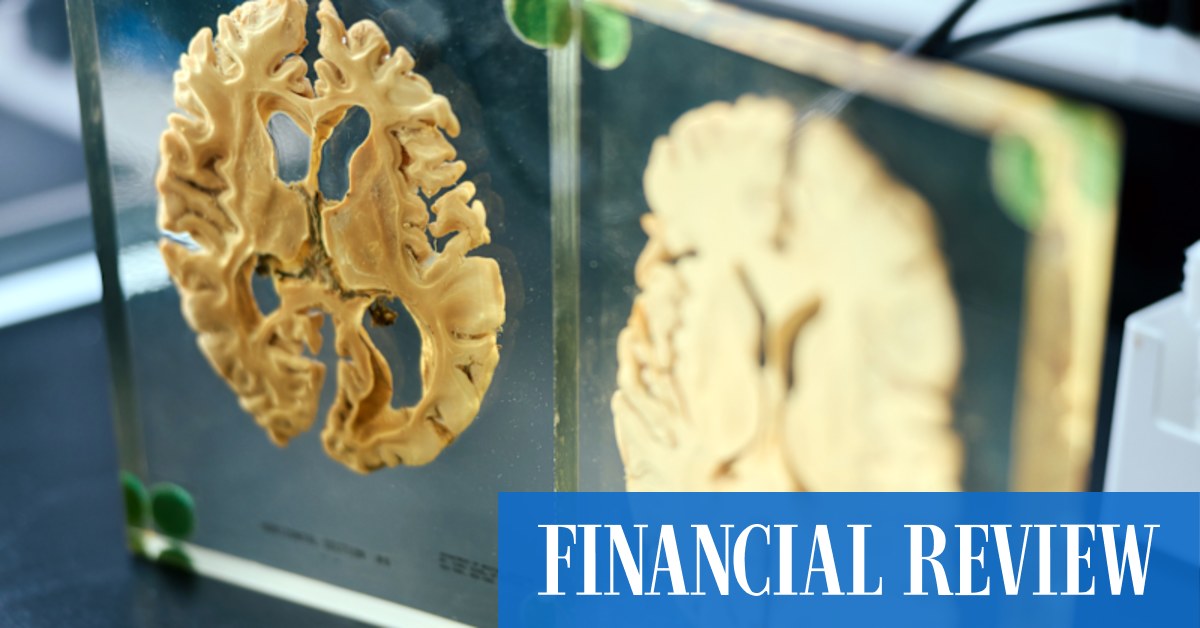
Could the geometry of our brains increase the risk of the disease? It’s a provocative question, but one that some scientists are beginning to explore.

Could your head shape be an Alzheimer’s risk? Scientists are looking

The illnesses that rob people of the ability to think, remember and create identity often begin, with pinpoint precision, in specific parts of the brain. It is one of the biggest mysteries about brain diseases: why do they start where they do?

Neuroscientists call this phenomenon, in which specific areas and cells in the brain are damaged by a disease while others are unaffected, “selective vulnerability”. Figuring out why it happens – and how to prevent or stop it – is a holy grail of the field.

Gift articles to anyone you choose each month when you subscribe.

Prev Swipe Story Next

Same Story from Other Publications

Compare how 4 other independent news outlets reported on this story.

4 Publications
The Verge
1d ago
The US should lose its measles elimination status, scientists say.

The US should lose its measles elimination status, scientists say.

Scientists who analyzed public data for The New York Times concluded the highly contagious virus is circulating in the US 26 years after being declared eliminated. An international panel will make an official designation on Tuesday, but it apparently won’t change the Centers for Disease Control and Prevention’s approach. [Link: The U.S. Has Lost Its Measles-Elimination Status, Data Suggests | https://www.nytimes.com/2026/11/10/health/measles-united-states-elimination-rfk.html | The New York Times]

#scientists
Compare →
Ars Technica
6d ago
The Bantu expansion changed Africa. Scientists are still tracing how.

The Bantu expansion changed Africa. Scientists are still tracing how.

Genes and archaeology are revealing how Bantu speakers spread across much of Africa.

#scientists
Compare →
The Guardian
6d ago
Want to have a better chat? Scientists say the secret is ‘pink noise’

Want to have a better chat? Scientists say the secret is ‘pink noise’

The most enjoyable conversations strike a balance between exploring a topic and pulling in fresh ideas, study finds

#scientists
Compare →
CNBC World
1w ago
Could CRISPR cure rare diseases before birth? Scientists are getting closer

Could CRISPR cure rare diseases before birth? Scientists are getting closer

Researchers are exploring fetal gene editing to treat rare genetic disorders before they cause lasting damage.

#scientists
Compare →

Related Stories

Health & Wellness
Build #2611