House prices are falling across Australia, but some regional areas are still seeing double-digit growth.
Australia's housing downturn has stretched into its seventh straight month, with national home prices falling 0.3 per cent in October.
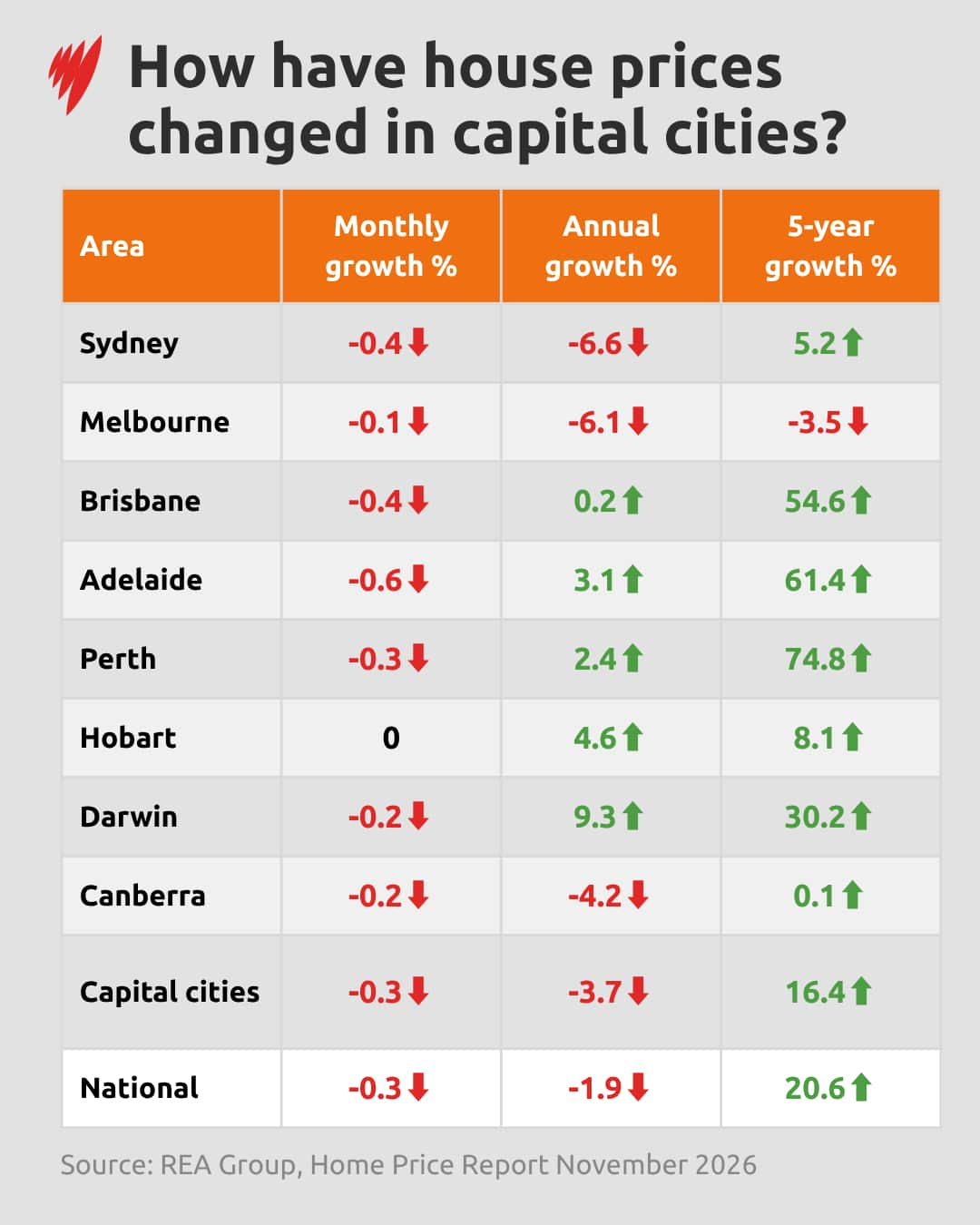
The latest REA Group Home Price Report shows home values are now 4.3 per cent below their March peak and 1.9 per cent lower than a year ago, as higher interest rates continue to weigh on borrowing power and buyer demand.
Capital cities are leading the decline, now 5.4 per cent below their peak and 3.7 per cent lower than a year ago.
But the downturn isn't playing out evenly across the country.
Your trusted source for staying up-to-date with the world around you. Get free daily news updates and analysis, straight to your inbox.
While headline figures point to a broad slowdown, some regional markets continue to record strong annual growth, even as buyers pull back elsewhere.
"There's quite a bit of diversity under the headline numbers," Tim Lawless, research director at property analytics firm Cotality, told SBS News.
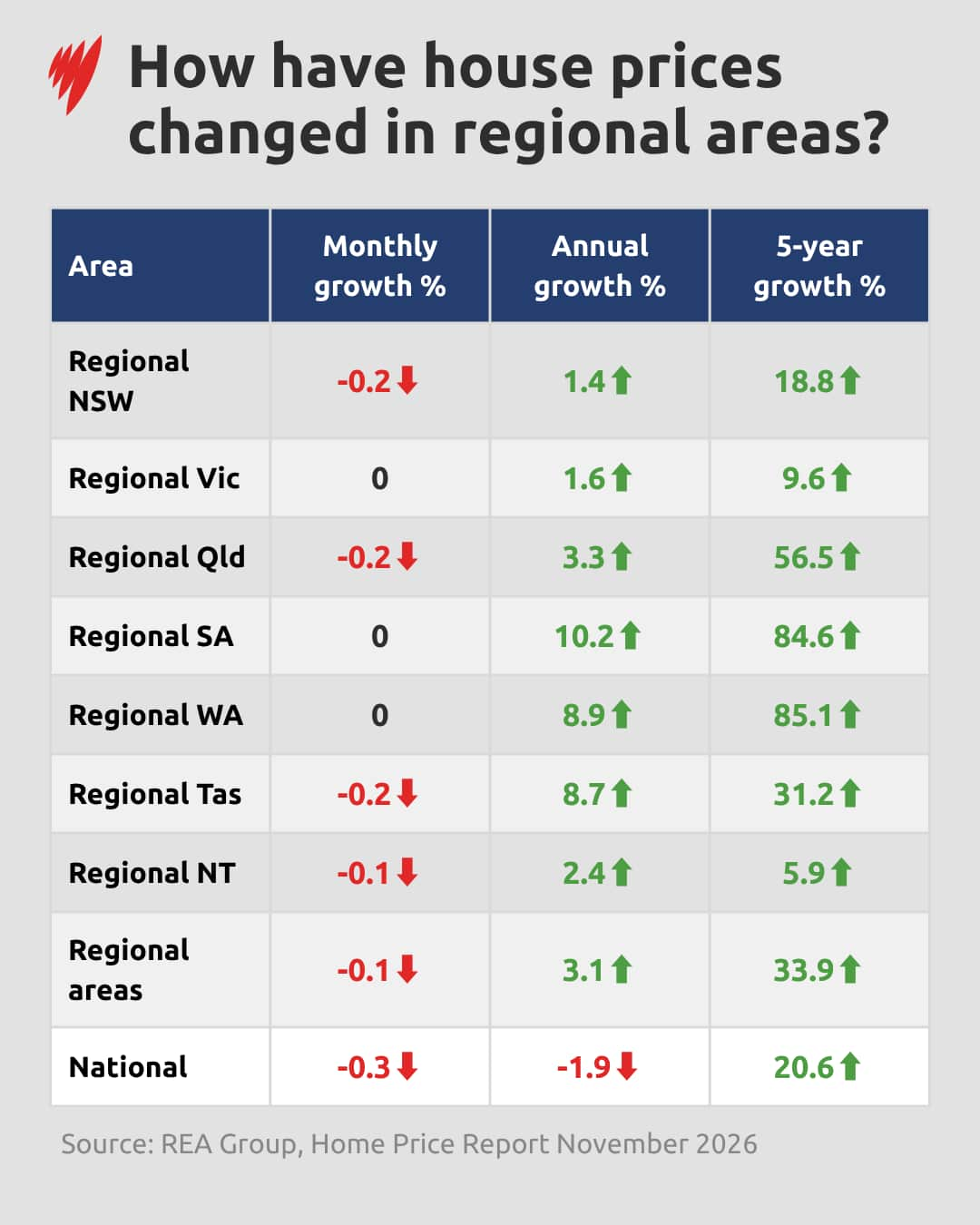
Regional home prices fell just 0.1 per cent in October and remain 3.1 per cent higher than a year ago, outperforming capital city markets despite the broader slowdown.
While regional markets have not escaped the downturn entirely, they have generally held up better than the capitals, said REA Group senior economist Eleanor Creagh.
"Regional areas in general have so far been more resilient than the capital city markets," Creagh told SBS News.
Several of the regions posting the largest price increases are concentrated in SA and WA.
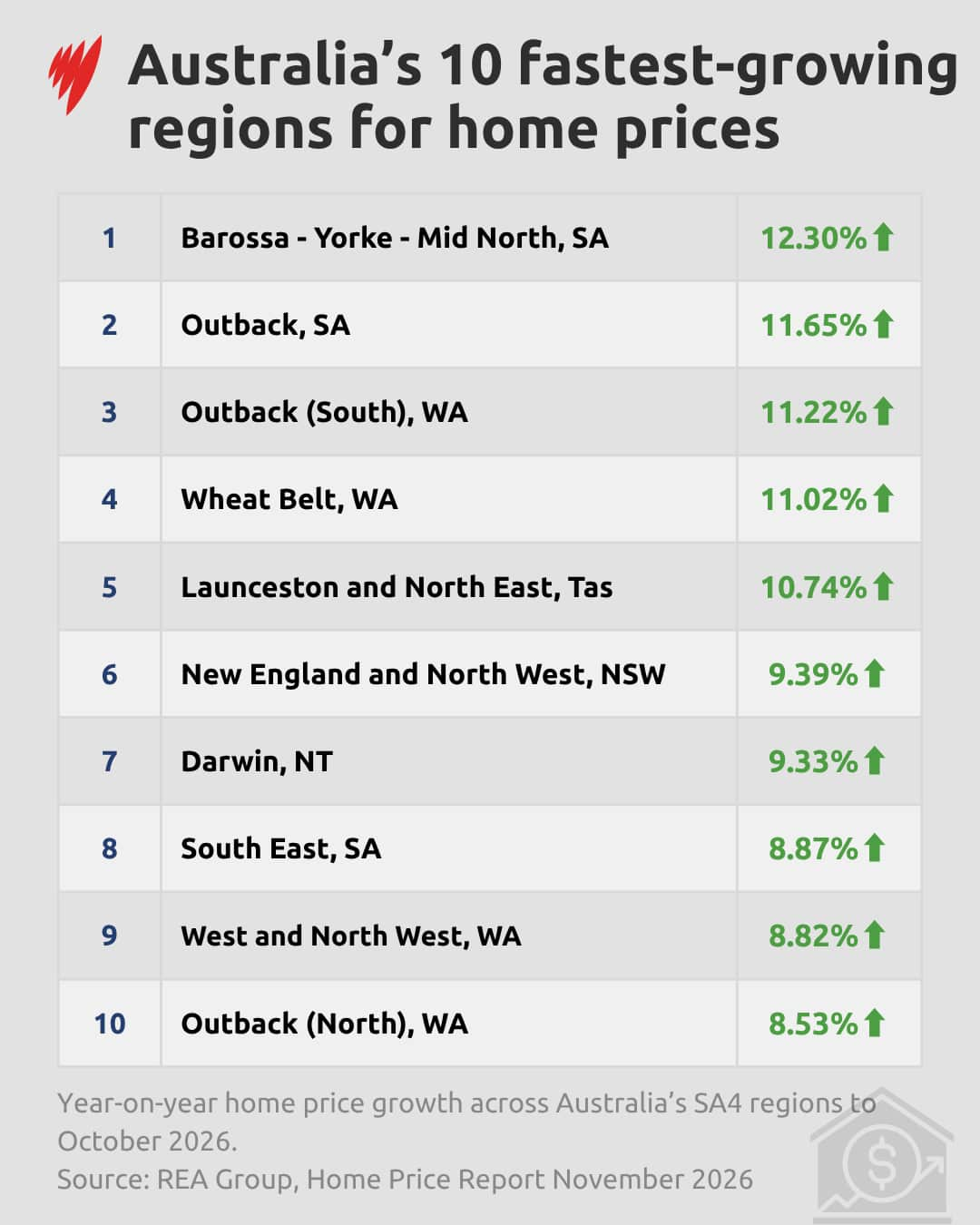
The Barossa, Yorke and Mid North region in SA topped the annual growth rankings, with prices up 12.3 per cent over the past year.
It was followed by outback SA (11.65 per cent), outback WA (11.22 per cent) and WA's Wheat Belt region (11.02 per cent).
Tasmania's Launceston and North East region rounded out the top five, recording annual growth of 10.74 per cent.
Creagh said many of the best-performing regions shared a common advantage: affordability.
"They're largely regional areas that continue to really benefit from comparative affordability advantages," Creagh said.
She pointed to regional SA, where median home values sit around $530,000, significantly lower than many regional NSW markets that have seen steeper declines.
That affordability buffer has become increasingly important as interest rates have climbed and borrowing power has fallen.
The difference between city and regional markets is stark over longer timeframes.
Regional home prices have risen 3.1 per cent over the past year, 33.9 per cent over five years and 108.4 per cent over the past decade.
By comparison, capital city prices are down 3.7 per cent over the past year and have risen 16.4 per cent over five years and 56.6 per cent over 10 years.
Regional South Australia recorded the strongest annual growth among the states, with prices rising 10.2 per cent over the year.
Western Australia followed at 8.9 per cent and Tasmania at 8.7 per cent.
Queensland recorded annual growth of 3.3 per cent, while the Northern Territory (2.4 per cent), Victoria (1.6 per cent) and NSW (1.4 per cent) posted more modest gains.
Over five years, regional WA and SA have been Australia's standout performers, with prices increasing 85.1 per cent and 84.6 per cent respectively.
Economists say the same factors driving prices lower nationally are helping support demand in some regional markets.
Lawless from Cotality described the current correction as "very much a demand-driven downturn", with higher borrowing costs reducing what many buyers can afford.
As household budgets come under pressure, buyers are increasingly adjusting their expectations and looking at cheaper locations.
Creagh said many prospective buyers had effectively been pushed down the property ladder.
"We know that as interest rates have risen substantially, maximum borrowing capacities for potential buyers have also reduced substantially," she said.
"More affordable regions and property types remain an option for a broader pool of buyers, so are less impacted by interest rate rises."
Lawless said affordability pressures have become one of the dominant forces shaping the market.
"Affordability and serviceability challenges are just pushing more demand towards lower price points," he said.
While many regional areas are still recording growth, Creagh cautioned they are not immune from broader housing market pressures.
"High mortgage repayments and reduced purchasing power are also weighing on demand in many regional areas, but relative affordability, local conditions, stock on the market, and differing demand conditions in some regional areas mean there's much more resilience there than in capital cities."
The trend does not necessarily mean housing has become more affordable.
"Higher interest rates have reduced how much they can borrow, and the decline in home prices hasn't been enough to offset that," Creagh said.
"Better buying conditions don't mean better affordability."
— With additional reporting by Hannah Kwon.