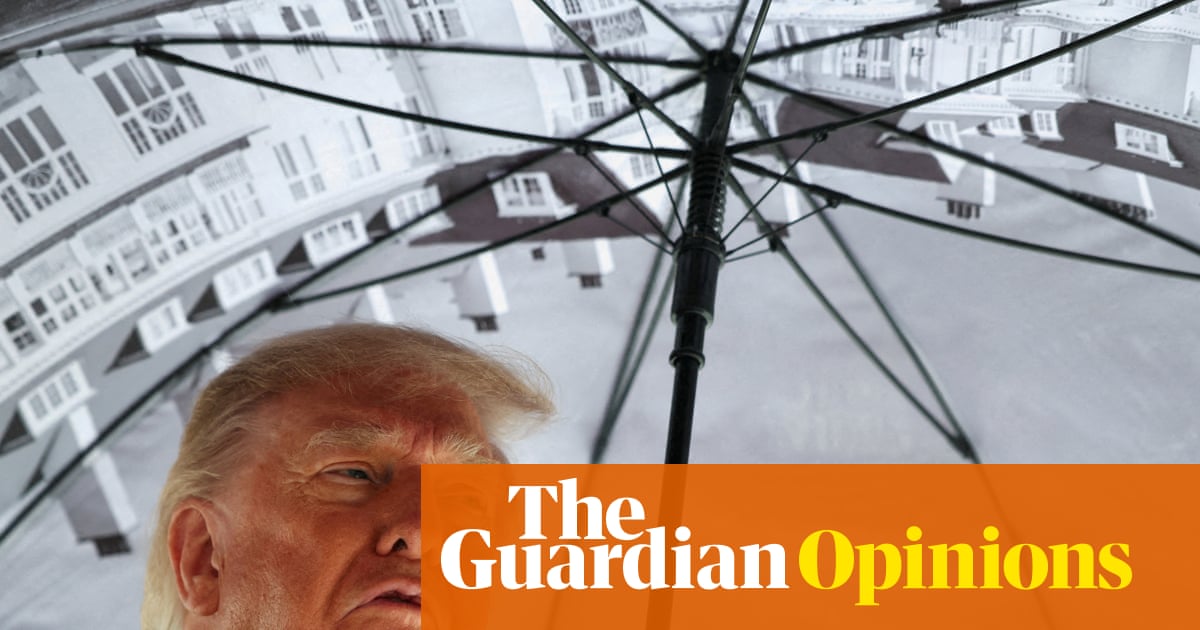
As Americans head to the polls on Tuesday in the much-anticipated midterms , the record number of voters identifying as independent could prove decisive for control of the US Congress and state legislatures .
Nearly half of US voters – as many as 117 million adults – now identify as politically independent, with the two major parties, Democrats and Republicans, jockeying for their votes.
At the same time, independent or third-party candidates win few federal or state seats. The Democratic and Republican parties have dominated US politics, from state legislatures to the US Congress and the presidency, for generations.
“The whole [electoral] system is built to frustrate the independence of voters,” says Rick Bennett, the former Republican Party chair in Maine, where he is running to become only the third independent governor in the state’s history.
Bennett’s candidacy runs headlong into one of the most stubborn contradictions in US politics: While millions of eligible voters reject Republican and Democratic labels , far fewer will cast their ballots for independent candidates.
“For decades, candidates outside the Democratic and Republican parties have struggled to achieve [a high] level of support,” political scientist AJ Simmons said. “[But] 2026 is shaping up to be one of the strongest election cycles for independent candidates in recent memory.”
According to the Pew Research Center’s annual National Public Opinion Reference Survey, 44 percent of US adults identify as politically independent. This is in contrast to 29 percent who identify as Democrat and 28 percent as Republican.
But there is a caveat: Most self-described independents still gravitate towards one of the major parties. Independents who express absolutely no partisan leaning make up only about 7-10 percent of the total electorate.
These “true” independents are sought after by candidates because they are persuadable, the core of the coveted so-called swing vote in a deeply divided and partisan electorate and political system.
In the 2026 midterm elections, 52 percent of likely independent voters are supporting Democrats, while 39 percent back Republicans, polling firm Marist suggests.
Frustration with President Donald Trump is permeating the midterm electoral landscape, with independent respondents more than three times as likely to say their vote is mainly against the president, and 28 percent saying they are voting for “change”.
The US does not legally restrict elections to two parties, and many local officials are not party-affiliated.
But for more powerful federal and statewide seats like Tuesday’s House of Representatives and Senate races, the winner-take-all electoral system and single-member congressional districts work against outsiders and can discourage voters from backing them.
Even substantial support for a minor party is rarely concentrated enough in one district to win a congressional seat.
Voters, too, can unknowingly reinforce the system.
Polling trends and data further suggest that voters who identify as or prefer an independent will often instead back a Republican or Democrat they see as more politically viable. Voters are also reluctant to support “spoilers”, who may peel away votes from one of the two major-party candidates.
Bernard Tamas, a political scientist at Valdosta State University who studies third parties, said that although laws are often blamed for keeping third-party candidates off the ballot, “there is very little evidence that legal barriers are undermining these candidates”.
The real barrier, he says, is money.
The Democratic National Committee (DNC), which heads the Democratic Party, raised nearly $252.3m during the 2026 midterm campaign cycle while the Republican National Committee (RNC) took in about $341m.
Unlike other democracies, the US “offers virtually no public support” or funding to political parties and does not set limits on campaign spending”, Tamas said. Independent candidates “raise very little money” and are less well known by voters.
Lesley Shedd, a Republican strategist, told Al Jazeera that the surge in voters identifying as independents obscures their support for one of the two major parties.
“When somebody says they are independent, they really are a Republican or Democrat but they maybe don’t agree with the party on absolutely every issue,” Shedd said. “Or they [just] don’t want to feel as though they are part of the culture of the swamp of [Washington] DC.”
The real test for independent candidates is persuading Americans to vote for them, not just a “protest vote” against the system. And voters are reluctant to cast a “wasted” ballot, Simmons said, given the most competitive candidates are Democrats or Republicans.
There are efforts to support independent candidates. The Independent Leadership Council, launched in July by former Democrat-turned-independent Senator Joe Manchin, provides donors and campaign resources for independent congressional candidates. The project has raised more than $10m.
But the longer-term test, analysts maintain, is whether independent candidates can be viable across multiple races and election cycles.
There is currently one independent in the US House and two in the US Senate. None holds a state governor seat.
Bennett, the independent Maine candidate, is one of just 11 independent or third-party candidates vying for gubernatorial or US Senate seats whom Simmons expects to surpass the 5 percent vote threshold often used to gauge electoral viability.
Additionally, Simmons sees several ways independent congressional hopefuls could throw the midterm map into disarray, mainly in two key states: Nebraska and Montana.
He identified Nebraska’s independent Senate candidate Dan Osborn, a 51-year-old Navy veteran, as the “most likely alternative candidate to win” across the country, given the race has been deemed a toss-up by RealClearPolling, an election analysis website.
The Nebraska Democratic Party chose not to field a replacement nominee after its candidate withdrew, leaving Osborn as the principal challenger to Republican Pete Ricketts.
In Montana, Simmons sees another opening for an independent, though the race is complicated by the possibility of an unpredictable “spoiler” effect.
Seth Bodnar, a former University of Montana president and Army veteran, is running against Republican Kurt Alme for the US Senate seat. He is being backed by the Independent Leadership Council, which is also supporting California Congressman Kevin Kiley, who left the Republican Party to seek re-election as an independent.
Democratic US Senate candidate Alani Bankhead could siphon off support from the same centre-left and anti-Republican pool of voters that Bodnar draws from, risking a three-way vote and potentially leaving the Republican to collect the spoils.
“Montana is the second most likely,” Simmons said, adding that “if that were to happen, the Republican Party would be having an extraordinarily bad night”.
In Idaho and South Dakota, independent candidates are not forecast to win, but they are expected to make Republicans pay for treating those seats as safe, diverting money, campaign time and attention to races Republicans may have otherwise taken for granted.
The greatest impact of independents may be the pressure they have historically brought to bear on the major parties to “implement a new policy or govern more effectively”, Simmons said.