
This audio is voiced by AI and may occasionally mispronounce words.
Share your feedback and help us improve this feature. Read more about how we use AI at SBS here.
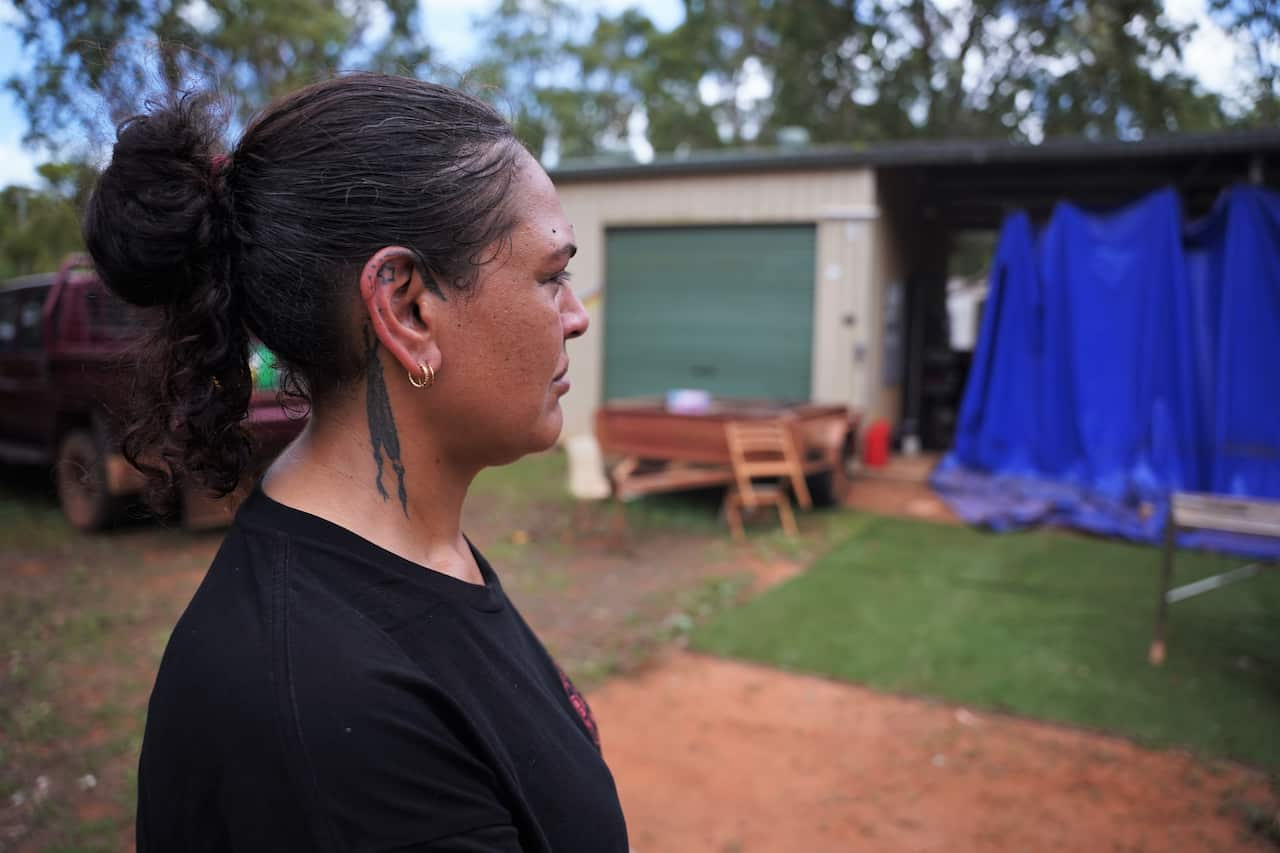
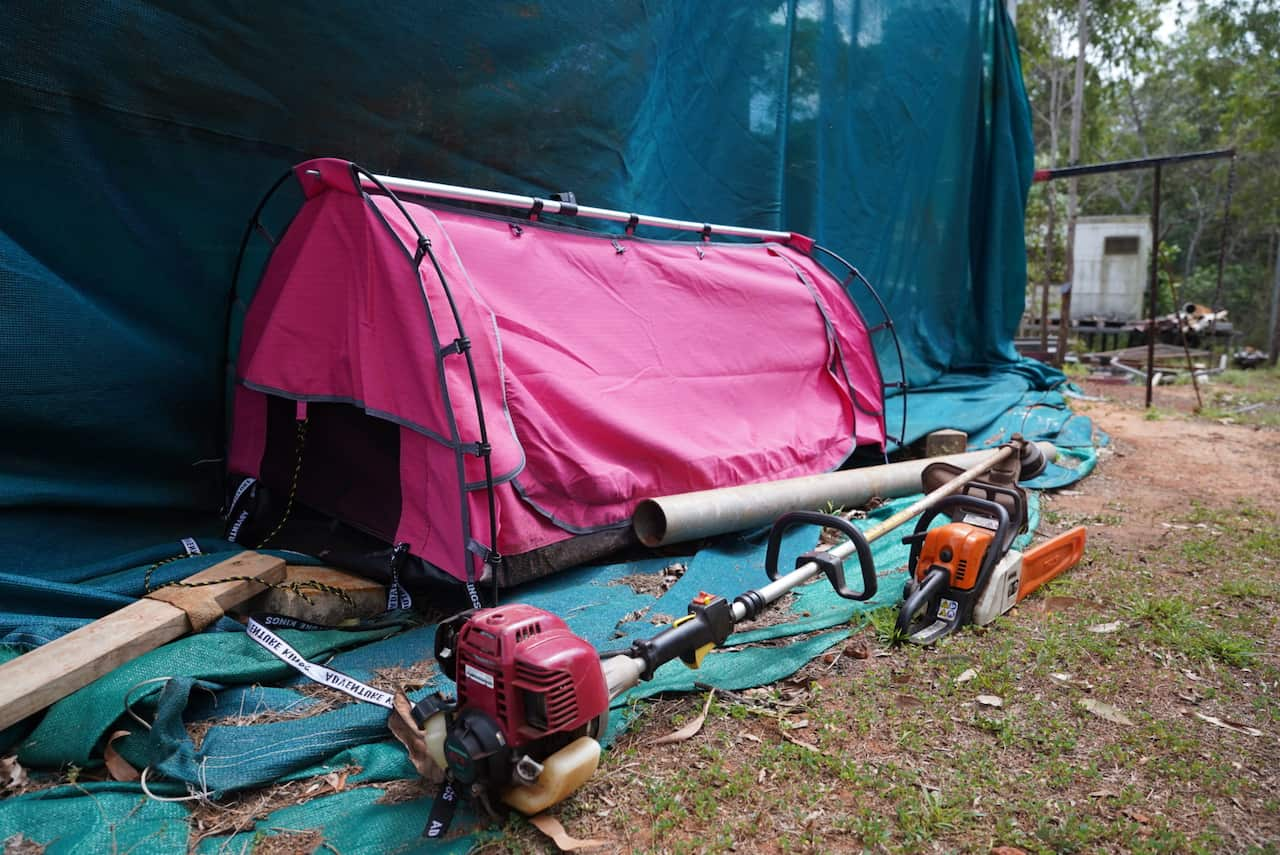
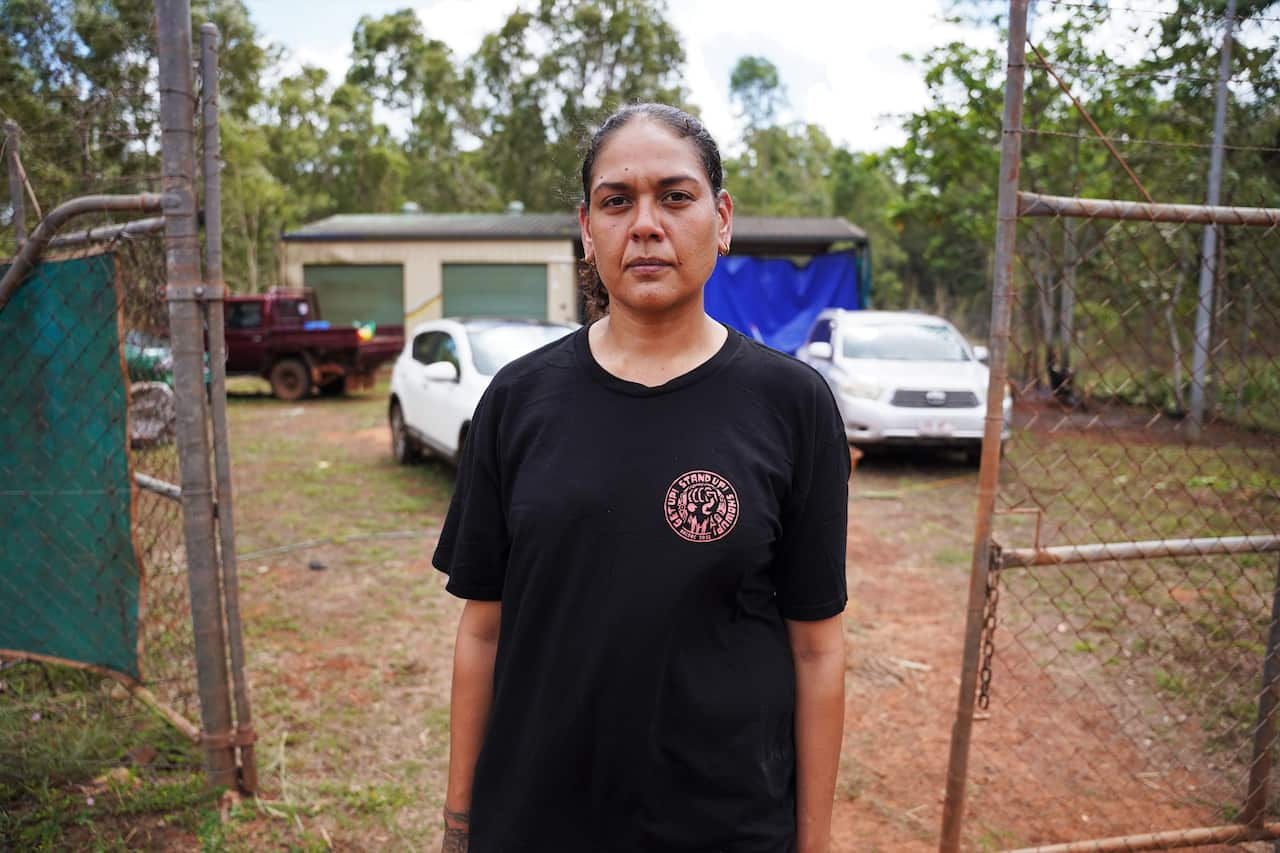
For the past three months, Rebecca Williams has been living in a storage yard without power on the fringes of Far North Queensland.
A broad tarp covers her belongings, and at night she sleeps in a pink swag, which she says offers little shelter from the weather and the noise of trucks hurtling down the nearby highway.
"None of this is secured, so some nights I feel very unsafe," she tells SBS News.
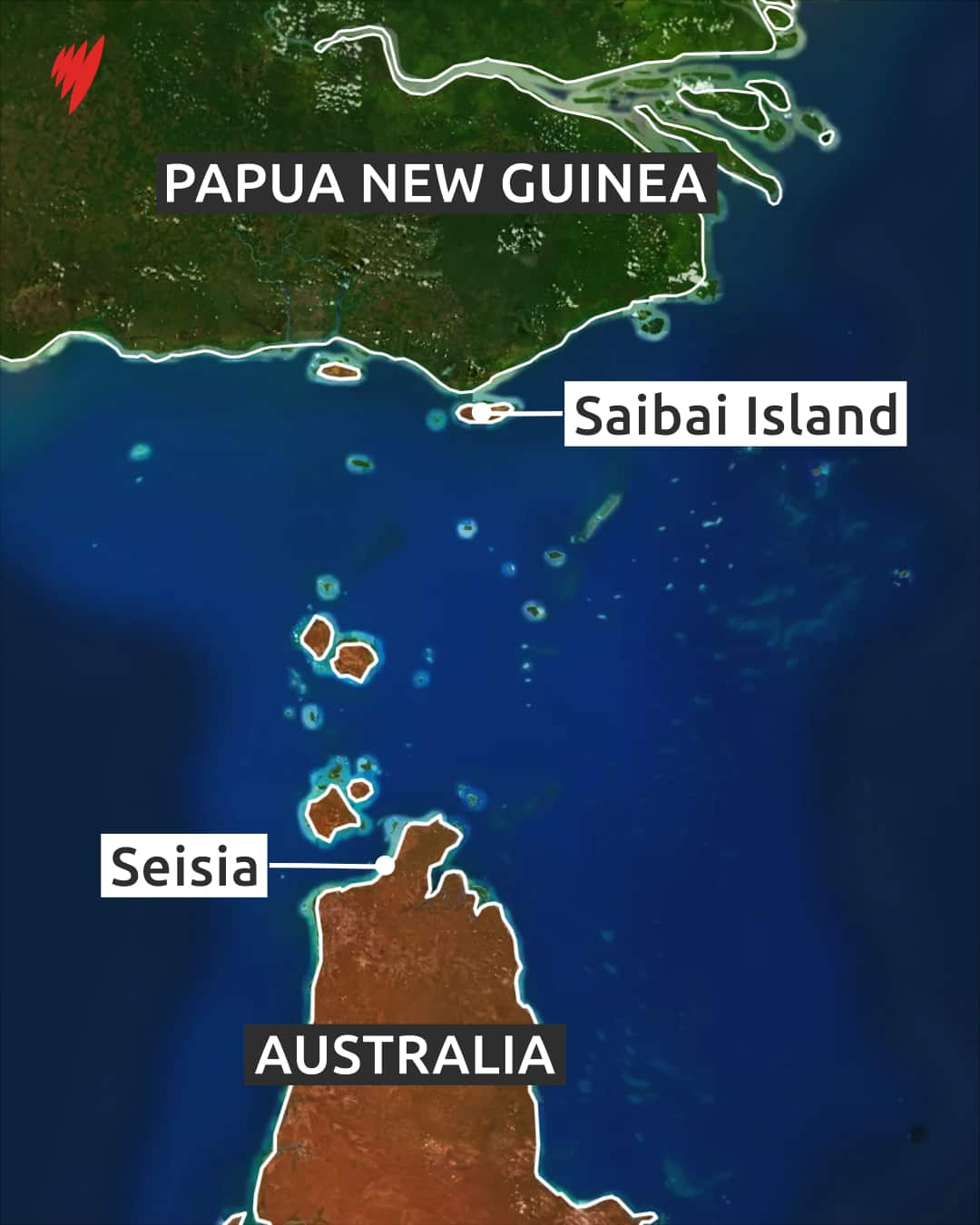
Her makeshift home sits on the outskirts of Seisia, a small coastal town of around 300 people on the Cape York Peninsula. Rising costs and encroaching seas have created a perfect storm for residents, who are struggling to access affordable and climate-resilient housing.
Your trusted source for staying up-to-date with the world around you. Get free daily news updates and analysis, straight to your inbox.
Williams, 35, is a proud Angkamuthi Seven Rivers woman and works full-time in environmental protection. She says she has been living in "survival mode" for far longer than she’s called the compound home.
She's been waiting for a rental for more than 11 years.
"I've been told it's based on not having kids. I'm not a priority," she says.
A chronic housing shortage has gripped the community for more than a decade, driven by undersupply, prohibitively high construction costs and overcrowding. Many in the community have no choice but to rely on government-funded housing stock.
While the Queensland Department of Housing is ultimately responsible for social housing across the state, Seisia's local applications are processed by the Northern Peninsula Area Regional Council (NPARC), which also delivers and maintains government-supported homes. But the waitlist is long, forcing some community members to consider leaving their ancestral homeland.
After a decade of couch surfing, living in overcrowded family homes and even taking jobs on boats for two years, Williams moved into her family’s storage yard in June.
As SBS News was preparing to publish this story, Williams received confirmation from the Department of Housing that it would provide her with emergency accommodation. She expects to move into a government-supported two-bedroom rental with her younger sister in the coming weeks.
She estimates around 100 people in Cape York's Indigenous community are currently waiting for a house — that’s around one in three residents.
"There's a whole heap of us. We're being told to move down to Cairns, but people who are from here, we haven't imagined ourselves living anywhere else," she says.
Across the Cape York Peninsula, communities like Seisia face similar housing challenges.
As the climate warms and sea levels rise, they are contending with another major threat to their way of life.
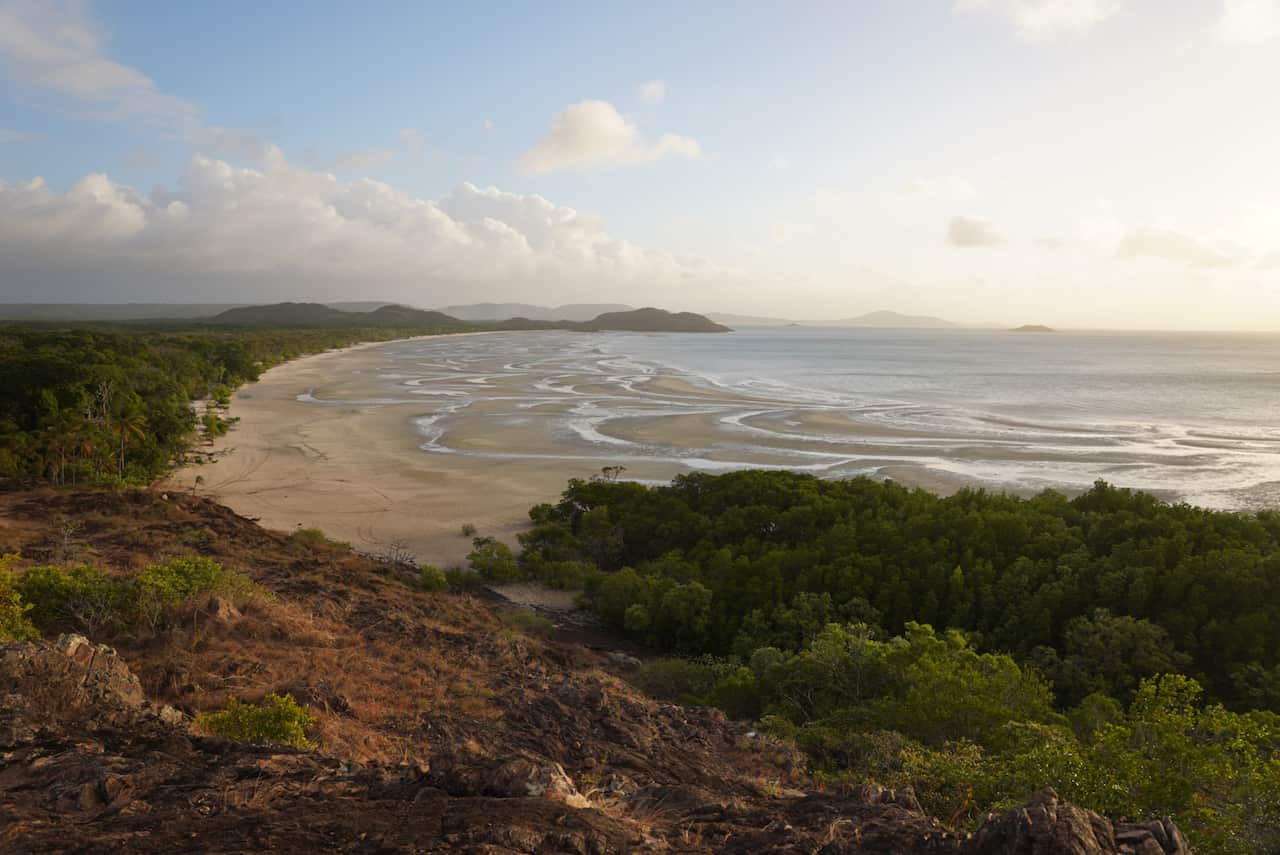
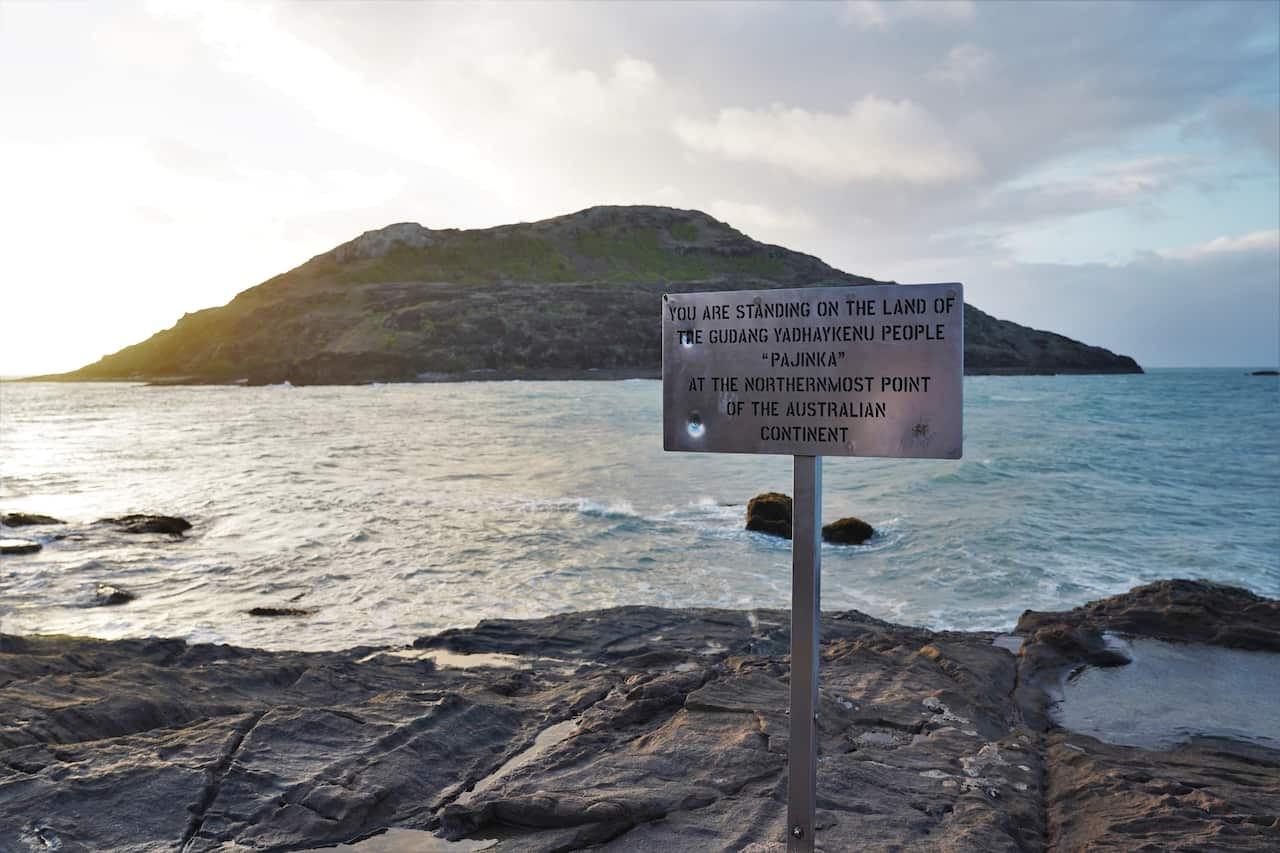
Roughly 1,000km north of Cairns, Cape York is bordered by the Coral Sea to the east, the Gulf of Carpentaria to the west and the Torres Strait to the north. Its low-lying, tropical landscape is carved by 21 major river systems, making it home to one of the largest freshwater networks in the country.
Much like the broader Torres Strait region, its topography makes it particularly vulnerable to coastal erosion.
It's difficult to predict exactly how much sea-level rise will inundate low-lying areas around the Torres Strait, but the Intergovernmental Panel on Climate Change has identified the region as among the most vulnerable places in the world.
A sea-level rise of just 50cm could make flooding across Australia 300 times more likely, according to the Australian government. By this estimate, a flood that once struck every hundred years would be expected several times a year.
This is a source of deep concern for residents of Cape York, who have witnessed the long-term impacts of flood events and seen First Nations communities displaced.
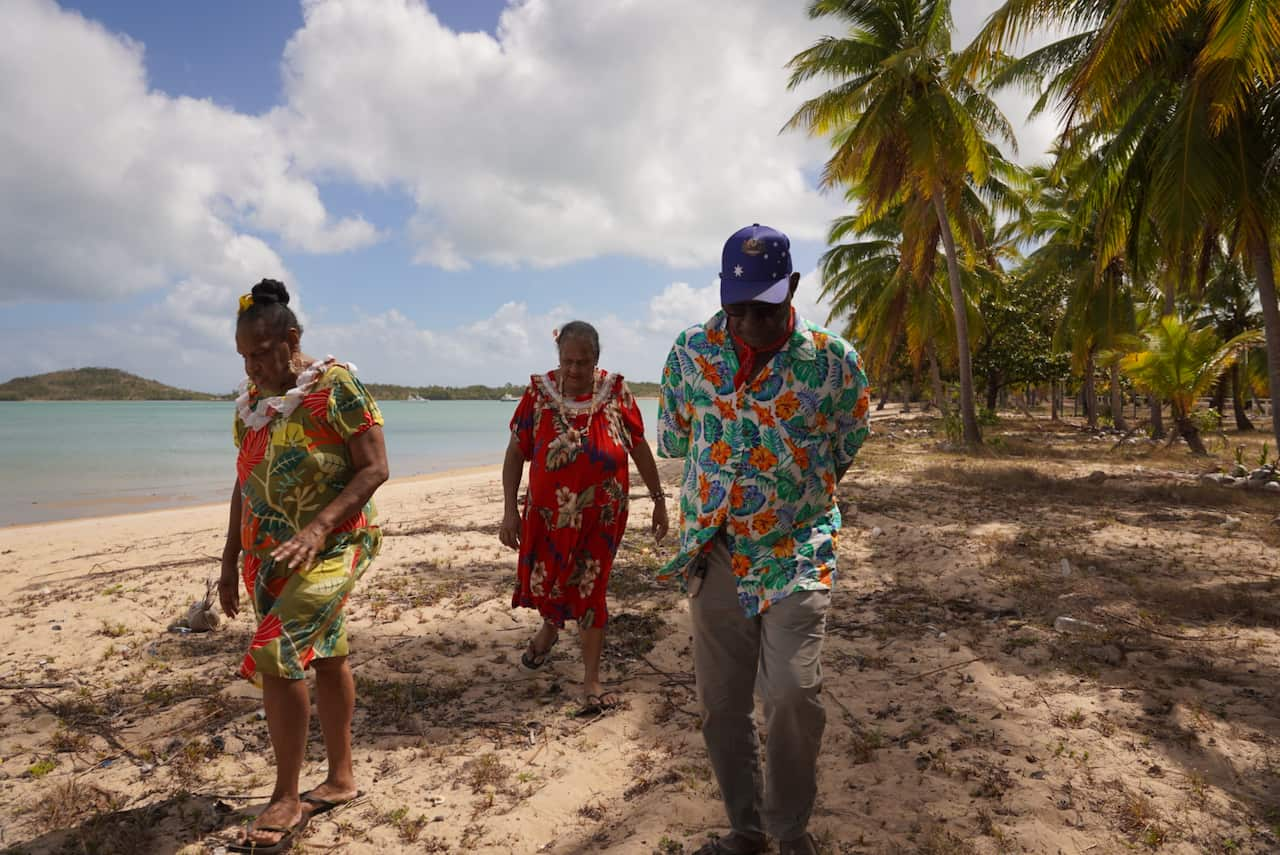
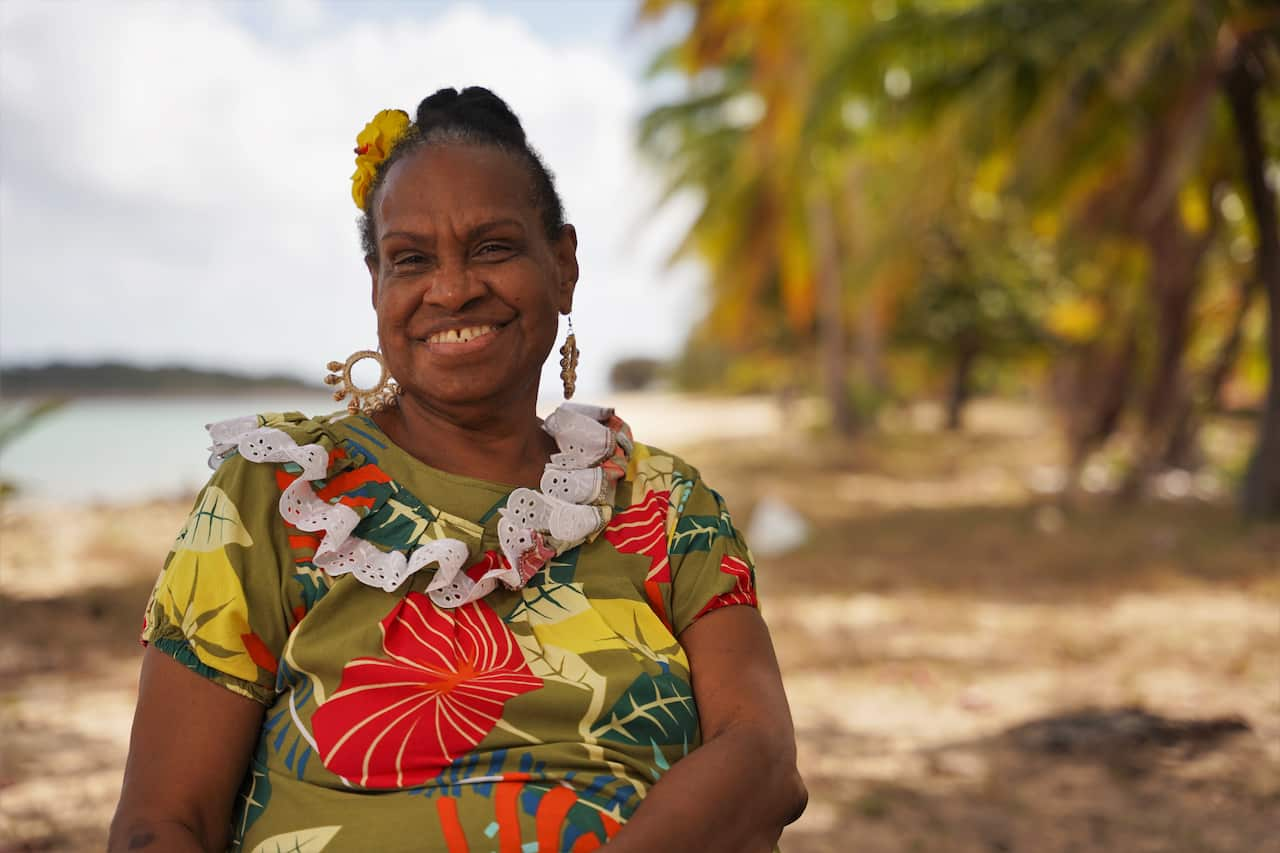
Sitting on the shores of Seisia Beach, Torres Strait Islander Elders Leonora Adidi and Jenson Warusam recall the "difficult decision" their grandparents made to leave their home in Saibai, a low-lying island in the Torres Strait just a few kilometres off the Papua New Guinea mainland, to establish a new community on the northernmost tip of Australia.
"This was a community that was built by the blood, sweat and tears of our people," Adidi tells SBS News.
The catalyst was a major flooding event, explains Adidi, who is also a linguist and cultural educator from the Suy-Baydham Clan of Bamaga and Saibai.
In 1947, unnatural king tides and heavy monsoon rains struck Saibai, flooding the entire village.
"There wasn't enough fresh water and also fresh food from the gardens to sustain the population," says Adidi, a linguist and cultural educator from the Suy-Baydham Clan of Bamaga and Saibai.
Sabai's chief, Bamaga Ginau, proposed a bold relocation idea.
"He put forward his plans that we should all move out and abandon the island," Warusam says.
The community was split: some wanted to leave, while others chose to stay.
Seven families representing seven clan groups sailed south to Cape York in pearl luggers, the M.V. Millard and M.V. Macoy, and established a temporary settlement in the abandoned army camps at Muttee Heads, on Cape York’s west coast. In 1948, the Queensland Government gazetted 44,500 acres (18,008 hectares) as a reserve for Torres Strait Islanders.
More families followed, clearing land and building new houses, until the settlements were renamed Seisia and Bamaga.
"When my grandparents moved here, there was a freak tide, probably due to some underwater event," Adidi says.
In The World's News, a discontinued newspaper formerly published in Sydney, a 1952 headline reads: "Disappearing Island Defies Science", referencing the unnatural tides that inundated Saibai.
But Adidi fears that a one-off event is becoming alarmingly regular.
"It's now getting closer and going into areas where they've never been affected by salt water," she adds.
While the term climate migration is often associated with people moving from disappearing Pacific islands — such as the recent relocation of Tuvalu citizens to Australia — some historians, climate advocates and members of the Cape York community view Saibai's displaced community as Australia's first internal climate migrants.
Today, the Northern Peninsula Area (NPA) of Cape York remains a gateway to the Torres Strait. Residents are deeply connected to their Saibai roots, sharing the same clan groups, cultural knowledge and totemic systems of the crocodile, or Koedal.
But nearly eight decades after the catastrophic floods that displaced several Saibai families, some NPA residents fear history is repeating itself.
As sea levels rise globally and threaten to submerge the island, Cape York’s chronic housing shortage may not support another generation of migrants from Saibai. Now, both NPARC (the local council) and NPA residents are calling for more government funding to accommodate a future wave of families displaced by rising tides.
Some are taking matters into their own hands.
In 2021, two Torres Strait Islander elders, Uncle Pabai Pabai and Uncle Paul Kabai, filed a first-of-its-kind negligence case against the federal government, known as the Australian Climate Case . Kabai, who is based in Saibai, argued the government had failed to protect residents against the threat posed by climate change.
Adidi worked as an interpreter for the Federal Court during the case. The hearings took her back to Saibai for the first time in 25 years.
"Going on Country and being shown the stark, very drastic changes on Saibai was very shocking. I was in tears," she says.
Her grandmother's garden was unrecognisable. The wide beach she remembered from childhood had been whittled down to a narrow strip. The towering coconut and almond trees had disappeared, replaced by mangroves in the saltwater.
Scientific evidence heard at the Australian Climate Case suggested that islands such as Saibai, which are only 1.5m above sea level in places, could be unlivable by 2050 if global warming continues on its current trajectory.
"It's going to be underwater if nothing is done, and when that happens, the families have got to move somewhere," Adidi says.
"We established these two communities, Bamaga and Seisia, for our people. In the future, if they want to move, there's always going to be a place for them here."
However, the community is already buckling under the demand for new homes. In remote Indigenous communities, government housing can be critical in bridging supply gaps, where private development is extremely limited because remote construction is so expensive.
Frances Elu, a former NPARC councillor, has witnessed Cape York’s overcrowding crisis unfold over many years.
"[The area has become] overpopulated, I guess — well, I don't guess, I see it. You put more people in an environment that will create a crisis for housing," he says.
But with limited government funding and the need for location-specific infrastructure, there are no simple solutions, he says.
"We've got to somehow assist not only Saibai but Torres Strait Islanders and land is another issue," he says.
Although Williams looks set to secure housing now, it took numerous applications over more than a decade. Just before her approval, she had appealed to the NPARC by sending letters and photos documenting her living situation.
She worries for other community members still on the waitlist. Relocation is not an option for many who, like Williams, have deep cultural and kinship ties to the region. Saibai is the Country of her ancestors, and her grandparents were among the first wave of climate-displaced migrants to leave the island for the NPA.
"My grandmother was one of the pioneers coming over looking for fresh water. They've worked really hard building these communities," she says.
She believes the government owes the community "a basic duty of care".
According to NPARC’s analysis of Census data from 2021, 44 per cent of Aboriginal and Torres Strait Islander people in the NPA lacked access to appropriately sized housing, and at least 1,385 additional bedrooms were required to relieve overcrowding. According to the council, this would equate to 462 three-bedroom houses.
NPARC has appealed to the federal government for $137 million to reduce chronic overcrowding. Last month, councillors and NPA community leaders travelled to Canberra to urge the government to fund at least 120 new dwellings across the five NPA communities, as well as maintenance for existing houses.
But building houses in a remote area like Cape York is not easy.
Construction materials and skilled contractors are disproportionately costly. According to NPARC's 2024-2025 budget, 15 new homes cost $15 million to build – roughly $1 million each.
For now, both councillors and community members alike are awaiting the federal government’s response.
According to a spokesperson for NPARC, there has been no dedicated federal funding to deliver housing for Queensland Indigenous Communities since 2019.
Acknowledging the funding "shortfall", NPARC is calling on the federal government to commit $1 billion from the Housing Australia Future Fund to support Queensland's Indigenous communities.
"Overcrowding has measurable consequences for health and education, including transmission of infectious diseases and acute rheumatic fever," the spokesperson says.
SBS News contacted the Queensland Department of Housing and Public Works for comment but did not receive a response before deadline.
Tess Lea, an anthropologist and Head of Macquarie University’s School of Communication, Society and Culture, says funding social housing is particularly challenging in Indigenous communities.
"The who's responsible question at the moment is kind of everyone and no one. There's no single minister or agency with the responsibility for Indigenous housing," Lea tells SBS News.
"You've got many more Indigenous people dependent on social housing than any other population group in Australia."
While nationally, social housing represents a small minority of total housing stock (in 2025, it accounted for just 4 per cent according to the Australian Institute of Health and Welfare), much of this problem is structural, Lea explains.
"We've got greater vulnerability [among First Nations communities] just on the basis of the histories of geolocation," she says.
"That's a colonial story – where did water theft start first, where was the most arable land, where was the rich soil."
As Indigenous communities have been displaced and forcibly resettled, their vulnerability to climatic and extreme weather events has increased, she explains.
"Australia's at the front lines of climate change," Lea says.
"We're in the age of fire. There's potentially less water or more intense heat events and flooding events."
First Nations communities, she says, are "the collateral … of dragging our feet".
Williams says if another wave of climate migration comes from the Torres Strait islands, she hopes history will not repeat itself, leaving those already displaced from their homelands without access to basic housing.
"We're the people already here, and we're not being looked after," she says.
This story was produced with support from the Pulitzer Center's Ocean Reporting Network.