With little transparency from Washington and warmongering from Tehran, people across the Middle East have been left anxious and confused, scanning for signals on whether the conflict between Iran and the United States will reignite.
“The mood has definitely shifted,” a 36-year-old American national living in Saudi Arabia told CNN. She plans to leave before Tuesday’s midterms, after which US President Donald Trump has hinted renewed fighting is possible.
“People are more cautious in general, and it feels like a waiting game to see what happens,” she added.
At home and workplaces across Gulf Arab countries, questions are swirling. Residents are searching for clues that c ould help them make plans in case of school closures or travel disruption.
The war began in February when the US and Israel launched strikes on Iran that killed Supreme Leader Ali Khamenei. It entered its eighth month this week with both sides still locked in a stubborn stalemate, neither making progress diplomatically nor capable of breaking the military impasse.
Trump has offered little clarity on his endgame, oscillating between threats of further strikes and openness to possible diplomacy. Iran has tried to project its own deterrence, claiming it now possesses weaponry capable of striking more targets and inflicting even greater damage than before. Mediation is continuing – but a breakthrough would depend on at least one of the two sides breaching their own red lines.
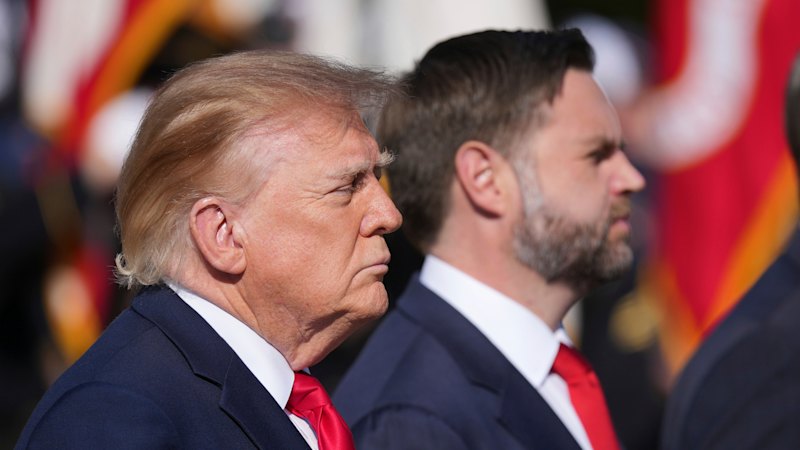
Trump wrote on social media earlier this month that Washington “will not be attacking Iran at any time prior to the midterm elections.” That the US president neither ruled out or confirmed strikes would resume afterwards is part of the reason for the ongoing nerves.
“The US has been actively feeding into this regionwide sense of anxiety as it keeps signaling that another round of escalation might be imminent” Hasan Alhasan a senior fellow for Middle East policy at the International Institute for Strategic Studies told CNN. “But it’s becoming difficult to distinguish pressure tactics from genuine signals.”
Adding to a sense that escalation could be imminent, Israel’s Prime Minister Benjamin Netanyahu - who partnered the US in attacking Iran and has been pushing for new strikes - will remain in office despite losing his majority in the recent elections. Negotiations to form a new government in Israel look set to begin in earnest next week, but election results suggest it will be difficult for opposition parties to oust Netanyahu quickly, if at all.
In the absence of clarity, residents in the region often rely on hearsay or search social media for reports on troop movements to determine whether a US strike is imminent.
Over the past month, Iranian military commanders have also intensified a series of public messages claiming that Iran has built-up large stockpiles of new weapons, a tactic designed to induce fear among Washington’s allies in the region.
A senior security official in Tehran told CNN that Iran will try to target infrastructure beyond oil facilities in the region, including AI, and warned that if the conflict resumes, it will be a long “war of surprises.” On Saturday, Iran’s supreme leader Mojtaba Khamenei ordered a response “without geographical limitations” to any new threat, an apparent effort to present a leader still yet to be seen in public as playing an active role in military preparations.
Foreign workers drawn to wealthy Gulf Arab states by economic opportunities and a tax-free lifestyle have for decades lived in relative stability in a region mired in conflict. That sense of security was shattered this year after the US and Israel launched the war, prompting Tehran to fire unprecedented barrages of ballistic missiles and drones onto Arab cities disrupting schools, travel and business and causing multiple casualties.
Yet despite the war, many residents stayed put, telling CNN they feel confident under the protection of well-armed regional militaries. Practical concerns remain, though.
“I’m actively trying not to think about that happening again because I really don’t want another winter with strikes,” Michelle, a 36-year-old American resident in Abu Dhabi told CNN. “I’ve always felt safe here…but I’m more concerned that our lives will have to change again.”
This month, people were surprised to find out that families of US diplomats have begun discreetly leaving, with the sudden departures becoming known only after their children started saying goodbye to classmates at school. Many of those leaving had only recently returned to their posts after being ordered out at the height of the Iran war in March, making the exits feel like a frustrating and chaotic déjà vu.
Fueling anxiety among residents are reports of thousands of US troops being dispatched to the region , as reported by the Associated Press.
In Saudi Arabia, where major events have already been canceled and offices closed with staff working remotely after the Iran-allied Houthi rebels intensified strikes, residents told CNN the were concerned that a return to war could increase pressure on a country already embroiled in conflict along its southern border.
“My neighbors and friends are bunkering for November but starting to get concerned about flights disruptions over the holidays,” said the 36-year-old American national in Saudi Arabia, comparing it to the covid era. “A lot of offices have moved to virtual or have reduced staff and remote learning is in place.”
Elsewhere in the region, other international gatherings remain on track, though the risk remains that they could be disrupted if the US launches strikes in the coming week.
In Abu Dhabi, where no attacks have been recorded since May, two US oil firms canceled plans for their executives to attend one of the region’s biggest oil conferences citing security concerns, Reuters reported. The event will proceed as scheduled next week with “strong” US participation and more than 120 American exhibiting companies, the organizer, DMG, told Reuters.
The conference is expected to host nearly 240,000 people, according to the organizers.
In Bahrain, one of the worst hit countries by Iran this year, people said they still felt the psychological impact of the war.
“There is still that traumatic effect ,” 21-year-old Fawaz told CNN. “When you hear the bombings, it’s kind of like you feel it in your hearts and it’s hard to sleep at night, especially when there are bombings outside.”
“A lot of people have become used to it by now but it’s still very scary,” he added.
Despite growing anxiety over the possible resumption of war, there has been a flurry of quiet diplomacy over the past week.
US Vice President JD Vance sent Iran’s top security official Mohsen Rezaei a letter, which the Islamic Republic is reviewing, according to Iranian media. Trump has claimed that the letter was related to an Iranian request for medical supplies, but it has raised hopes a diplomatic breakthrough could still be possible.
Iranian officials are in Qatar for talks, a Qatari official said. Qatar has played a prominent role mediating, but the official added there was no US delegation present Saturday.
‘If you don’t stop, they’ll kill all of us’: Somali pirates are back with a vengeance
In stark contrast to Trump’s warnings, the US ambassador to Turkey and special envoy to Syria and Iraq Tom Barrack told CNN’s Becky Anderson that he thinks there could be “dramatic steps” in the next two weeks
“We’re close. I think we’re very close to a place where we can finally say: Let’s just have a time out,” he said, adding that it is, however, a “matter of trust and who goes first.”
Iranian officials have sai d they’re open for diplomacy with the US, but they do not have trust that talks will stop military strikes, citing several past occasions when the Islamic Republic was struck during negotiations.
And a central figure also warned that Iran was not ready to compromise.
“Iran’s conditions have been repeatedly and clearly stated to the mediators,” said Mohammad Bagher Ghalibaf, the Iranian parliamentary speaker who is leading negotiations with the US. “The carrot-and-stick approach has no effect on Iran. Progress can only be achieved once Iran’s seven conditions have been agreed upon.”