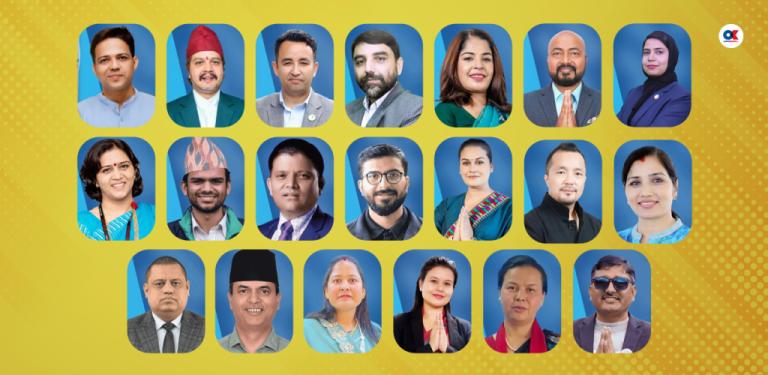
Kathmandu. Lawmakers have registered extensive amendment proposals to transform the 'Solid Waste Management Bill, 2083' under consideration in the House of Representatives from a traditional disposal-oriented model to one based on a source-centric, circular economy and human rights. A total of 212 amendment notices were registered by lawmakers from various parties in accordance with the House of Representatives rules. Speaker Dol Prasad Aryal has approved the clause-by-clause discussion of the bill as per Rule 113 (2) of the House of Representatives Rules, subject to the conditions of Sub-rule (1) of Rule 113. Lawmakers have demanded significant amendments regarding the definition of solid waste, jurisdiction of three tiers of government, producer responsibility, health security of workers, rights of residents in landfill-affected areas, and penalties. The original bill presented by the government aims to amend and consolidate laws related to solid waste management in accordance with the federal structure. It primarily defines the roles of the central government, provincial government, and local levels in solid waste management. Local levels are assigned the main responsibility of collecting, transporting, processing, and disposing of waste within their areas. A 'Solid Waste Database' system is to be established at the center to integrate data related to solid waste management. Local levels will determine landfill sites or management sites for waste disposal and coordinate with the federal government for land acquisition. Local levels will be able to collect service fees from citizens and businesses for waste management and legal provisions are proposed to penalize those who litter in public places. Local levels can also hand over waste collection and management work to public-private partnerships (PPP) or the private sector. The bill also clearly provides for penalties for individuals, organizations, or industries that violate solid waste management rules. Anyone who mixes non-biodegradable, biodegradable, and hazardous waste from their homes and disposes of it will be fined Rs 500 per instance. Any organization or business entity that mixes and disposes of waste without source segregation will be fined up to Rs 50,000 per instance. Littering household waste on roads or public places or burning it in the open will incur a fine of Rs 5,000 to Rs 15,000 for the first offense, Rs 5,000 to Rs 10,000 for a repeat offense, and Rs 15,000 for each subsequent offense, along with the recovery of waste removal costs. Individuals obstructing cleaning work by stopping vehicles during street cleaning will be fined Rs 1,000 to Rs 5,000. Vandalizing dustbins placed in public places, causing damage, or managing waste commercially without permission will result in a fine of Rs 15,000 to Rs 50,000 and compensation for damages. Disposal of hospital waste, chemical, industrial, or electrical hazardous waste in places other than designated ones will incur a fine of Rs 50,000 to Rs 100,000, and for a repeat offense, the license will be revoked and referred to the relevant body. Individuals or groups obstructing waste collection and transportation, blockading landfill sites, or striking on waste management may be fined Rs 10,000 to Rs 50,000 or imprisoned for 15 days to 3 months, or both, by the Chief District Officer. The Nepal Police will investigate such offenses and file cases through the government attorney, with the Nepal government as the plaintiff. Importing, producing, or selling prohibited goods will be punishable by a fine of Rs 50,000 to Rs 100,000 or imprisonment for up to 3 months, and producers or importers failing to destroy expired chemical pesticides will be fined up to Rs 1 million and charged for disposal costs. Local levels can stop waste collection services for individuals or organizations that fail to fulfill their obligations, do not segregate waste, or do not pay service fees. If services are suspended, the concerned individual or organization must manage the waste according to the prescribed standards. Individuals dissatisfied with the penalty decisions made by the Chief District Officer or local levels can appeal to the concerned district court within 35 days. However, lawmakers have demanded extensive changes, arguing that the original bill views waste merely as refuse, does not clarify the responsibility of pollution-causing producers, neglects the health security of workers handling hazardous waste, and overlooks the rights of residents in affected areas. Lawmakers including Lima Adhikari (Acharya), Dr. Toshima Karki, Bharat Prasad Parajuli, Sushil Khadka, Ashish Gajurel, Dharmaraj KC, Dr. Ojashwi Sherchan, Dr. Ram Lama, Ganesh Bahadur Bishwakarma, Bodhnarayan Shrestha, Krantishikha Dhital, Nitima Bhandari (Karki), Nisha Dangi, Kusum Maharjan, Kamal Subedi, Ain Bahadur Mahar, Manish Jha, Rubina Acharya, Balawati Sharma, Parshuram Tamang, and Guruprasad Baral have registered amendments to the bill. Lawmakers have proposed to include 'circular economy' and 'zero waste' as core policies from the preamble of the bill. They demand a system that transforms waste into a source of economic benefit, reduces the amount of waste to be disposed of by at least 90 percent, and safely disposes of only the remaining residue. Lawmaker Kamal Subedi has proposed an amendment to adopt a 'zero landfill' policy, limiting the waste disposed of at landfill sites to a maximum of 20 percent of the total generated waste. Lawmakers have demanded that companies producing or importing plastics, batteries, tires, glass, and electrical materials be legally bound to bear 'Extended Producer Responsibility' by amending Sections 8, 22, 40, and 40 'A' of the bill. Lawmaker Lima Adhikari has proposed that producers or importers must submit annual proof of mandatory buy-back and processing of at least 60 percent of the plastic or electrical materials they send to the market, and if not, environmental compensation fees should be collected. Amendments have been registered requiring waste to be mandatorily segregated at the source into at least 3 different colored bins or containers for biodegradable, non-biodegradable, and hazardous waste. Lawmaker Lima Adhikari has proposed that local levels must enforce a policy of 'no waste segregation, no waste collection'. For transportation, lawmakers Sushil Khadka, Ashish Gajurel, and Dharmaraj KC have registered amendments demanding the use of vehicles with at least three chambers, fully covered, leak-proof, equipped with compactors, and GPS tracking. Lawmaker Bodhnarayan Shrestha has demanded the addition of a separate 'Section 10 A', pointing out that wastewater and fecal sludge have been overlooked in the bill. His proposal includes transporting sludge from septic tanks or pit toilets only in leak-proof vehicles to designated treatment sites and a complete ban on discharging untreated wastewater into rivers, streams, or public places. Lawmaker Dr. Ojashwi Sherchan has demanded extensive reforms in Section 63 of the bill, proposing that employers must provide free tetanus and hepatitis 'B' vaccines to all workers engaged in waste management and sanitation, and rabies vaccines to high-risk workers in landfills and sewers. She has also proposed mandatory semiannual full health check-ups, 'exposure monitoring' for workers handling chemical and radioactive waste, and 'biological monitoring' to test for toxic substances in the body. Lawmaker Ganesh Bahadur Bishwakarma has demanded that sanitation workers be brought under the formal labor system, PPE be made mandatory, and zero tolerance be adopted for discrimination based on caste. Lawmakers have demanded special rights for residents in areas affected by landfill sites, stating that they should not be used solely as dumping grounds. Amendments proposed by Dr. Ram Lama, Manish Jha, and Balawati Sharma demand that a minimum of 30 to 70 percent of the total service fees collected by local levels from waste management must be compulsorily spent on the health, drinking water, education, and social development of residents in affected areas. They also demand free health insurance for affected residents, subsidized organic fertilizer or energy produced from waste, and the establishment of a dispute resolution mechanism led by local residents. Lawmakers have proposed to include provisions in the bill for the establishment of 'waste banks' at the community and ward levels where recyclable and processable waste can be collected in exchange for cash or tax discounts, and for the establishment of second-hand markets. They have also demanded a ban on the open burning of straw or crop residue from agriculture in fields and incentives to convert it into compost or biofuel (Section 38 'A'), and a ban on mixing batteries and e-waste with general waste. Lawmaker Lima Adhikari has proposed that city police be empowered to impose on-the-spot fines of Rs 500 to Rs 50,000 on individuals littering in public places or on riverbanks based on CCTV or digital evidence, and that citizens providing information (informants) be rewarded with a certain percentage of the fine. Lawmakers Krantishikha Dhital and Dr. Toshima Karki have proposed linguistic amendments to replace English words like 'dustbin' with Nepali words such as 'phohordan' or 'sourcebin', and 'database' with 'tathyaank bhandar'.
Read full story at source ( english.ratopati.com )