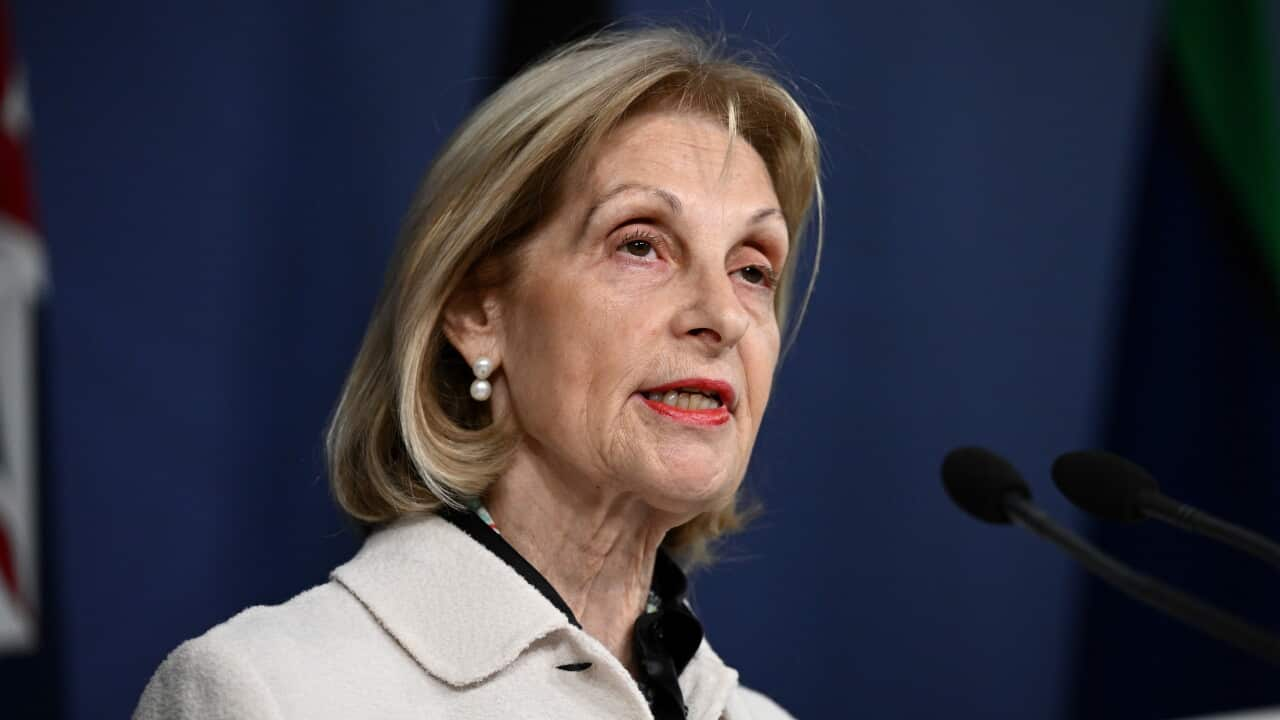

SBS and the ABC could have an "external ombudsman" monitor their coverage of Israel and the Middle East to avoid perpetuating antisemitism, Australia's envoy to combat antisemitism has proposed.
Jillian Segal released, as part of a broader report, an updated proposal for the idea she first floated during hearings for the Royal Commission on antisemitism and social cohesion. The broadcasters again rejected the idea and said their existing ombudsmen and complaints processes are sufficient.
Segal's report included other proposals including bans on face coverings, and measures that would seek to combat language used throughout society which she said can lead to racist violence.
Key areas of focus include the introduction of codes of conduct in organisations across Australia, the stripping of public funding from institutions that "promote, facilitate or accept antisemitism", and reform of the education sector.
Australia's public broadcasters have previously been accused of "marking their own homework" by Segal , who suggested appointing an independent adjudicator to manage public complaints about coverage of Israel and the Middle East during antisemitism royal commission hearings in July.
Your trusted source for staying up-to-date with the world around you. Get free daily news updates and analysis, straight to your inbox.
The public broadcasters have independent but internally located ombudsmen. The Australian Communications and Media Authority also regulates media organisations in the country.
Segal spoke on the suggestion on ABC radio on Friday morning, saying that such oversight was neither sufficient nor satisfactorily independent.
"They should be subject to the same level of accountability and transparency in relation to where things might go wrong in terms of complaints as any other sector," she said.
Segal was appointed Australia's special envoy to combat antisemitism in 2024.
The government has thanked Segal for her "continued work to eradicate antisemitism in Australia" and said it will continue to work with her to strengthen social cohesion.
Segal has called for all media outlets to "improve their practical understanding of antisemitism", with the "education of key management and editorial staff" a priority.
She has also requested greater transparency regarding the definitions of antisemitism public broadcasters draw from in their reporting.
Her report claims many in the Jewish community have become concerned over "disproportionate, misleading, or inaccurate" reporting on Israel and the conflict in the Middle East since Hamas' October 7 attacks on Israel in 2023 — which led to Israel's military campaign in Gaza.
Australians ought to receive "accurate, fair and impartial news", Segal's report continues, while making sure "editorial standards do not amplify antisemitic narratives".
"Given the extent and seriousness of concerns about subjective, inaccurate and disproportionate reporting in accordance with its own standards, it would be in the public interest for the public broadcasters’ coverage and approach to be the subject of more detailed analysis and independent review," she said.
SBS and the ABC have defended their reporting on the ongoing conflict in the Middle East.
In a statement, SBS said it "condemns antisemitism unequivocally and recognises the profound harm it causes Jewish Australians and Australia’s social cohesion."
SBS' editorial standards and independence are "essential to public trust", the statement said.
"SBS's existing complaints and accountability framework is robust and fit for purpose, including an independent Ombudsman and external oversight from the Australian Communications and Media Authority."
On Friday, the ABC said its complaints process was "the most robust and transparent in the Australian media".
"The ABC has the highest editorial standards and a comprehensive framework to ensure accountability, transparency and high editorial standards," it said in a statement.
"This framework is designed to balance accountability with editorial independence and robust journalism."
Some members of the Jewish community have expressed fear they could be labelled antisemitic under the definitions presented in Segal's latest report.
Segal identified what she called "progressive" antisemitism as the most pervasive form facing the country.
"It takes the hostility of Islamic extremism and far-left antisemitism, together with traditional antisemitic tropes, and gives it a respectable face through the language of social justice and human rights," she wrote.
Bart Shteinman, executive officer at the Jewish Council of Australia, criticised the report, calling it "Orwellian" and saying it does not represent the views of all Jews.
"This updated report from the Special Envoy is so misguided, conspiratorial and frankly Orwellian that it's hard to know where to start," he said.
"The report does little to mask a right-wing ideology that will go to incredible lengths to silence those drawing attention to Israel's genocide in Gaza.
"The Australian Government would do well to remember that the special envoy does not speak for all Jews, many of whom could be classified as 'progressive antisemites' themselves under the ridiculous analysis Segal is promoting."
A United Nations Independent International Commission of Inquiry, which does not speak on behalf of the UN as a whole and has been sharply criticised by Israel, concluded last year that Israel is committing genocide in Gaza.
Israel is separately defending a genocide case at the International Court of Justice, which has ordered provisional measures but has yet to issue a final ruling.
Israel has repeatedly denied committing genocide in Gaza, saying it has the right to defend itself.
Segal's report suggested "progressive antisemitism" could manifest as holding all Jewish people responsible for the actions of the Israeli government.
Segal stressed, however, that criticism of Israel similar to that levelled against any other country was not antisemitic.
— With additional reporting by the Australian Associated Press.