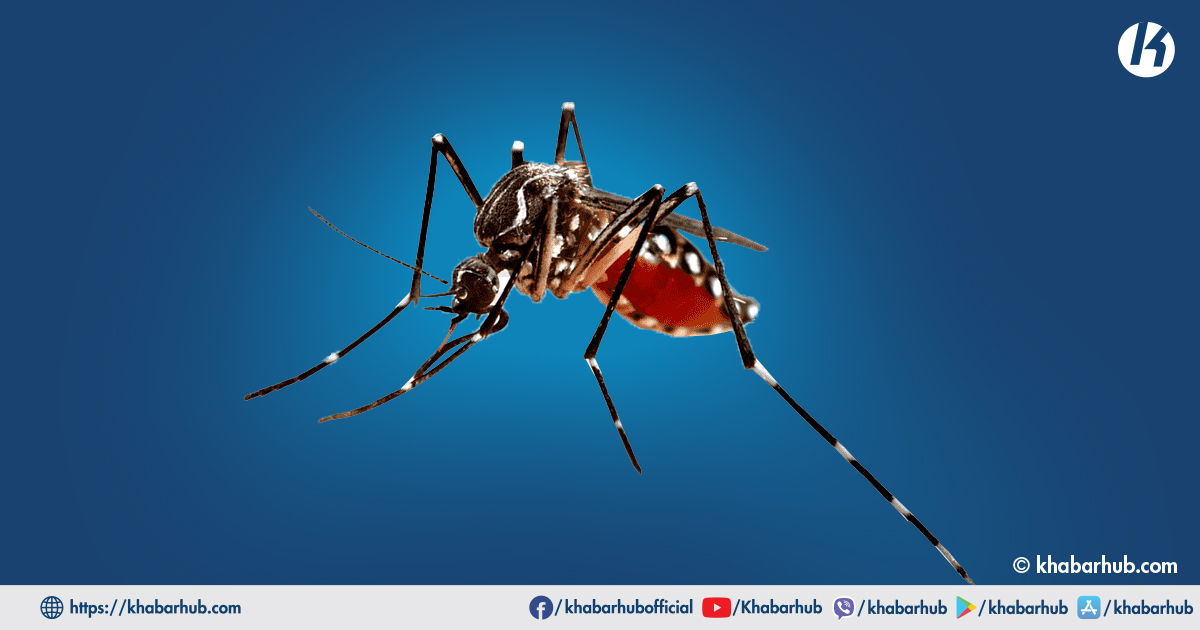

Kaski. As the monsoon season ends and winter begins, the dengue infection rate in Gandaki Province has decreased. While 1,274 people were confirmed with dengue infection in August, the highest this year, 425 people have been infected since October, according to the Provincial Disease Control Center. According to the center's Director General Manmohan Mishra, the dengue infection rate started increasing from July. In September, 1,191 people were diagnosed with this disease. Director General Mishra stated that dengue infection has spread to all districts except Manang, beyond the Himalayas, this year. He said that Baglung district is the most affected. The center's data shows that 3,576 people have been confirmed with dengue infection within Gandaki Province in the 43 weeks since January. "As many as 274 people were infected in a single week. In the last 43rd week, a total of 69 people have been confirmed with this disease," said Director General Mishra, adding, "This disease appears only in minimal numbers during the winter season." In January, 35 people, in February, 37, and in March, a total of 26 people were diagnosed with dengue. According to the data from the last week, October 19 to 25, 20 people in Parbat, 13 each in Gorkha and Kaski, six in Myagdi, five in Baglung, four in Lamjung, three each in Syangja and Tanahu, and one each in Mustang and Nawalpur were confirmed with the disease, informed Director General Mishra. "The infection rate is decreasing, but since the risk of dengue infection will remain until the end of Kartik, precautions must be taken," he said. After the infection increased, campaigns to find and destroy the habitat of dengue-spreading mosquitoes were conducted in various local levels here. Doctors say that dengue should not be taken lightly, as it can become an epidemic if not controlled and prevented in time. Doctors state that every individual and family must be responsible for controlling and preventing dengue. Director General Mishra said that the female mosquito that spreads dengue, 'Aedes aegypti', breeds in clean stagnant water, so water should not be allowed to accumulate in homes, offices, and public places. He stated that mosquitoes that spread dengue lay eggs in clean water accumulated in potholes, old tires, utensils, drums, etc., and these should be emptied. He advised that caution should be exercised as mosquitoes that spread dengue lay eggs in accumulated clean water and bite only during the day.
Read full story at source ( english.ratopati.com )