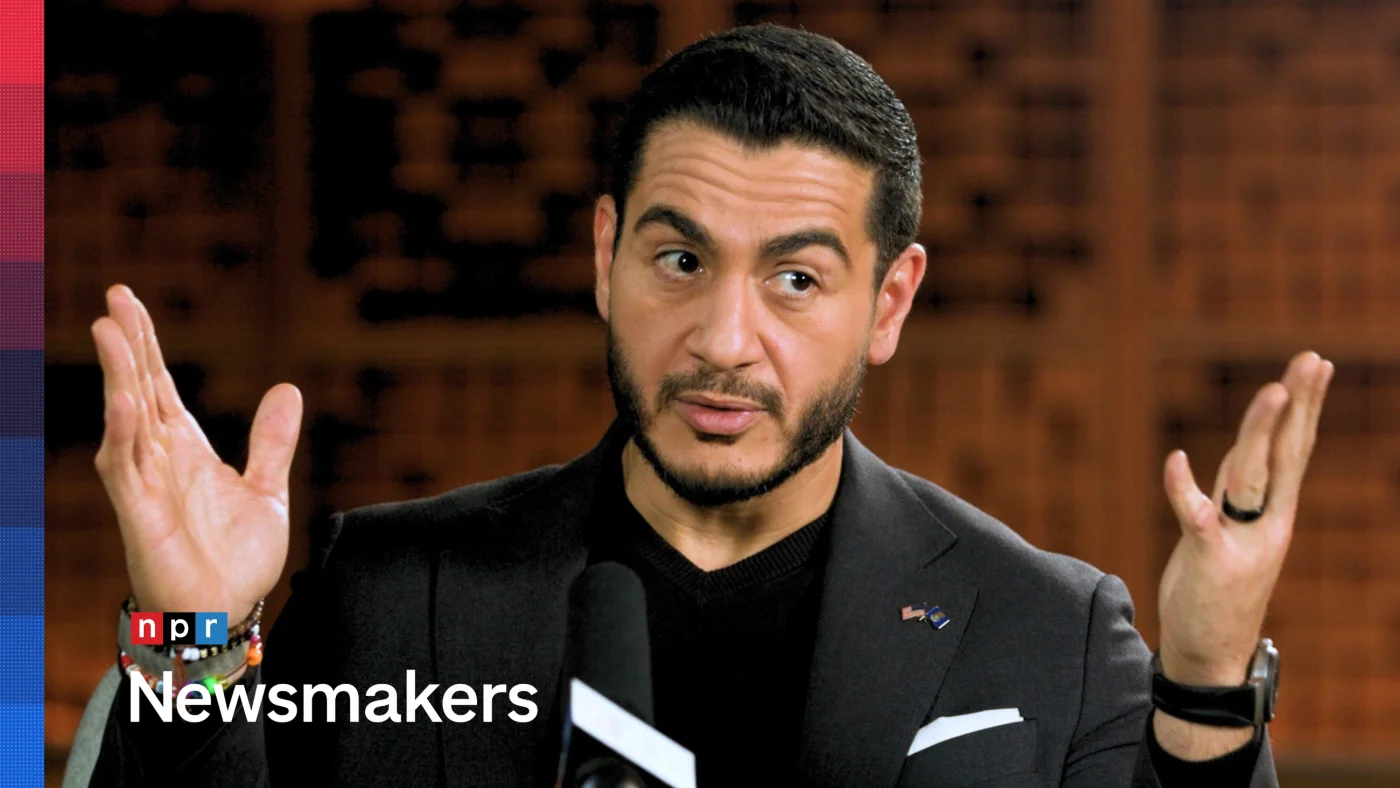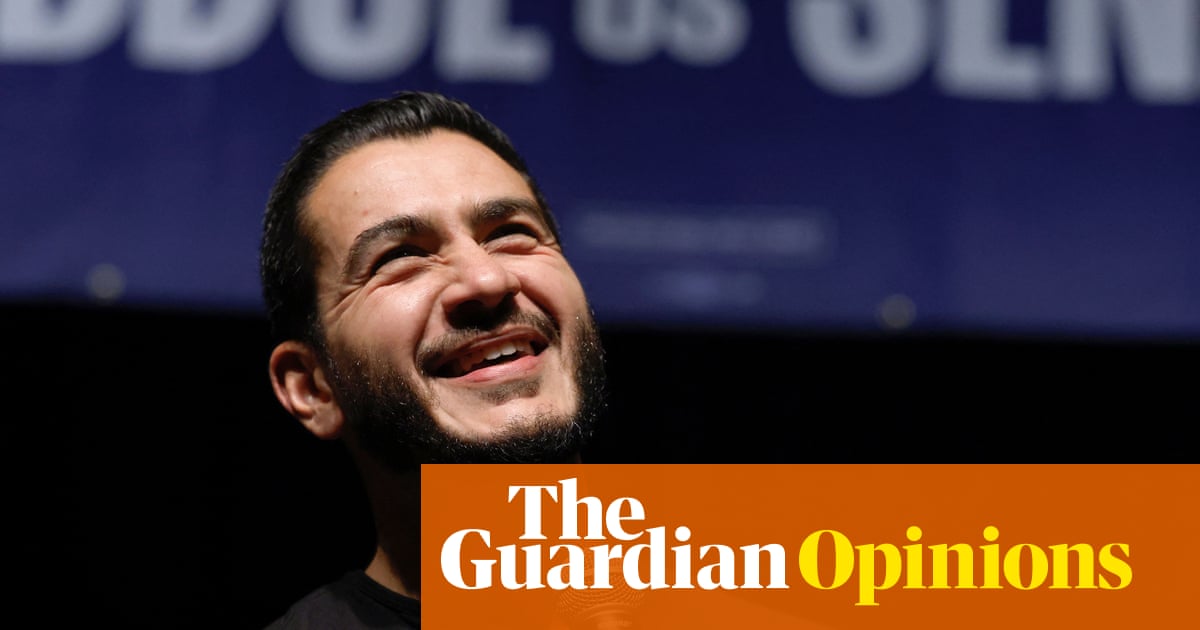
T he Michigan senatorial candidate Abdul El-Sayed, a Democrat, occupies a strange but increasingly common place in modern American politics. He’s praised by progressives, begrudgingly tolerated by moderate Democrats and largely demonized by Republicans.
He’s also uniquely positioned to forge an all-too-elusive thread of political kinship between these perpetually-at-odds groups with his bold but contentious plan for reining in AI, called AI Under Democracy .
And it couldn’t come at a better time. According to a poll conducted this summer by NBC News, 70% of Americans said that they were more worried than excited about AI, a shocking reversal from just a couple of years ago. Another poll from Quinnipiac several weeks ago found that 73% of Americans are concerned about AI posing a threat to human existence.
AI Under Democracy was revealed several weeks before the Michigan Democratic primary. At the time, El-Sayed was still a relative underdog, a physician with threadbare political credentials and views that – it seemed – were woefully misaligned with the moderate, blue-collar sensibilities of Michiganders.
When it comes to his AI plan, and a companion proposal called AI Under Control that he released this month, that may no longer be the case. In fact, it could be a potential antidote to our ideological gridlock over the promise and peril of AI.
Back in 2023, I was invited to be a guest on Abdul El-Sayed’s podcast, America Dissected. Both Michigan natives with backgrounds in public health, El-Sayed and I commiserated over global leaders’ glaring lack of relatability and, by extension, the grating way they dismiss – and often increase –the struggles of everyday people. It all seems quite prescient now.
Barack Obama recently urged Democrats to rally around AI regulation in the midterms, but El-Sayed and many progressive Democrats have already been leading the charge.
El-Sayed’s AI ethos is deeply shaped by his history as a healthcare provider – not as a politician. His maxim for AI development is “first, do no harm,” a transposition of the Hippocratic oath into this new wild west of technology, as AI companies face pressure to balance profit against the public interest.
To this end, El-Sayed’s proposal calls for corporate divestiture from AI’s largest companies, recognizing that legacy companies such as Google, Microsoft, Meta and Amazon simply have too much controlling interest in frontier AI ventures like OpenAI and Anthropic, creating untenable friction between their revenue-generation prerogatives and our public safety.
For example, Microsoft has an estimated 27% stake in OpenAI , and Google owns 14% of Anthropic , giving each a sizable say in how the companies operate. Under El-Sayed’s proposal, the tech giants would have to divest or abandon those investments within a defined transitional period.
The plan also calls for the regulation of datacenters : slowing the volume of developments, facilitating local job creation, freezing residential utility costs, and addressing the public health and quality of life issues that datacenters produce in terms of noise and pollution. He has been especially vocal about the colossal OpenAI-Oracle datacenter being erected just outside of Ann Arbor, Michigan, where he attended the University of Michigan.
Today, there’s a groundswell of resistance towards datacenters. An August poll found that only one in 9 Americans would support the construction of a datacenter in their local community. El-Sayed’s plan dovetails with the public’s clear and growing opposition: keep AI’s footprint and its environmental and socioeconomic consequences – those known and as yet unknown – contained.
Far and away the most controversial – but essential – part of El-Sayed’s plan to thwart an AI-fueled catastrophe is his call for 50% + one of board seats (a simple majority) at influential AI companies to be publicly appointed or democratically elected. This would in theory foster transparency around AI companies’ plans and give Americans the power to veto decisions – on matters like datacenter development and biological weapons manufacturing – that could undermine the public interest.
While both Democrats and Republicans may come to support heavier regulation and moratoriums on AI, public control may be an entirely different can of worms. For many, the idea of transferring ownership of a private enterprise to a public trust smacks of socialism. And this narrative certainly feeds into the common Republican critique of El-Sayed, as well as his Republican challenger Mike Rogers’ even more aggressive attempt to tar him as a feckless communist .
However, communities across the US have long embraced public ownership of essential resources such as water, natural gas, and electricity. And according to a June report, roughly 69% of American adults support AI companies transferring 50% of their stock to public sovereign wealth fund, a pot of money used to support public interests.
This is a paradigm which Bernie Sanders, El-Sayed’s most prominent booster on Capitol Hill, has legislatively proposed . There’s a good chance that Americans will continue warming up to this idea.
It’s not a coincidence that, as we approach the midterms, feverish debates are now erupting over how – or even whether – AI’s soaring risks can now be tempered via federal policy.
Naturally, in the US, people are looking to their political leaders for answers – even though a whopping 78% of Americans disapprove of how Congressional members are handling their job and Donald Trump’s approval ratings are underwater.
Many of these politicians seem unaware of or ambivalent about the state of AI and its mushrooming perils. That’s where younger, tech-savvy candidates like El-Sayed – who has called for a pause on AI’s most potent releases, a ban on artificial superintelligence, and an AI kill switch – shine and can provide leadership and restraint as we confront a future where AI is ubiquitous.
Exhibit A of the opposite: Trump and other administration officials who have been aggressively poo-poohing demands to slow AI’s rapid ascension, saying the uproar is a “hoax” while continuing to insist on the US’s AI dominance at essentially any cost .
To be sure, some – including leaders in the White House and Silicon Valley investors beholden to the sunken cost principle – will remain bullish on AI.
But calls for regulation from everyday people on both sides of aisle should be the ultimate shot across the bow. And AI’s top plutocrats, such as OpenAI’s Sam Altman and Anthropic’s Dario Amodei, rallying around the idea of “ pacing the frontier ” are a big, red flag being waved right in society’s face.
All this can be addressed through a deliberate, balanced public ownership policy.
Jerel Ezell is executive director of the Center for AI and Everybody and an assistant professor at the University of Chicago