Australia's first delivery robots have begun their autonomous conquest of the Gold Coast's pavements, with experts saying that they could herald a new era in human-robot relations.
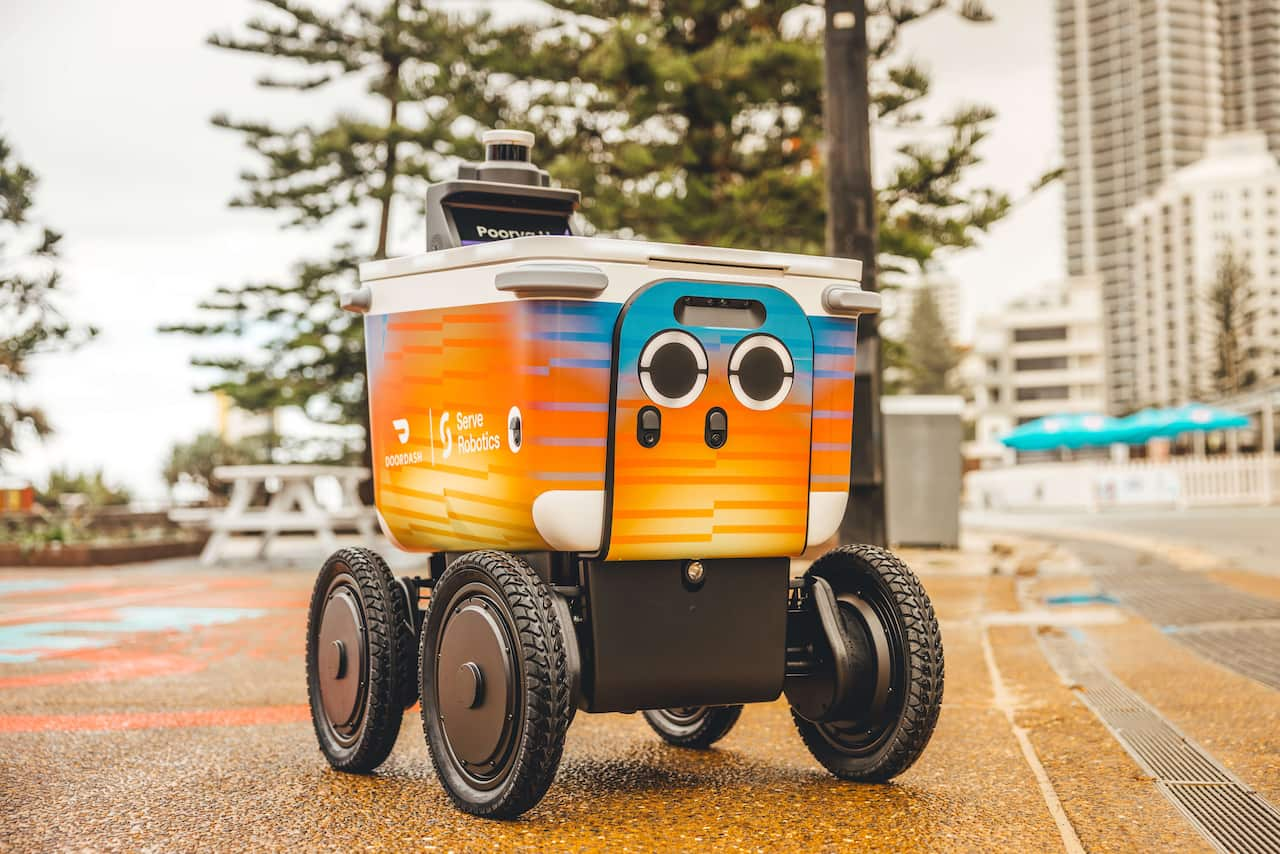
United States-based firm Serve Robotics has partnered with DoorDash to deliver meals to local residents in Queensland on robotic wheels, but the technology still has a long way to go before it becomes commonplace across the rest of the country.
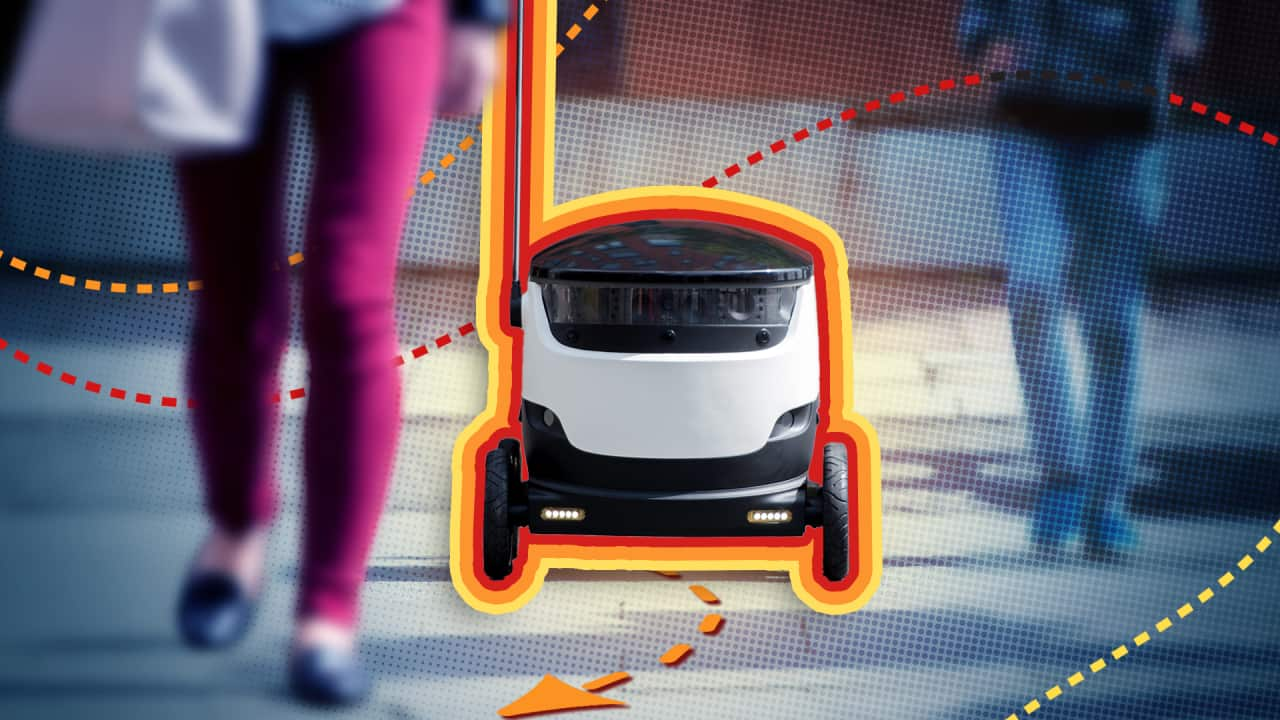
The robots, which carry takeaway orders on pavements at walking pace, are the same as those used by the company and its competitors in the US. They can access an operations depot at Griffith University.
Japan, Colombia, Germany, and others are also in various stages of rolling out autonomous delivery with other companies; however, the droids have not always been warmly received by residents.
In the US, where resentment towards the construction of data centres and the increasing ubiquity of artificial intelligence is growing, residents in places like Chicago, Los Angeles, and Philadelphia have filmed themselves attacking the robots.
Your trusted source for staying up-to-date with the world around you. Get free daily news updates and analysis, straight to your inbox.
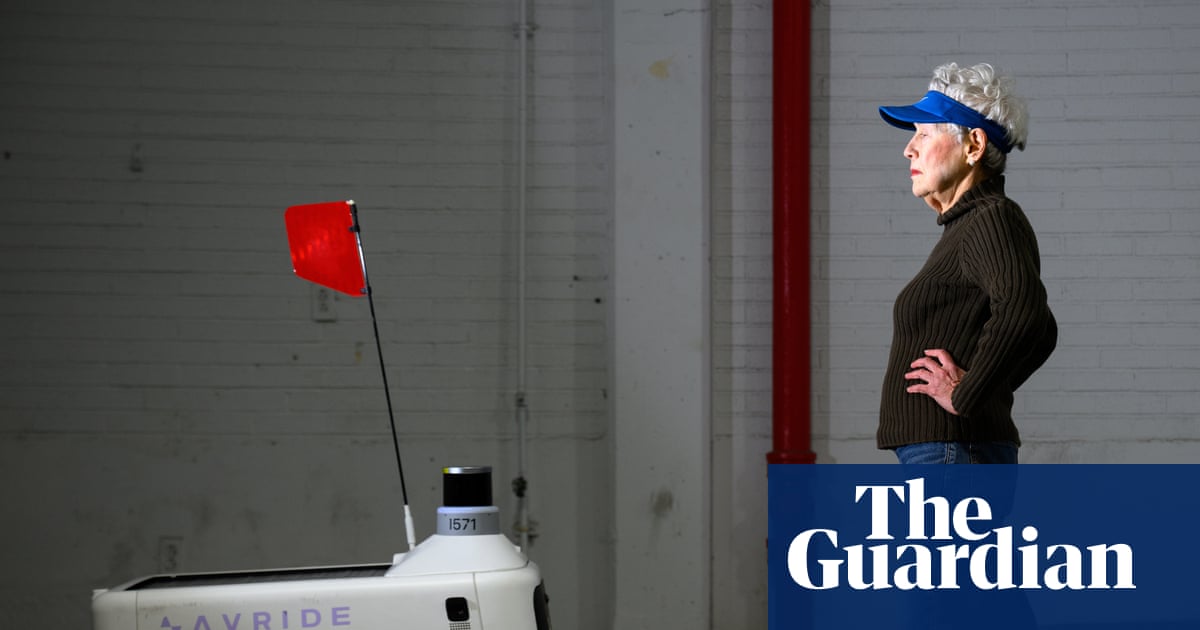
Retired professor Carolyn Marvin was arrested earlier this month after a campaign of protest in which she deliberately stood in front of the machines to stop them doing their jobs. She said she was concerned that robots could soon replace human workers.
Elsewhere, delivery robots have been seen causing damage and chaos when their programming fails to match up with the environment around them.
There have been reports of broken-down robots blocking pavements, stopping at pedestrian crossings as emergency vehicles try to pass, and even running through glass bus stops.
In one viral incident, a robot was filmed straying onto railway lines before being flattened by an oncoming train.
Australians may hold similarly hostile views about the rise of the machines, given backlash against AI and concerns about data centres.
However, Australia Post's experiments with similar autonomous vehicles in 2017 did not spark major pushback.
Professor Michael Milford, director of the QUT Centre for Robotics, told SBS News that an autonomous robotic future is by no means guaranteed, as the devices will have to overcome hurdles such as these if they are to be adopted.
"There's a number of challenges," Milford said. "There's societal acceptance. There's the perception of hogging precious space on the footpath, getting in people's ways occasionally, occasionally driving into bus shelter windows and all that sort of stuff.
"But ultimately, it's a commercial play by these companies, and there is, as far as I can tell, a very challenging path to being sufficiently profitable."
At present, the use of delivery robots is limited. However, analysts expect to see a spike in their adoption over the coming decade. Research firm Transforma Insight reported last year that 2.1 million could be operating worldwide by 2024.
Although fears about job replacement by technology are widespread, Milford notes that the current food delivery system has its own issues — and is quite efficient.
Without being able to offer some advantage to hand-delivered takeout through price, speed, or otherwise, Milford said the robots face an uphill battle.
Yet, while challenges remain, there are also benefits, such as the removal of cars from the road.
"A lot of [these issues] come down to not the specific technology but to underlying societal things around capitalism and what people will accept," he said.
"This is sort of the pointy end of it, but a lot of this is true of any new technological development."
While Serve Robotics' vehicles are currently delivering meals from just a single restaurant — Gnocchi Gnocchi, Southport — more are set to join soon.
DoorDash has said the robots are expected to complement its existing delivery drivers by completing short trips in dense urban environments, while humans continue to do longer, cross-city trips.
Professor Hai Vu, head of the Monash Connected Autonomous Vehicle program, told SBS News that automating aspects of the economy is largely inevitable given the productivity benefits on offer.
His team built Australia's first domestically designed and autonomous food-delivery robot in 2025, which they named ARI. Vu said their approach could solve some of the economic issues facing similar machines at present.
"Our approach is actually quite very different," Vu said, explaining that his machines do all of their computing remotely, rather than inside the vehicle as most others do.
"That enables us to have a very simple and low-cost robot," he said. "You could actually scale up thousands of these robots at a fraction of the cost."
Delivery robots are not automatically legal to operate in Australia and face a raft of regulatory roadblocks, with local councils at the forefront of how they might be regulated.
Gold Coast City Council has been working actively with technology companies and Griffith University to establish how autonomous robots might work on its streets.
Experts at Swinburne University and Monash are also mapping low-speed urban zones where delivery robots and humans might co-exist peacefully.
Milford said that the issues need to be thought through carefully, but that there is little reason Australia couldn't see more robots on its streets soon.
"If you can walk around [a robot], that's fine. But if you're in a wheelchair, for example, that could be catastrophically bad," he said.
"Technically and economically, there is no reason why you couldn't roll out a Waymo service in Sydney tomorrow," he said, referring to the driverless cars operating in the US.
Legally, NSW prohibits the use of fully autonomous vehicles, but Premier Chris Minns has publicly supported the idea, and Waymo — owned by Alphabet, Google's parent company — appears to be preparing to establish a presence in Australia.
"I would not be surprised at all if there was an announcement from Waymo or one of the other organisations that they're going to roll out trials in Sydney in 2027 or 2028," Milford said.
"Elsewhere, I expect to see gradual, steady expansion of these robo-taxis in a lot of places."
While the rollout may be slow, experts say it is coming. Hai cautioned policymakers that they need to play a more active role in addressing how the nation deals with the autonomous future rushing toward it, in order to both mitigate the impacts and reap the benefits.
"If you want to develop the economy," Hai said, "then you need to have the right incentives and provide the right opportunities for people to capitalise on those incentives."