
A failed attempt to sell part of its $4-billion airport stake has cost Dexus $30 million in legal fees and accelerated its retreat from infrastructure investment.
The property giant is appealing the NSW Supreme Court ruling behind the bill, while a separate strategic review will see its infrastructure funds pursue asset sales in 2027.
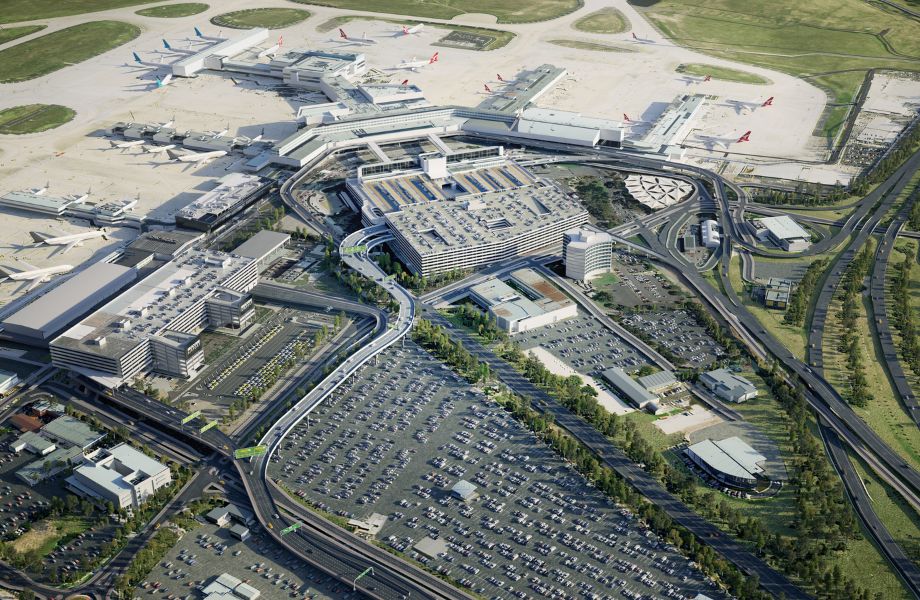
Heads rolled following the stoush with Australia Pacific Airports Corporation (APAC), which leases and operates Melbourne and Launceston airports.
Dexus is a stakeholder in APAC, having acquired a 27.3 per cent, $4-billion stake in late 2023.
But tension arose when Dexus and its bankers JP Morgan attempted to sell a portion of its stake to external investors in 2024.
These shares were reportedly restricted by rules that required them to be first offered to APAC co-investors—which include IFM Investors, the NSW Treasury Corporation, Future Fund and Utilities of Australia.
Dexus maintained that its co-investors knew about the sale, but the consortium argued otherwise.
Led by IFM, the co-investors argued that the attempt by Dexus to sell its stake breached confidentiality obligations, given that it allegedly included information on fee negotiations with major airline carriers and other sales and forecasting data.
The APAC co-investors issued a default notice in 2025 that would trigger the compulsory sale of Dexus’s shareholding, but Dexus took the issue to court.
The case did not go in Dexus’s favour. In May of this year, the NSW Supreme Court ruled the default notice valid.
As a result, Dexus directors Nik Kemp and Michael Faulkner were suspended from the APAC board.
This week, the NSW Supreme Court ordered Dexus to pay $30 million in legal fees to APAC and the other shareholders due to an indemnity clause in the shareholders’ agreement.
Dexus said it would continue to contest the issue and has filed an appeal, with a court date set for November 30, 2026.
The ultimate impact of the APAC conflict on Dexus “remains uncertain at this time,” the chair of the board of Dexus Funds Management directors Warwick Negus said in his address to the annual general meeting this week.
But it has proven to have far-reaching consequences.
Negus acknowledged that the Supreme Court judgment had made “adverse findings” and that “this situation does not meet the standards we set for ourselves and that our stakeholders rightly expect of us”.
Negus said Dexus had taken action including standing down employees and making remuneration adjustments.
Additional mandatory training has been completed and governance KPIs have been introduced for all employees, Negus said.
At the same time, Dexus group chief executive Ross Du Vernet announced a “strategic review” of infrastructure funds following a shareholder review earlier this year which found that clients across a number of funds were seeking liquidity.
Dexus Diversified Infrastructure Trust and Core Infrastructure Fund will progress asset sales in 2027 to provide this liquidity, Du Vernet said. Other infrastructure funds are in consultation as to how they strategically liquidate existing interests and assets.
“The infrastructure review has given us a clear basis to simplify the platform and focus our capital and capability where Dexus can deliver the strongest long-term outcomes,” Du Vernet said.
Dexus announced it will refocus on real estate markets including office, industrial and retail, plus its targeted alternatives platform.
Ross acknowledged it had been a “difficult year” but there were bright spots too.
The ADC small Australian data centre business in which Dexus owns a controlling interest is part of a consortium that has entered into a lease agreement with the Australian subsidiary of Anthropic this year. It will help deliver the proposed hyperscale data centre campus in Queensland’s Western Downs.