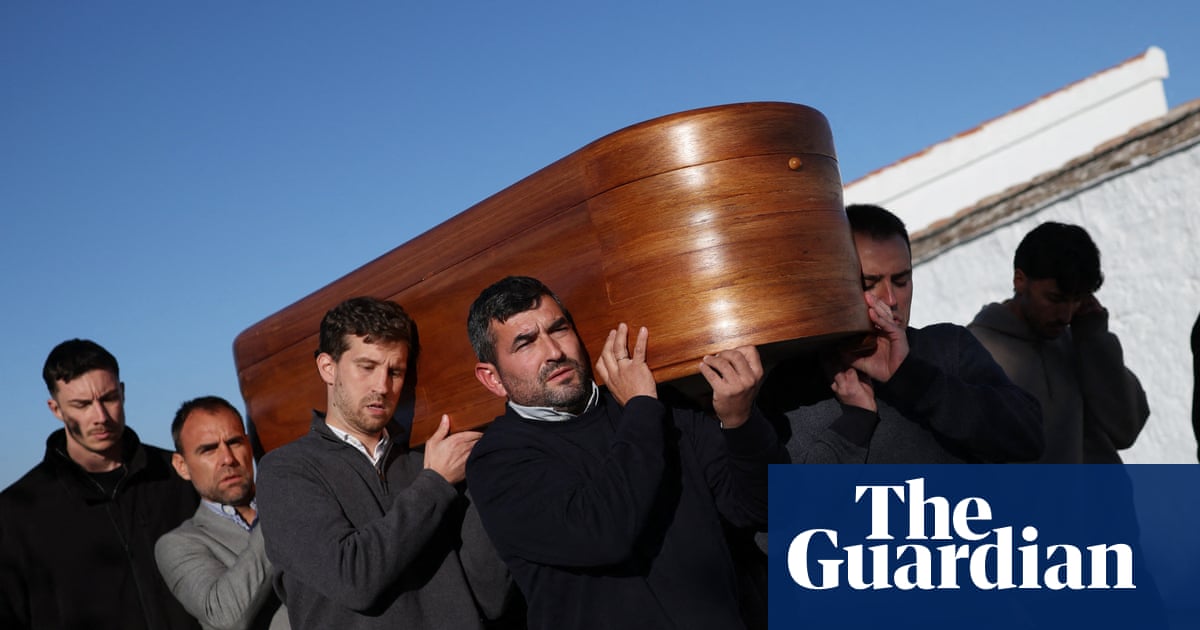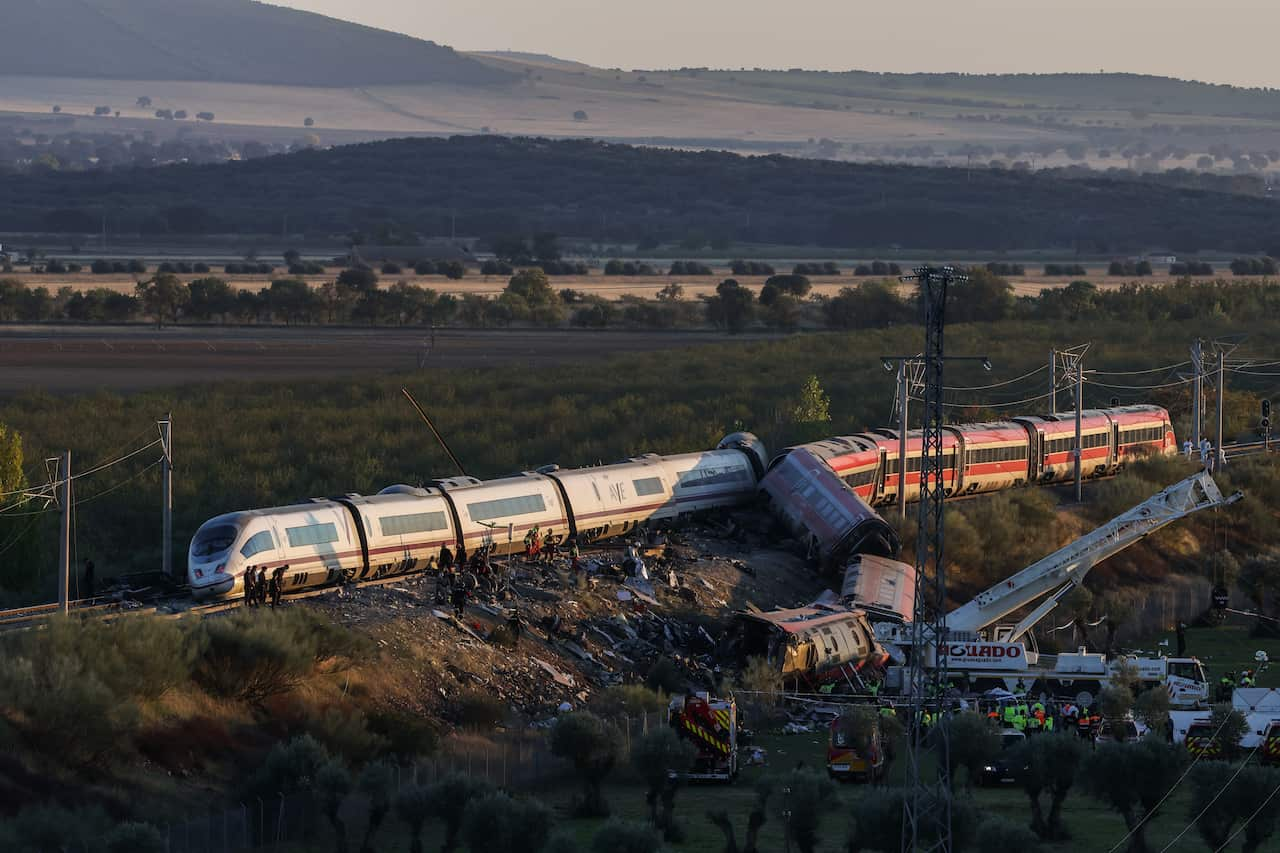
One of Europe's worst rail disasters this century claimed the lives of at least 68 people on Wednesday, local time, with experts and authorities demanding an investigation into exactly how two high-speed passenger trains in Spain could slam into each.
Experts say the Spanish rail system suffered an "appalling" failure of normal safeguards, leading to the crash on a rail line south of the capital Madrid.
A train in the central region of Castilla La Mancha is believed to have been stationary at the time when a second passenger train collided with it at up to 200km/h from behind.
Authorities have warned that the death toll is likely to rise, with the Agence France-Presse news agency reporting that more than 100 people have been injured. 58 of them are in hospital, with 15 in a critical condition.
Francisco Badea, professor of engineering and railway expert at Nebrija University in Madrid, told the BBC that it is "crazy" that the system in Spain has failed to keep passengers safe.
Your trusted source for staying up-to-date with the world around you. Get free daily news updates and analysis, straight to your inbox.
"From what I have seen, this is something that should not happen in 2026, especially not in a European country in the modernity that we have," he said.
"This is the type of stuff that would probably happen 100 years ago when the controllers were tired."
Spain has one of the most advanced railway systems in the world and yet the incident is the second major train crash in the country this year.
According to early reports, at around 8.30am on Wednesday (6.30pm AEDT) a major computer failure resulted in the suspension of the LZB continuous automatic train protection and signalling system across a 69km stretch of track in Spain's Toledo province.
As a result, all six trains active in the blackout region were forced to automatically come to a halt. The Iryo 6076 passenger train travelling from Madrid to the southern city of Seville stopped, as did the later-departed Renfe AVE 2080 doing the same journey.
The control centre in Madrid issued an authorisation clearance for the AVE train to continue on its journey, without standard "line of sight" precautions that require a train to run at limited speed in a blackout zone.
At 8.54am, the AVE train, travelling at speeds estimated between 180km and 200km per hour, rounded a corner between Los Yébenes and Urda and slammed directly into the rear carriages of the stationary Iryo train.
More than 540 passengers and crew were on board both trains, including one infant and Spain's former employment minister, Fátima Báñez, who has been killed.
At present, the official cause of the incident is unknown; however, a judicial investigation is expected to be carried out by local authorities.
Spain's transport minister, Oscar Puente, said that the decision to resume travel on the line where the blackout occurred belongs to the central control team at Madrid's Puerta de Atocha-Almudena Grandes station.
"The control centre ... took the decision to resume traffic in circumstances that, from our point of view, are inexplicable," Puente said.
"It is clear that, in the control centre, the decision was taken to restart, and then they had more than enough time to verify the error, and they did not fix it."
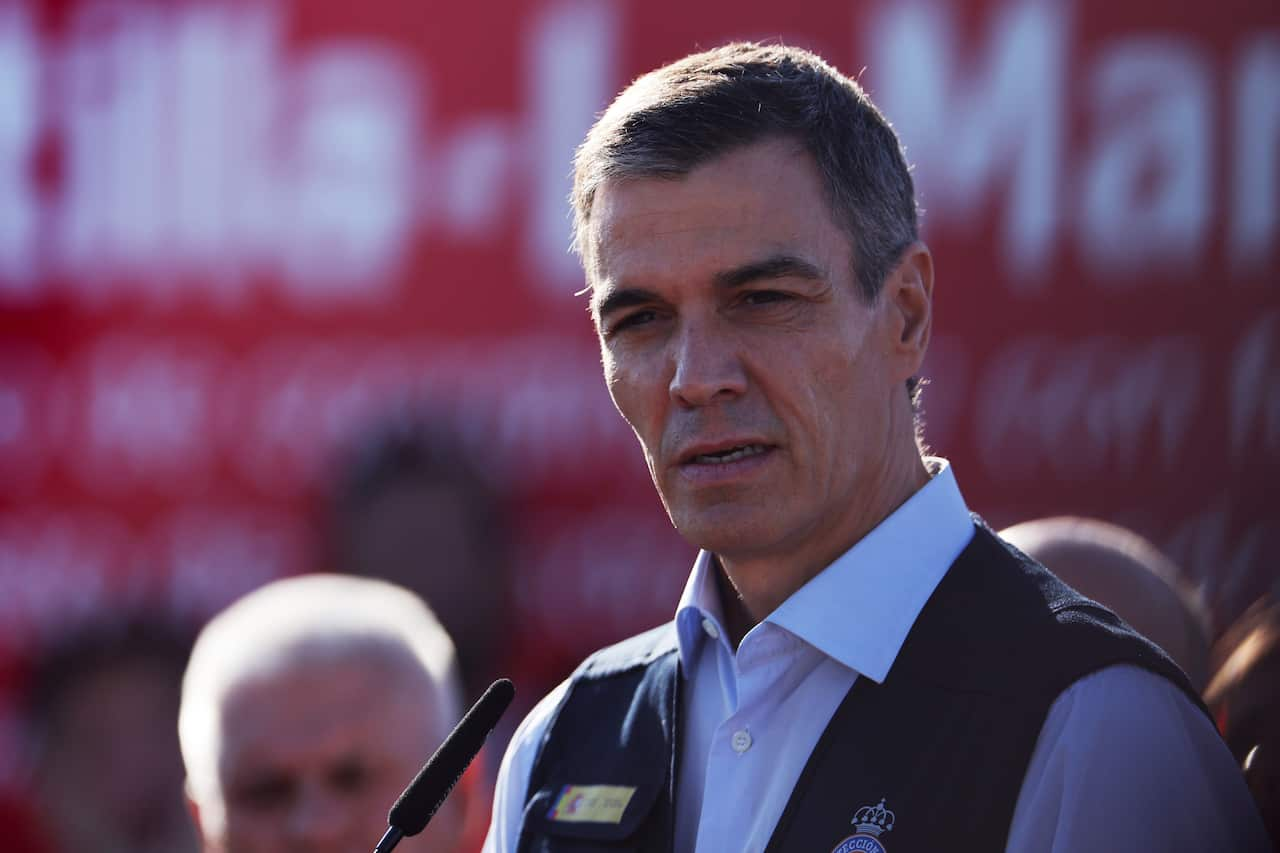
The accident comes one month before socialist Prime Minister Pedro Sanchez, who faced heavy criticism for this year's first disaster, seeks to overturn unfavourable polls and extend his eight-year premiership in an early general election on 29 November.
He said the "whole country is grieving," and Spain would observe three days of mourning from Thursday. His socialists halted campaign activities.
"If there was negligence, it will come to light, and if there have been failures in the safety system, there will be a firm response," he told reporters after receiving an updated casualty report.
"It is evident that we have suffered two high-speed tragedies. Everything indicates that the origins of the two accidents are unrelated, but that is not for me to say."
"It is clear that, if we need to further strengthen safety to rebuild confidence in our rail system, we will do so. It is not acceptable for a country like Spain to suffer two rail accidents in the same year. All measures will be taken to further guarantee the safety of citizens."
The leader of the main opposition conservative Popular Party, Alberto Nunez Feijoo, who leads in most polls, also suspended campaigning but said: "Spain has the right to know what is going on with its infrastructure."
— With additional reporting by Agence France-Presse