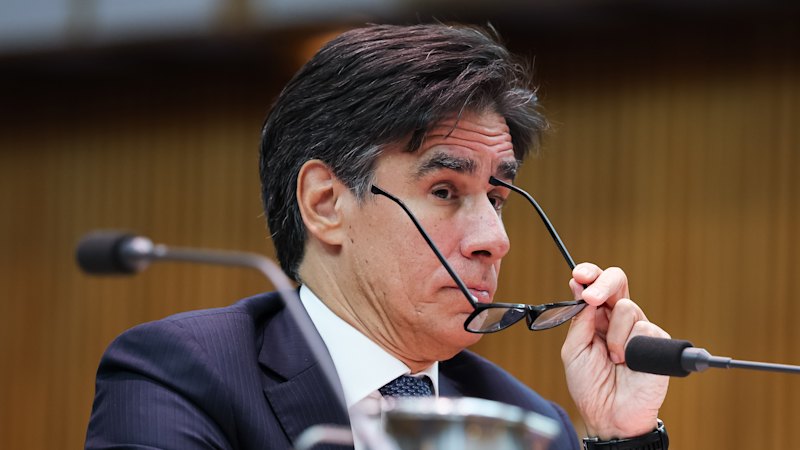
Jim Chalmers and Anthony Albanese are caught in a political bind when it comes to inflation. ( ABC News: Matt Roberts )
It is hard to imagine after nearly five years of economic pain, but the grim truth revealed by yesterday's batch of high inflation numbers is inescapable: the worst is yet to come.
Most observers now think the Reserve Bank will hike rates again on Tuesday. That would take the cash rate to 4.85 per cent, its highest level in 18 years. By now, we know this means a tighter financial squeeze for all borrowers.
Few will want to spare a thought for the politicians, but the news also piled on the agony for Treasurer Jim Chalmers, who had to front up once again for a stony-faced press conference and a Question Time laden with jeers from the opposition benches.
As he has done countless times, Chalmers acknowledged those "doing it tough" and solemnly swore the government would continue to be "responsible". And, as always, he snarled at "commentators" who say public spending is the root cause of the problem.
He might have a point. The role of global events is obvious, and is pushing up inflation all over the world. And a private sector investment boom, propelled by the rush to build data centres, hasn't helped either. They're excuses, but they're real ones.
Still, how many times can you reassure people that you're doing everything you can and that you're sensitive to the difficulty they're enduring before your words lose weight?
The answer: you can keep it up for as long as you can sell hope. And that's getting tough.
Rewind to 2022, when this inflation episode began, and hope was a carefully calibrated part of the message. The government and the Reserve Bank were singing from the same song sheet, promising a relatively painless route out of trouble.
They called it "the narrow path to a soft landing". Interest rates would go up, but not as harshly as in other countries. They might stay high for a little longer, but without doing excessive damage to the jobs market or the broader economy in the process.
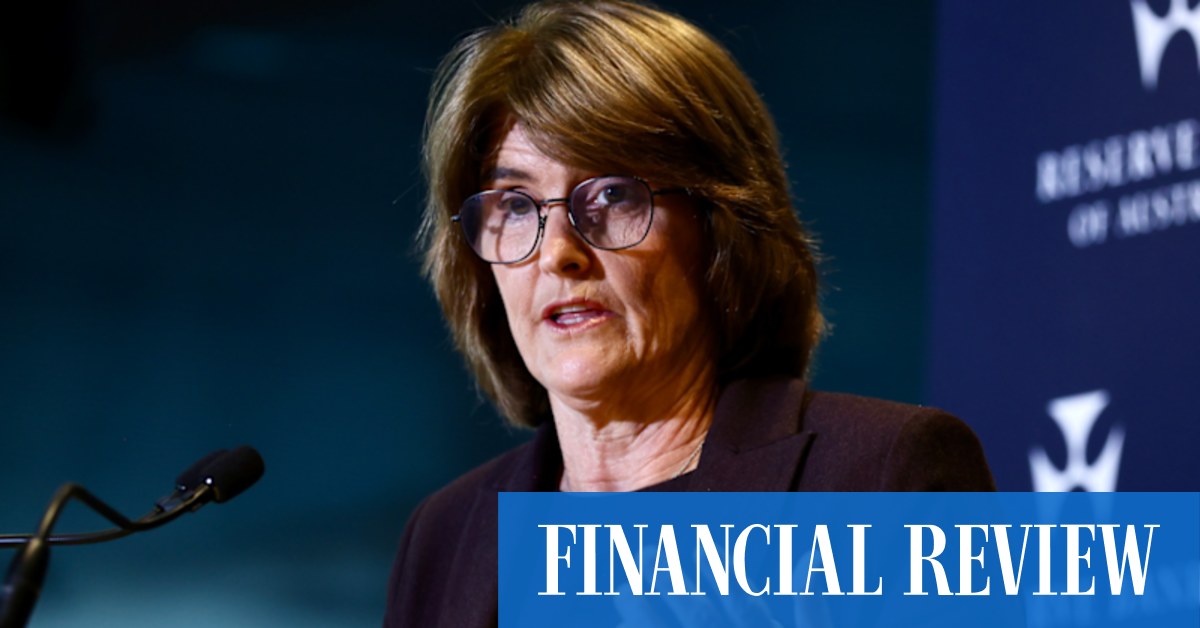
Was the plan to tackle inflation, supported by RBA governor Michele Bullock, too good to be true? ( ABC News: John Gunn )
There were always those who said this sounded too good to be true. Inflation has wrought havoc whenever it has taken hold in history, and it has rarely been possible to banish it without a recession, such as the one Paul Keating said we "had to have" in 1990.
But it was an admirable ambition, and it's not entirely anyone's fault that it didn't work out. Yes, the "narrow path" strategy probably was the reason why Australia had more heat left in inflation when the war hit. But that's why it was called "narrow".
And the war, coupled with the AI investment boom, have made for a perfect storm not just in Australia but in other countries, too. The boom pushed up demand, and the war constrained what could be supplied, stretching out the gap where inflation thrives.
That is the simple and ruthless logic of inflation. When demand in an economy outstrips what can be supplied, inflation is the result, because the excess demand has nowhere to go other than to bid prices up.
To stamp that out, all that can be done is to slash demand or expand our capacity for supply. The latter option is what economists mean when they talk about productivity. Sluggish productivity growth is what Michele Bullock calls our "fundamental challenge".
But, in the meantime, the only other option is to slash demand, from anywhere. Rate hikes do this by slugging borrowers. Critics who say they do not address the root cause of inflation misunderstand the aim; it might be unfair, but it can be effective.
Dealing with inflation will put further pressure on everyday households. ( ABC News: Tristan Hooft )
The government can also reduce demand, either by cutting spending or hiking taxes. These can be more targeted approaches, but the political difficulties are obvious.
That is why economists like Chris Richardson tend not to ask governments to slash and burn, and instead judge them by the precautionary principle: at the very least, don't make things worse by spending more or handing out large tax cuts.
Of course, that is exactly what governments are tempted to do when voters are worn down by all those high prices. And, as Chalmers put it on Tuesday, helping people with the cost of living can be legitimate and necessary. It's an exercise in "balance".
As the opposition has pointed out, the government could have been a little braver if it wanted to. Spending like the EV discount and the home batteries discount might have achieved a climate goal but has put billions into the pockets of high-income earners.
But these are small in the grand scheme of things. And as the government points out, nobody in politics wants to identify acceptable spending cuts on a grander scale. It's hard to argue that a subsidy here or there is the main reason we are where we are.
Anyway, that sort of quibbling dodges the ugly truth about what lies ahead. The Reserve Bank, with the government's support, tried to get rid of inflation without triggering job losses and a recession. The soft approach didn't work.
That means that narrow path, and that soft landing, are likely beyond us. We have escaped the worst until now, with minimal change in the jobs market and minimal business closures or distressed housing sales.
Absent a productivity boom, which nobody can clearly articulate how to create, we will be going harder for longer, suppressing demand well into 2027.
That will happen with higher rates, and it will probably happen on the budget balance sheet too. For all his defensiveness about the role of government spending, Chalmers has promised further savings and poured cold water on calls for cost-of-living relief.
Around the cabinet table and the RBA board table is a shared recognition: that inflation is destructive, that it is making people angry, but that the only way is through.