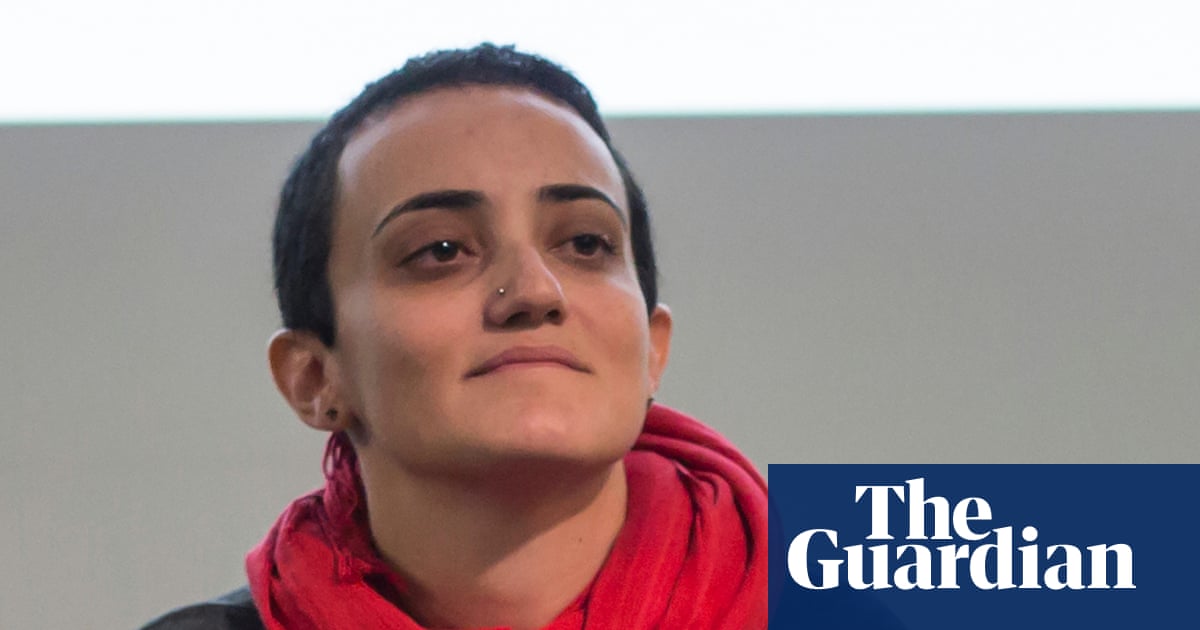
Professor in the Media Studies program at the Doha Institute for Graduate Studies.
Egyptian President Abdel Fattah el-Sisi surprised observers when he recently announced his intention to leave office after his third presidential term ends in April 2030.
El-Sisi had been widely suspected of moving to amend the Egyptian constitution to allow him to serve another term, or possibly indefinitely.
But speaking at a graduation ceremony at the Egyptian Military Academy, el-Sisi insisted that his departure was a settled matter and that “no one would tamper with” the constitution.
So what is behind the decision? There has been much speculation that el-Sisi may use this declaration to rally popular support for a fourth term or preempt a move by the military against him. But there is also the possibility that he is setting up the next phase of military rule in Egypt.
It is important to point out first that voluntarily leaving power is a risky proposition for any authoritarian leader.
In el-Sisi’s case, his 2030 departure would leave open the possibility that a future Egyptian government could seek to use him as a scapegoat for the country’s problems, possibly even holding him to account for alleged crimes committed during his presidency.
El-Sisi led a coup in 2013 against Egypt’s first democratically elected president, Mohamed Morsi, which was accompanied by massacres and the jailing of tens of thousands of politicians, activists, and journalists.
El-Sisi’s economic record has also been the subject of criticism, with detractors accusing him and his government of corruption , poor fiscal policy and lavish spending on vanity projects. Egypt’s debt stands at 81 percent of gross domestic product (GDP), with interest payments alone exceeding combined spending on healthcare, education, wages and subsidies. Meanwhile, the Egyptian pound has lost more than 80 percent of its value against the US dollar since 2014, while cumulative inflation exceeds 460 percent.
In this context, el-Sisi’s announcement that he plans to step down in 2030 was rather unexpected. Some have speculated that he has no intention of actually leaving office and could go back on his statement, as he has done before.
In 2013, following Morsi’s overthrow, el-Sisi denied that he would run for president.
After telling the media in 2017 that he was committed to “preserving [the constitution’s] two four-year terms and not changing it”, he helped lead the drive to amend the constitution in 2019.
A judicial source told Mada Masr last week that el-Sisi’s announcement left open the door for a “popular call” for the president to remain in office.
A second possibility is that with this move, el-Sisi may be attempting to preempt a possible military intervention, which could become more likely if the economy continues to falter.
In 2011, the military responded to popular protests against former President Hosni Mubarak by forcing him to step down.
The army could attempt to defuse public anger by presenting el-Sisi as a scapegoat, forcibly removing him from power, and replacing him with someone who can preserve a measure of stability as well as secure its vast economic interests.
In that context, a member of parliament said recently that he has heard el-Sisi say in private meetings that he would rather step down than wait for the military to force him out.
But a third and much more likely possibility deserves particular attention: el-Sisi may be preparing to leave the presidency while ensuring that Egypt’s military-dominated political system survives his departure.
It is perhaps not coincidental that during the announcement, he cited Article 200 of the constitution, which gives the armed forces an extraordinary role in Egyptian politics.
The article, amended in 2019, makes the military responsible for maintaining the country’s “democracy” and the “gains, rights and freedoms” of the Egyptian people.
According to el-Sisi, the aim of the article is “to protect the Egyptian state from any attempt to infiltrate it or allow people to take it over who cannot handle the responsibility of this country or who do not even understand the meaning of ‘state’”.
Article 200, combined with Article 234 — which requires that a president secure approval from the Supreme Council of the Armed Forces before appointing a defence minister — gives the military significant control over Egyptian political life.
El-Sisi’s vision for the selection of Egypt’s next president gives the military an outsized role. His proposal includes setting up a committee of experts to draft legislation for selecting hundreds of highly educated Egyptians to undergo specialised training at the Egyptian Military Academy.
Applicants, el-Sisi proposes, should hold doctoral degrees, be between 40 and 50 years of age, and be prepared to spend 30 months at the academy learning about the Egyptian state.
The programme would also train future ministers, governors and members of parliament.
Combined with Articles 200 and 234, this proposed mechanism seems intended to preserve the military’s dominance long after el-Sisi leaves office. It could be favourable to him as well.
A genuinely independent, civilian president could seek to investigate massacres overseen by el-Sisi, allegations of corruption, or other alleged crimes. A transition process closely managed by the military is highly unlikely to yield such a result.
The open question now is how an increasingly frustrated and critical Egyptian public will respond to a political process managed by the military that effectively wipes out the need for a popular mandate.
For now, el-Sisi and the military appear determined to shape Egypt’s political future. But the people may have the last word.
The views expressed in this article are the author’s own and do not necessarily reflect Al Jazeera’s editorial stance.