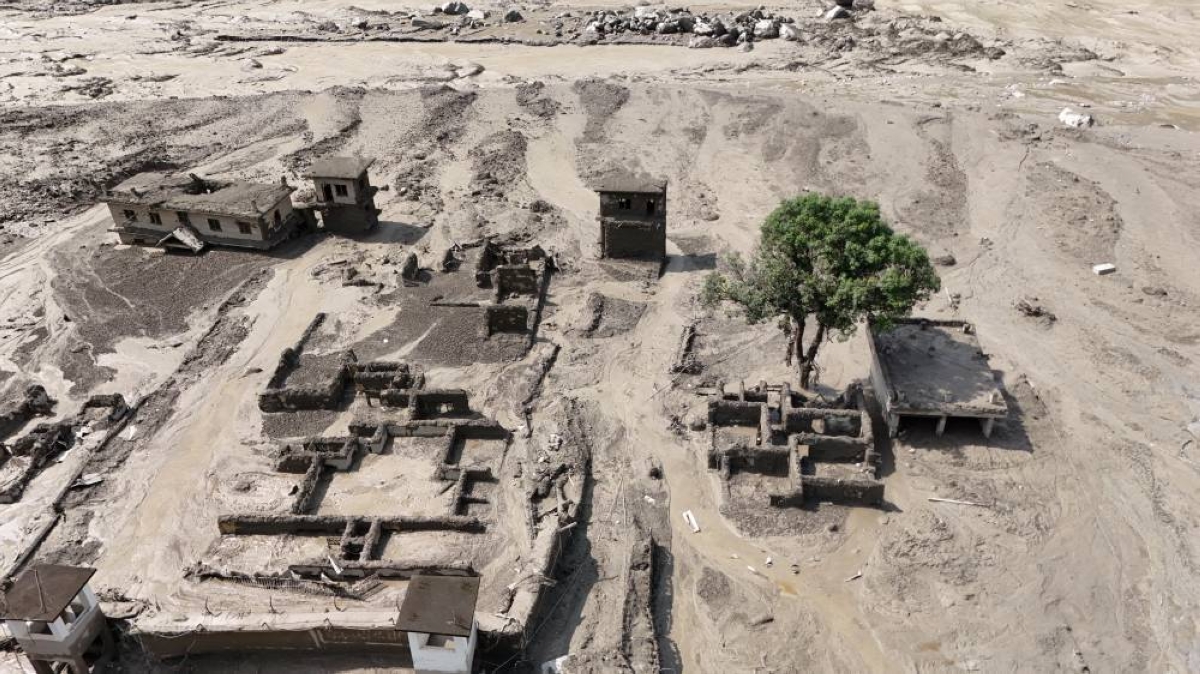
The Budhi Gandaki flood that struck its river basin on that unfortunate Sunday morning has certainly dealt Nepal a double blow, as the country has yet to recover from the earlier shock of the gigantic Bhotekoshi flood, nicknamed the Himalayan Tsunami, which hit on August 26. It originated in such a remote area that its cause is yet to be ascertained. Preliminary observations have attributed it to a landslide outburst flood, but the possibility of a glacial lake outburst flood further upstream cannot be ruled out.
This, however, is not the first event of its kind in the country. Many more cataclysmic events have occurred in the past. In 1190, during the reign of Gunakamadev II, a massive section of the Annapurna mountain range broke off, depositing enormous quantities of limestone in Pokhara. As a result, the Seti River cut through the deposits, forming a deep gorge. The river disappeared underground near what is now the K. I. Singh Bridge area and eventually re-emerged at the surface in Ram Ghat.
A landslide outburst flood occurs when debris from a landslide blocks a river. This particular landslide, however, was different because it was dry, as there had been virtually no rainfall in the area sufficient to trigger a wet landslide. The river becomes dammed for some time, but the barrier eventually gives way under the immense pressure of the accumulated water, unleashing a flood of water and debris. Such a flood is so gigantic in scale and force that it sweeps away everything in its downward path.
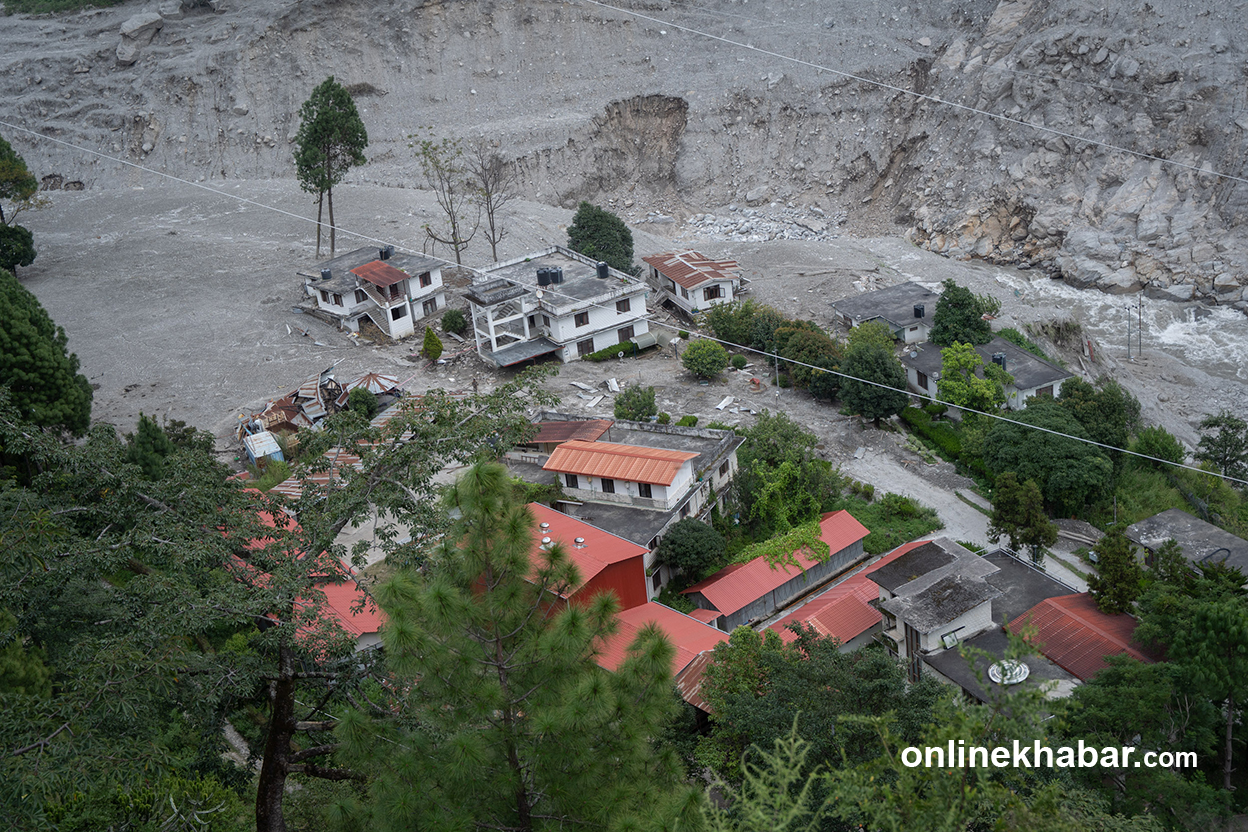
Consequently, 40 houses, along with the campsite of the 341 MW Budhi Gandaki hydropower project, were destroyed by this flood. It also washed away six bridges along its course. We can, however, draw some comfort from the fact that no human casualties have been reported so far, although a few people remain missing. The Bhotekoshi flood in August, in turn, left 1,450 people dead, with several others injured or reported missing.
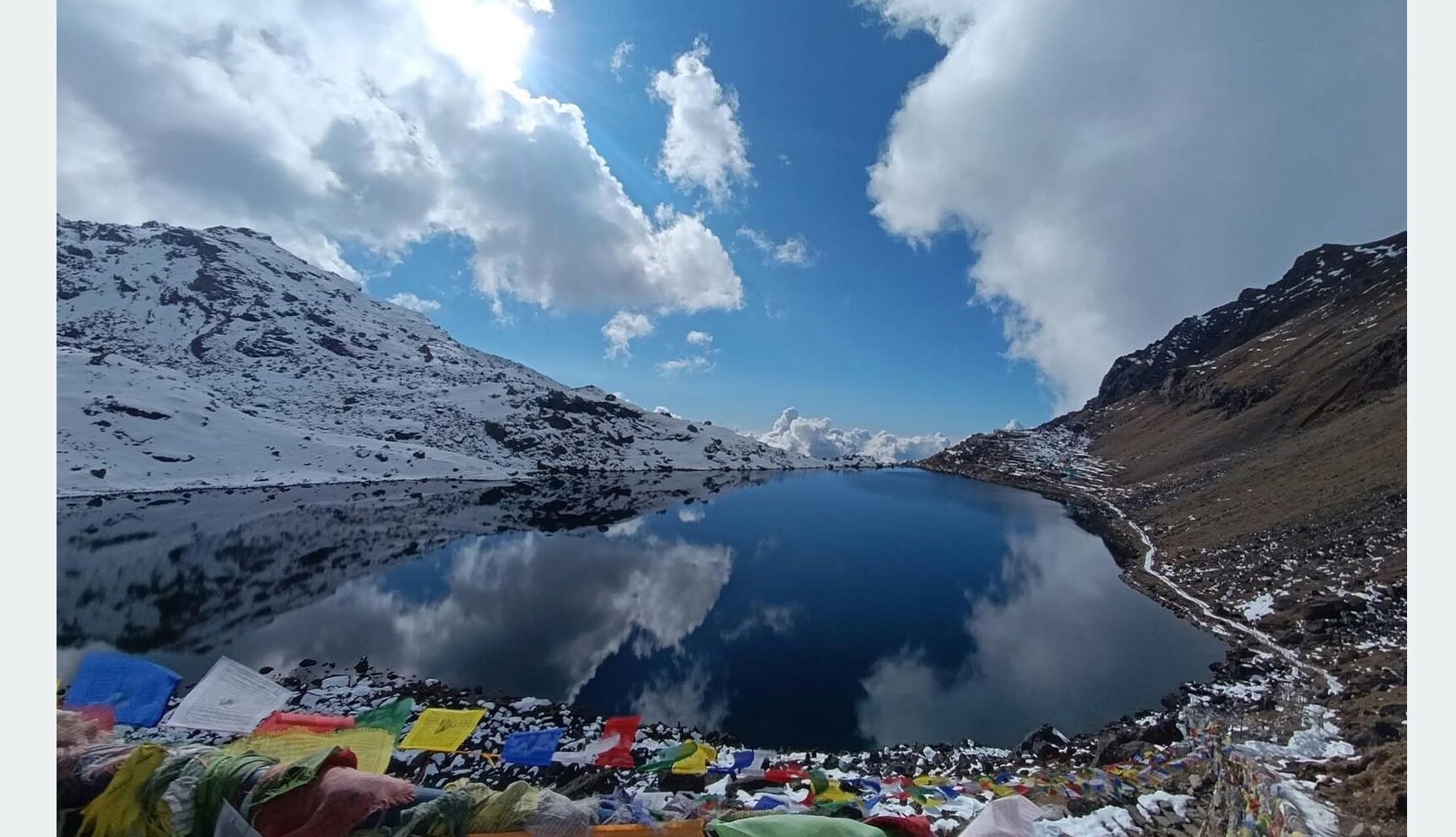
A glacial lake outburst flood, however, differs from a landslide outburst flood. It occurs when a glacial lake suddenly releases its water, often following the failure of a natural dam. Rising temperatures can accelerate glacier melting and increase the risk of such events. There are about 4,000 glaciers in the region, of which 47 are said to be vulnerable: 24 in Nepal, 22 in China, and one in India. Several such floods have occurred in the past, including the recent event that swept through Thame, the birthplace of the legendary Tenzing Norgay, in 2024. It was followed by the Bhotekoshi flood last August and now the Budhi Gandaki flood.
The risk of such outbursts is increasing with rising temperatures caused by climate change. It would be merely tautological to say that climate change has been driven by carbon emissions, which are nearly zero in Nepal compared with those of major emitting countries. Yet Nepal has suffered incredible damage and climate injustice because of emissions from other countries. Carbon emissions raise global temperatures, which, in turn, trigger the thawing of permafrost.
Permafrost helps bind Himalayan rocks, stones, and soil together through the presence of ice. Once the ice melts, the slopes become unstable, and landslides can occur, as appears to have happened in the case of the Bhotekoshi flood. As global temperatures continue to rise, despite the 2015 Paris Agreement's goal of limiting warming to 1.5 degrees Celsius above pre-industrial levels, the likelihood of permafrost thawing increases day by day. Consequently, such floods are likely to occur at regular intervals in the future, as they have in the recent past.
What next? We can perhaps draw lessons from Japan, where earthquakes occur at regular intervals. As a result, housing and infrastructure have been designed and constructed to withstand earthquakes, helping to minimise damage or, in some cases, prevent it altogether.
Nepal, too, should plan settlements beyond the reach of such flood waves, preferably at least 100 meters above the riverbed, as our ancestors did in the mid-hills, leaving the highlands and lowlands for growing food crops. It should follow a traditional, organic planning pattern in which one building occupies one terrace. Orthogonal or grid planning, as seen in Tikapur, diagrammatic planning, as in Rajbiraj, and even the grand planning inspired by Baroque cities, as seen in complexes such as Singha Durbar, are unsuitable for hilly terrain.
The transport network must also be made more resistant to landslides. Surface roads often become unusable when covered by landslide debris. However, drainage systems and surface turfing can dramatically reduce this problem. The technique involves digging a horizontal channel across a mountain slope and connecting it to the gullies on either side. Instead of allowing rainwater to rush from the highlands to the lowlands through the mid-hills, the water is diverted into the gullies on either side, significantly reducing the risk of landslides.
Filling cracks and covering the slopes with the resilient local dubo, or Bermuda grass, further improves their stability. This indigenous technology has been used successfully in Nepal since time immemorial. It has also been applied successfully in Shirangkot Village Development Committee in Gorkha district.
The government can no longer shift the blame onto previous governments. It must therefore immediately evacuate riverside settlements from vulnerable riverbanks across the country and relocate their residents a few terraces uphill to prevent similar disasters in the future. It should pass a new bill allowing people to exchange their riverside land for government-owned forest land upstream. To prevent environmental degradation, the government should also launch a massive afforestation drive to compensate for any adverse effects of deforestation resulting from the clearance of forest land.